
Drain cleaning in Austin, TX - Travis County - 146 ZIP codes covered
Drain Cleaning in Austin, TX
Austin is the rare city that wrote its private laterals into law and then built a program around them. Austin Water runs a Private Lateral Program because the wastewater line connecting your building to the city system, called a P-Lat here, is not owned by the city, and defective private laterals let stormwater and groundwater pour into the sewers, driving overflows the city is under federal pressure to prevent. City code chapter 15-11 spells out owner maintenance duties, and a city grant program funds repair or replacement for eligible lower income owners of single family homes and duplexes. Around that legal frame sits a boomtown housing stock: median build year 1994, about 43.3 percent of homes built after 2000, flash flood rain that averages 46.9 inches a year in violent Central Texas doses, and limestone and clay fighting under every slab in the city.
The P-Lat: your line, in the city code, by name
Most cities leave lateral ownership as a custom every plumber knows. Austin legislated it. City code chapter 15-11, the private lateral ordinance, defines the private lateral as the segment of the sanitary sewer system on private property connecting a residence or business to the city system, and requires the owner to maintain it, because defective laterals discharge sewage and admit inflow and infiltration that overload the public system and cause overflows. Austin Water investigates private laterals when there is an overflow or blockage on private property, or when a city system problem could affect the lateral.
That framing changes the emotional register of a drain call here. Your lateral is not just your problem when it fails inward, into your floors. It is also a regulated component of the city wastewater system when it fails outward, leaking sewage or drinking stormwater the treatment system then has to handle. Owners who grasp that dual role understand why the city inspects, why it can require repair of a defective lateral, and why keeping yours sound is both self protection and, in a literal code sense, compliance.
There is a practical geometry to know as well. The city plumbing code expects private laterals installed at a slope of no less than 2 percent toward the disposal point, with a limited 1 percent exception for larger pipe where 2 percent is unavailable. Slope is destiny in a gravity system: a lateral laid too flat, or settled out of its slope across decades, holds solids no amount of wishful flushing will move. When a camera shows a sagging Austin line, it is often this original geometry, plus soil movement, being read back to the owner in pictures.
Austin Water also maintains a hotline for lateral questions and can assist with determining elevations and available slopes through its Utility Development Services division. That is an underused resource. An owner planning a repair, an addition or a replacement can get the public half of the geometry from the city before paying a contractor to guess at it, and the permit requirement for plumbing work in Austin means the paperwork trail for lateral work is real and worth keeping.
Drain problems we handle in Austin
The problems Austin's own housing, ground and weather produce most. The full symptom list is on the problems hub; these are the ones that earn their place here.
Multiple Drains Backing Up in Austin
Several drains failing together is the main line or sewer until proven otherwise. Stop the water, protect the floor, make the call..
Recurring Clogs in Austin
A clog that returns is not bad luck. It is an undiagnosed cause - roots, scale, a belly, or a cleaning that never removed the material..
Gurgling Drains in Austin
Gurgling is air moving where it should not - displaced by a partial blockage or a vent problem. It is one of the earliest main-line warnings..
The grant program most eligible owners never hear about
Buried in the same program pages is the most useful sentence on this entire page for a struggling homeowner. The city housing department runs a Private Lateral Grant Program that funds repair or replacement of private laterals for eligible Austin Water customers in a single family home or duplex whose household income is at or below 100 percent of the area median family income. Lateral replacement is one of the most expensive surprises in home ownership, and in Austin a defined route exists for the owners least able to absorb it.
Eligibility is income based and property based, and the details live with the housing department, which is the right office to confirm them before assuming anything. What DrainFlowed can do honestly is point at the door: if a camera has condemned your lateral and the repair range threatens your finances, ask about the grant program early, in parallel with contractor pricing, not after signing the largest contract of your year. Programs like this run on applications and documentation, and the camera footage your contractor produces is exactly the evidence such a file is built from.
Even owners well above the income line gain something from the program existence. It signals how seriously this city takes lateral condition, which supports the resale value of a documented, sound line. A seller in Austin who can hand over recent lateral footage is not offering a courtesy. In a market regulated at this level of detail, they are offering compliance history, and buyers and their inspectors are learning to price it.
Renters in single family homes and duplexes should pass the information upward rather than sit on a worsening drain. The duty and the grant both attach to the owner, but the symptoms land on the household. A tenant who reports slow drains and backups promptly, in writing, gives the owner the chance to use the city routes while the problem is still a repair rather than an overflow event that invites the city in on less friendly terms.
Documentation is the bridge between the camera and the grant. Keep the inspection footage, the contractor written findings and any city correspondence in one file, because each reader of that file, a housing department reviewer, a future buyer, a second contractor giving an honest comparison, will ask for the same evidence in the same order. Austin system rewards households that can produce their lateral paperwork the way it rewards the city own record keeping: completely, and without drama.
About Austin: the local snapshot
Austin is the capital city of the U.S. state of Texas.
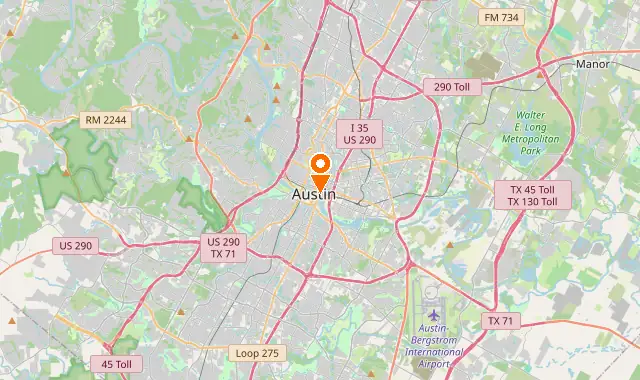
Local facts from Wikipedia and Wikidata, retrieved 2026-10-25. Population and area describe the city itself; the drain coverage counted on this page spans the wider area around it.
Boomtown housing: young suburbs, old core, cast iron clock
Austin median home was built in 1994 and about 43.3 percent of the stock dates from after 2000, the highest post 2000 share in this batch, across roughly 483,071 housing units. The boom defines the map: vast tracts of slab homes from the 1990s onward, where drain problems are dominated by use, construction era materials reaching middle age, and ground movement, wrapped around an older central core where only about 8.1 percent of homes predate 1960 and another 20.2 percent date from 1960 to 1979.
That older core carries the material clock Austin plumbers talk about most: cast iron drain lines, standard in central homes of a certain era, corrode from the inside over decades until the channel roughens, catches everything, and eventually fails outright. The symptom progression is so regular it reads like a script: occasional clogs in the early years, a clearing rhythm that shortens, then odors, backups and finally footage of a channel eaten to lace. Owners of pre 1980 central Austin homes should treat a first camera inspection, in the $125-$500 range, as due diligence already owed to the house.
For the post 2000 majority, the enemies are different and cheaper: the settling of new ground around new lines, construction debris that occasionally survives into service, grease and non dispersible wipes, and the sheer load of full households in a city that keeps filling. Standard cleaning in the $99-$450 range and honest habits solve most of it. The boomtown mistake is assuming a young house means a maintenance free underground. It means a grace period, roughly the years Austin newest stock is now exiting.
Only about 48.5 percent of Austin units are single family in form, so shared and multi unit laterals carry much of the city load. In those buildings the P-Lat duty still lands on the property owner, while the symptoms distribute across households that do not control the repair decision. Condo associations and landlords who put laterals on a documented inspection rhythm are simply governing well in a city whose code already treats the lateral as regulated infrastructure.
Flash floods, clay and limestone: the ground argues back
Austin rain averages about 46.9 inches a year with roughly 10.9 heavy rain days, delivered in the Central Texas style: creeks that rise in an hour, storms that drop inches between lunch and dinner, and long dry intervals between. Freeze days are few, about 10 a year. Laterals live through that cycle inside soils that swing between expansive clay, which swells when wet and shrinks when dry, and limestone, which does not move at all and makes excavation slow, hard work wherever a line must be opened.
The clay cycle is the quiet pipe killer here. Seasonal swelling and shrinking works joints and bellies lines a fraction at a time, so a lateral can pass a wet spring inspection and stand open jointed by the end of a dry summer, admitting roots that found the moisture trail. Then the flash rain arrives, infiltration pours through those joints, and a system sized for sewage discovers it is also draining the neighborhood groundwater. That sequence is precisely the inflow problem the city lateral program exists to reduce, happening one yard at a time.
Practical habits follow the geology. Treat post storm gurgling and slow drainage as information about joints and capacity, not just debris. Keep heavy vehicle loads and new hardscape off the known lateral route where you can, since ground pressure and clay movement are partners. And when excavation is unavoidable, expect rock in the quote and respect the contractor who prices it openly after measuring depth, rather than the one whose suspiciously soft number assumes dirt that much of Austin does not have.
New landscaping deserves the same geological respect. Trees planted for shade in a dry climate will find your lateral moisture with the determination of thirst. Plant off the line route, which your inspection footage or permit records can show, and give the roots somewhere better to go. Austin will keep planting, keep growing and keep raining violently on schedule. The owners who map their one underground line into those plans are the ones whose drains stay boring.
A note on additions and remodels, because Austin is a city perpetually adding bathrooms. Every added fixture loads the same lateral, and an addition permitted and plumbed correctly still deserves a capacity question about the line it joins. The cheapest moment to film the lateral is before the new bathroom is finished, when a discovered defect can be repaired as part of a planned project rather than as the emergency that follows the first full house gathering. Builders and remodelers who scope the existing line first are not being cautious. In this geology, they are being literate.
Costs, permits and connecting the right way
Private drain work in Austin follows the standard ranges: cleaning $99-$450, main line cleaning $200-$650, sewer line work $250-$900, hydro jetting $300-$900, camera inspection $125-$500 and emergency service $150-$700. Plumbing work in Austin requires a permit from the city development services, a detail that protects owners: permitted lateral work is inspected work, and the paper trail supports both resale and any future grant or city interaction about the same line. Build the permit into the timeline conversation with your contractor from the start.
DrainFlowed is a connection service, not a contractor and not a city program. It connects Austin homeowners with independent local contractors who price, permit and perform their own work. If cost is the barrier to a needed lateral repair, ask the housing department about the Private Lateral Grant Program eligibility in parallel. If the issue looks like a public main failure or sewage surfacing outdoors, Austin 311 and Austin Water are the report route. Knowing which of those three doors your problem belongs to is most of Austin drain competence.
Call (866) 555-0134 to connect with an independent contractor, and give the details that route well here: the age of the home, whether problems follow storms, whether a camera has ever filmed the line, and whether you are in a single family home or duplex, since that fact matters if grant eligibility ever enters the picture. Austin has done more than most cities to organize this unglamorous system. Owners who use the organization, code, program, permits and all, get measurably better outcomes than owners who treat every backup as an isolated surprise.
One habit closes the Austin loop: after any lateral work, scheduled or emergency, walk the result once with fresh eyes. Confirm the cleanout is accessible and capped, note the date and the contractor in the house file, and file the footage where the next owner will find it. Austin has built an unusually complete public framework around this hidden pipe. The households that mirror that completeness in miniature, records, rhythm and all, are the ones the framework serves best when it matters.
Drain services available in Austin
The services that answer Austin's lead problems, from the independent contractors who cover the city. Ranges are the national typical ranges used across this site.
| Service | Typical range | What it is |
|---|---|---|
| Main Line Cleaning | $200-$650 | When every drain in the house slows at once, the problem is the main line. |
| Sewer Line Cleaning | $250-$900 | The buried line from your house to the street: root cutting, scale removal and jetting, with camera proof of the pipe's condition.. |
| Hydro Jetting | $300-$900 | High-pressure water that scours pipe walls clean - the answer for grease, scale and lines that keep re-clogging after cabling.. |
| Drain Camera Inspection | $125-$500 | See inside the pipe before you spend on the fix: roots, cracks, bellies and blockages located precisely, with footage to decide on.. |
| Emergency Drain Cleaning | $150-$700 | Sewage backing up, water rising, guests arriving: what counts as a drain emergency, what to do in the first ten minutes, and how the visit works.. |
Full detail on every service, with signs and causes, is on the services hub, and every range on the site is collected in the cost guide.
Austin coverage snapshot
Nearby covered cities: Pflugerville, Fort Worth, El Paso, Mcallen.
Austin sewer and water resources
The city and utility pages this page's local facts rest on, worth bookmarking if you own a home in Austin:
Sources for this page
- sewer lateral responsibility: Private lateral is on private property, not city owned, owner maintains it under Austin City Code chapter 15-11; Austin Water investigates defective laterals (Austin Water Private Lateral Program) (source)
- city programs: Private Lateral Grant Program funds repair or replacement for eligible single family or duplex owners at or below 100 percent of area median family income (Austin Housing, via Austin Water program page) (source)
- housing age: Median year built 1994, 8.1 percent pre 1960, 43.3 percent post 2000, 483071 units, 48.5 percent single family (ACS 2024 5-year) (source)
- climate: 46.9 in annual precipitation, 10.9 heavy rain days, 10 freeze days, 0.8 in snow (Open-Meteo ERA5 2014 to 2023) (source)
- combined sewer and water hardness: Neither claimed. Austin is not asserted as a combined sewer city and no Austin Water hardness figure was verified for this page. (source)
- Housing age: median year built and build-era shares (US Census Bureau ACS)
- Weather averages: 2014-2023 daily record (Open-Meteo archive, ERA5)
Coverage around Austin
Areas and neighbourhoods in and around Austin
Calls also come in from Del Valle, Mc Neil and the streets between them. Those areas sit inside the same coverage, on the same contractor rounds.
Del ValleMc Neil
Nearby cities we cover in Texas
- Drain cleaning in Pflugerville, TX
- Drain cleaning in Fort Worth, TX
- Drain cleaning in El Paso, TX
- Drain cleaning in Mcallen, TX
- Drain cleaning in Denton, TX
- Drain cleaning in Arlington, TX
- Drain cleaning in Corpus Christi, TX
- Drain cleaning in Dallas, TX
The full list for the state is on the Texas locations page.
Beyond Austin
Coverage at this depth continues nearby: see drain cleaning in San Antonio, TX and drain cleaning in Dallas, TX, each written from its own city's data the same way this page is.
Questions, answered
What is a private lateral, or P-Lat, in Austin?
The wastewater line connecting a building to the city system, located on private property and not owned by the city. Austin city code chapter 15-11 requires the owner to maintain it, and Austin Water runs a Private Lateral Program to ensure defective laterals get repaired and stop adding inflow to the sewers.
Is there financial help for Austin sewer lateral repair?
Yes, for eligible owners. The city housing department runs a Private Lateral Grant Program funding repair or replacement for Austin Water customers in a single family home or duplex with household income at or below 100 percent of area median family income. Confirm current eligibility with the housing department.
How much does drain cleaning cost in Austin?
Standard cleaning typically runs $99-$450. Main line work runs $200-$650, hydro jetting $300-$900, camera inspection $125-$500 and emergency service $150-$700. Lateral repair is priced after inspection, and plumbing work requires a city permit.
Why does Austin care so much about private laterals?
Because defective laterals leak sewage out and let stormwater and groundwater in. That inflow overloads the collection system and contributes to sewage overflows the city must prevent. The Private Lateral Program exists to find and fix those defects.
My central Austin home has cast iron drains. What should I watch for?
A shortening cycle of clogs, odors and backups. Cast iron corrodes internally across decades. A camera inspection in the $125-$500 range shows whether you are at the cleaning stage, the descaling conversation or the replacement stage, before the pipe decides for you.
Who do I call for a sewage overflow in Austin?
Report sewage on the ground to Austin Water through 311 or its dispatch line, stop using water, and for the private side connect with an independent contractor at (866) 555-0134. Austin Water investigates laterals involved in overflows or blockages on private property.
Drain problem in Austin? Make the call
A live person answers around the clock. Describe the problem, hear the likely range, and get an independent local contractor on the way.
(866) 555-0134 Tap to call nowA live person answers, day or night. Describe the problem, hear the likely range, then decide.