
Drain cleaning in Detroit, MI - Wayne County - 9 ZIP codes covered
Drain Cleaning in Detroit, MI
Detroit has the oldest housing stock in this set, and it is not close. The median home here was built in 1947, and 77.8 percent of the city's housing predates 1960. Those homes drain through clay laterals that have spent three quarters of a century under freeze and thaw, tree roots, and a combined sewer system that can push back during hard rain. When a Detroit drain slows, the question is rarely just what is in the pipe. It is what condition the pipe itself is in. DrainFlowed will connect you with an independent local contractor. Call (866) 555-0134 and describe what you are seeing, especially if it involves the basement.
The backup problem comes first in Detroit
In most cities a drain page can start with slow sinks. In Detroit it has to start with the basement, because the defining drain event here is sewage coming back into the house during heavy rain. The city's older sewer system carries stormwater and wastewater together in many areas, and when a storm fills those pipes faster than they can empty, the pressure discharges through the lowest available openings. In a city of single family homes with basements, that opening is often a floor drain or a basement toilet connected to an ageing lateral.
The June 25 to 26, 2021 storm is the reference point Detroiters use, and the city built programs around it. DWSD's Basement Backup Protection Program targeted neighbourhoods with a history of rain event backups, inspecting laterals by camera, repairing or replacing defective ones, disconnecting downspouts, and installing backwater valves and sump pumps. The first phase covered Victoria Park and Aviation Sub, described by the city as the hardest hit areas, with 382 backwater valves installed by September 2023. Phase two followed in eleven neighbourhoods in total.
Whether or not your street is in a program area, the lesson of that work applies to any older Detroit home. A backup during rain is a system condition, not bad luck. The useful questions are whether your lateral is sound, whether your downspouts feed the problem, and whether a backwater valve belongs on your line. A contractor visit that only clears the immediate blockage and leaves those questions unasked is treating the symptom of the most predictable drain failure in the city.
Drain problems we handle in Detroit
The problems Detroit's own housing, ground and weather produce most. The full symptom list is on the problems hub; these are the ones that earn their place here.
Multiple Drains Backing Up in Detroit
Several drains failing together is the main line or sewer until proven otherwise. Stop the water, protect the floor, make the call..
Recurring Clogs in Detroit
A clog that returns is not bad luck. It is an undiagnosed cause - roots, scale, a belly, or a cleaning that never removed the material..
Slow Drain in Detroit
One slow fixture is a narrowing pipe. Several slow fixtures are a main-line warning. How to tell the difference and what fixes each..
Standing Water in Detroit
Water that will not go down has a blockage at a specific level. Which level decides whether it is a quick clean or a main-line job..
1947: what a median build year means underground
Census figures put the scale plainly. Detroit has 329,393 housing units, a median year built of 1947, 77.8 percent of homes built before 1960, and only 4.5 percent built after 2000. Single family homes are 71.4 percent of the stock, which means most drain systems here are individual laterals running from a house to a city connection, typically beneath the alley, rather than shared building stacks.
The material reality of that stock is clay. Prewar and early postwar laterals were laid in short clay sections, and each joint is a place where roots can enter, soil can infiltrate, and sections can shift against each other. Detroit's 126 freeze days a year and its freeze and thaw shoulder seasons work those joints a little every year. None of this means a clay lateral is doomed. Plenty are still serviceable after 80 years. It means the inspection question in Detroit is structural first: is the pipe round, aligned and intact, with a cleaning problem inside it, or is the pipe itself the problem?
That is why recurring clogs carry a different weight here than in a newer city. In a 1990s suburb, a repeat clog usually means the cleaning was shallow. In a 1940s Detroit house, recurrence is what a root entry, an offset joint or a partially collapsed section feels like from inside the house. The honest sequence is cleaning, then camera, then a decision based on footage. Anyone who quotes you a replacement before a camera has been down the line is selling, not diagnosing.
About Detroit: the local snapshot
Detroit is the most populous city in the U.S. state of Michigan.
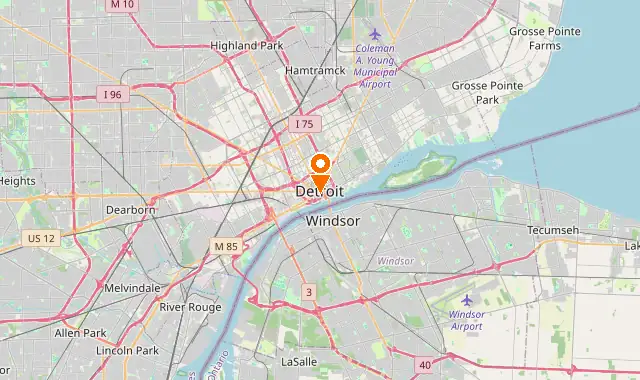
Local facts from Wikipedia and Wikidata, retrieved 2026-10-25. Population and area describe the city itself; the drain coverage counted on this page spans the wider area around it.
The line is yours to the alley, and the city says clean it yearly
Detroit's allocation of responsibility is unusually clear, and unusually far reaching. City guidance states that property owners are responsible for the sewer infrastructure on their parcels, and specifically for cleaning the sewer service line, the pipe that carries wastewater from the house to the city sewer pipe, which in most cases runs under the alley. DWSD maintains the city collection system itself. In practice, the long run under your side yard or drive and out to the alley connection sits on your side of the ledger.
The same guidance carries a maintenance instruction that surprises people: DWSD recommends cleaning the sewer service line at least once per year to keep it flowing properly. That advice makes sense in a city of clay laterals and mature trees, where a year of root growth through a joint can take a line from slow to backed up across one wet season. A scheduled annual cleaning, at the low end of the $99-$450 standard range when the line is healthy, is cheaper and calmer than an emergency visit at the $150-$700 end with sewage already in the basement.
Cleaning is not the whole of the owner's job, though. The guidance also covers what goes into the line, and Detroit kitchens carry the same grease risk as anywhere. Fats poured down a sink coat a clay line just as happily as a plastic one, and on a wall already narrowed by root hairs or scale roughness, grease is frequently the layer that closes the pipe. The cheapest drain maintenance in Detroit is a coffee can by the stove for cooking fat, emptied into the trash.
Two city programs that exist because of 2021
Because the 2021 flood exposed how many private laterals were already damaged, Detroit built publicly funded routes into lateral work that most cities simply leave to homeowners. When DWSD assessed areas after that event, it found nearly 30 percent of private lateral service lines damaged. That finding sits behind both programs below, and it is worth knowing before you pay privately for work the city may be funding on your street.
The Basement Backup Protection Program is the infrastructure focused one. Funded through the Detroit Future Fund and federal relief money, it sends city contractors to designated neighbourhoods to clean and televise laterals, repair or replace defective sections, disconnect downspouts and extend them away from foundations, and install backwater valves and sump pumps. It works in phases tied to flood history, and applications for earlier phases have closed with wait lists, so treat it as a real program with windows, not a standing offer. Check DWSD's resources page for the current status before assuming your home is or is not covered.
The Private Sewer Repair Program is the income qualified route. Expanded with HUD funding after the 2021 flood, it helps residents at or below 80 percent of area median income repair flood damaged private laterals, and the expansion alone was announced as reaching 75 more neighbourhoods. If your lateral is damaged and money is tight, this program is the first call to make, before signing anything. DrainFlowed contractors are independent businesses and cannot enrol you in either program, but knowing the programs exist changes the order in which you spend your own money.
Roots, grease and winter: the Detroit maintenance year
Detroit drains follow a seasonal rhythm set by the climate record: 36.6 inches of precipitation a year, 29.1 inches of snow, about 3.7 heavy rain days, and those 126 freeze days. Spring thaw and spring rain test laterals that roots have been quietly narrowing all winter. Summer storms test the combined system's capacity and your backwater protection. Autumn is when a sensible owner schedules the annual cleaning DWSD recommends, before the line has to perform through freeze season with a full load of holiday cooking going down it.
Roots deserve their own sentence in any Detroit drain conversation. The city's street trees and yard trees are old, their root systems are wide, and a clay joint with a hairline opening is an invitation that never expires. Root cutting with a cable restores flow, typically within the $200-$650 main line range, but roots regrow into the same opening. A camera after the cutting tells you whether you are managing a sound pipe with one bad joint, which can be managed for years, or watching a lateral come apart at several joints, which is a replacement conversation.
Winter adds one more specific failure: the slow freeze of rarely used drains and shallow branches in unheated spaces. Basement laundry sinks and floor drains that sit idle can lose their trap water or freeze at the margins in the coldest stretches. Running water through idle fixtures every few weeks through winter costs nothing and closes off a whole category of odor and freeze calls. In a city with this much old housing, the owners who fare best treat the drain system as a thing with a calendar, not a thing that only exists when it fails.
The yearly cleanout, run like a furnace check
Detroiters already maintain one ageing system on a calendar: the furnace gets its autumn check whether it complained or not. DWSD's guidance invites the same treatment for the other system in a pre 1960 house. The department advises cleaning the sewer service line at least once a year, and in a city where 77.8 percent of homes predate 1960 and their clay laterals run to an alley connection, that advice is calibrated to the stock rather than written as boilerplate.
A yearly rhythm only pays if the visit is used well. The cleaning itself is the floor, not the ceiling. Every few years the same appointment should carry a camera, so the household accumulates a dated record of the lateral's condition: which joints hold roots, whether any section is deforming, how the line compares with its last portrait. A backwater valve, where one is fitted, belongs on the same checklist, exercised and confirmed working before the spring storms rather than discovered stuck during one.
Timing within the year is a household choice with a local logic. Autumn cleaning, after leaf fall and before the freeze sets in at depth, sends the line into winter clear and into the spring melt with full capacity. Spring cleaning answers a winter that already happened and catches root growth at its first surge. Either beats the third option, which is the emergency call placed while sewage is standing in the basement and the calendar is making the decisions.
Keep the paperwork the way you would for the furnace: date, contractor, what was found, what the camera showed. A Detroit house changes hands with its systems' histories as part of its value, and a lateral with ten years of clean reports is a different object from a lateral nobody has looked at since the war. In the oldest housing stock in this set, the log book is not fussiness. It is how an owner proves the pipe under the yard has been a maintained asset all along.
What drain work costs in Detroit, and how booking works
Detroit jobs price out against the published national ranges. The list for Detroit: a standard cleaning at $99-$450, main line work at $200-$650, sewer line cleaning at $250-$900, hydro jetting at $300-$900, a camera inspection at $125-$500 and an emergency visit at $150-$700. In Detroit terms, a single slow fixture in a sound line sits at the low end. A clay main line that needs root cutting and a camera, which is the classic Detroit call, sits in the middle of two ranges at once, and any lateral excavation is a separate, larger job that should only follow footage of actual damage.
DrainFlowed is a connection service, not a plumbing company, and the contractor who comes to your home is an independent local business that sets its own final price within the range you discuss. Call (866) 555-0134, describe which fixtures are affected and whether rain is part of the pattern, and verify the contractor's licence and insurance before work begins. Mention any city program correspondence you have, because a lateral already televised under a DWSD program gives the contractor a head start and may save you a duplicate inspection.
If the contractor's findings suggest a damaged lateral, pause before authorising a private repair and check the two city routes in the section above. The order of operations in Detroit, uniquely among the cities on this site, sometimes runs through City Hall first. That is not delay. That is how this city rebuilt the program landscape after 2021, and using it is simply knowing how your own city works.
Drain services available in Detroit
The services that answer Detroit's lead problems, from the independent contractors who cover the city. Ranges are the national typical ranges used across this site.
| Service | Typical range | What it is |
|---|---|---|
| Drain Cleaning | $99-$450 | The core service: mechanical cleaning that clears the clog and scrapes the pipe walls, not just a hole poked through the blockage.. |
| Main Line Cleaning | $200-$650 | When every drain in the house slows at once, the problem is the main line. |
| Sewer Line Cleaning | $250-$900 | The buried line from your house to the street: root cutting, scale removal and jetting, with camera proof of the pipe's condition.. |
| Hydro Jetting | $300-$900 | High-pressure water that scours pipe walls clean - the answer for grease, scale and lines that keep re-clogging after cabling.. |
| Drain Camera Inspection | $125-$500 | See inside the pipe before you spend on the fix: roots, cracks, bellies and blockages located precisely, with footage to decide on.. |
| Emergency Drain Cleaning | $150-$700 | Sewage backing up, water rising, guests arriving: what counts as a drain emergency, what to do in the first ten minutes, and how the visit works.. |
Full detail on every service, with signs and causes, is on the services hub, and every range on the site is collected in the cost guide.
Detroit coverage snapshot
Nearby covered cities: Dearborn Heights, Taylor, Westland, Livonia.
Detroit sewer and water resources
The city and utility pages this page's local facts rest on, worth bookmarking if you own a home in Detroit:
Sources for this page
- housing age and mix: Median year built 1947, 77.8 percent pre 1960, 12.5 percent built 1960 to 1979, 4.5 percent post 2000, 329,393 units, 71.4 percent single family (source)
- climate: 36.6 in annual precipitation, 29.1 in snow, 126 freeze days, 3.7 heavy rain days per year (2014 to 2023 average) (source)
- sewer lateral responsibility: Property owner is responsible for the sewer service line from the house to the city sewer connection, usually under the alley; DWSD advises cleaning it at least once per year and maintains the city collection system (source)
- city programs: Basement Backup Protection Program (DWSD, 11 neighbourhoods, backwater valves, lateral repair, downspout disconnection) and Private Sewer Repair Program (income eligible at or below 80 percent AMI) followed the June 25 to 26, 2021 flood; DWSD found nearly 30 percent of assessed private laterals damaged (source)
- water hardness: Total hardness average 103 ppm (range 95 to 118 ppm) in the City of Detroit 2020 Water Quality Report, water tested by GLWA; moderately hard (source)
- Housing age: median year built and build-era shares (US Census Bureau ACS)
- Weather averages: 2014-2023 daily record (Open-Meteo archive, ERA5)
Coverage around Detroit
Areas and neighbourhoods in and around Detroit
Calls also come in from Redford and the streets between them. Those areas sit inside the same coverage, on the same contractor rounds.
Redford
Nearby cities we cover in Michigan
- Drain cleaning in Dearborn Heights, MI
- Drain cleaning in Taylor, MI
- Drain cleaning in Westland, MI
- Drain cleaning in Livonia, MI
- Drain cleaning in Dearborn, MI
- Drain cleaning in Grand Rapids, MI
- Drain cleaning in Lansing, MI
- Drain cleaning in Ann Arbor, MI
The full list for the state is on the Michigan locations page.
Beyond Detroit
Coverage at this depth continues nearby: see drain cleaning in Grand Rapids, MI and drain cleaning in Lansing, MI, each written from its own city's data the same way this page is.
Questions, answered
Sewage backed into my basement during a storm. What do I do first?
Start by protecting the basement: keep people and valuables away from sewage, stop running water in the house, and document the damage. Then check whether the city is running help for your area. DWSD's Basement Backup Protection Program has installed backwater valves and repaired laterals in the hardest hit neighbourhoods, and the separate Private Sewer Repair Program covers income eligible owners. Applications have opened and closed in phases, so verify current status with the city.
Who is responsible for the sewer line from my Detroit house to the alley?
You do. Detroit guidance puts the sewer service line on the property owner from the house all the way to the connection at the city sewer pipe, which in most cases sits under the alley, and DWSD advises cleaning that line at least once a year. A camera inspection shows whether a backup is a cleaning problem or a damaged lateral.
Does Detroit have a program that helps pay for sewer line repairs?
Two, with different doors. The Basement Backup Protection Program, run by DWSD, covers backwater valves, sump pumps, downspout disconnection and lateral repair in designated neighbourhoods with a history of rain event backups, and has operated in phases. The Private Sewer Repair Program is income based, for households at or below 80 percent of area median income with flood damaged laterals. Check current availability with the city before counting on either.
Can Detroit winters freeze my drains?
Detroit averages 126 freeze days a year, so shallow lines, unheated crawl spaces and traps in vacant rooms all live close to freezing for months. Most buried laterals sit below the frost line and are fine. If a drain slows only in the coldest weeks and recovers in a thaw, say so on the call, because the remedy differs from a blockage.
How much does drain cleaning cost in Detroit?
Expect $99-$450 for a standard cleaning, $200-$650 for main line work and $125-$500 for a camera inspection. In a pre 1960 house, budget the camera into your thinking from the start, because it decides whether you are maintaining a sound clay line or planning around a damaged one. The contractor confirms the range with you before any work begins.
Why do backups cluster during heavy rain in Detroit?
Because in much of Detroit the same system carries stormwater and sewage together, and older areas were built around that combined design. A hard rain can fill the city sewer faster than it can drain, and the pressure finds the lowest openings, which are basement fixtures connected through old laterals. DWSD's own guidance centres on backwater valves and downspout disconnection for exactly this reason.
Is Detroit water hard enough to scale my pipes?
Not very. Detroit water, tested by the Great Lakes Water Authority, averaged about 103 ppm total hardness in the city's 2020 water quality reporting, which is moderately hard. Scale plays a minor role here compared with roots, grease and the condition of clay pipe that has been in the ground since before 1960.
Drain problem in Detroit? Make the call
A live person answers around the clock. Describe the problem, hear the likely range, and get an independent local contractor on the way.
(866) 555-0134 Tap to call nowA live person answers, day or night. Describe the problem, hear the likely range, then decide.