Drain cleaning in Atlanta, GA - Fulton County - 127 ZIP codes covered
Drain Cleaning in Atlanta, GA
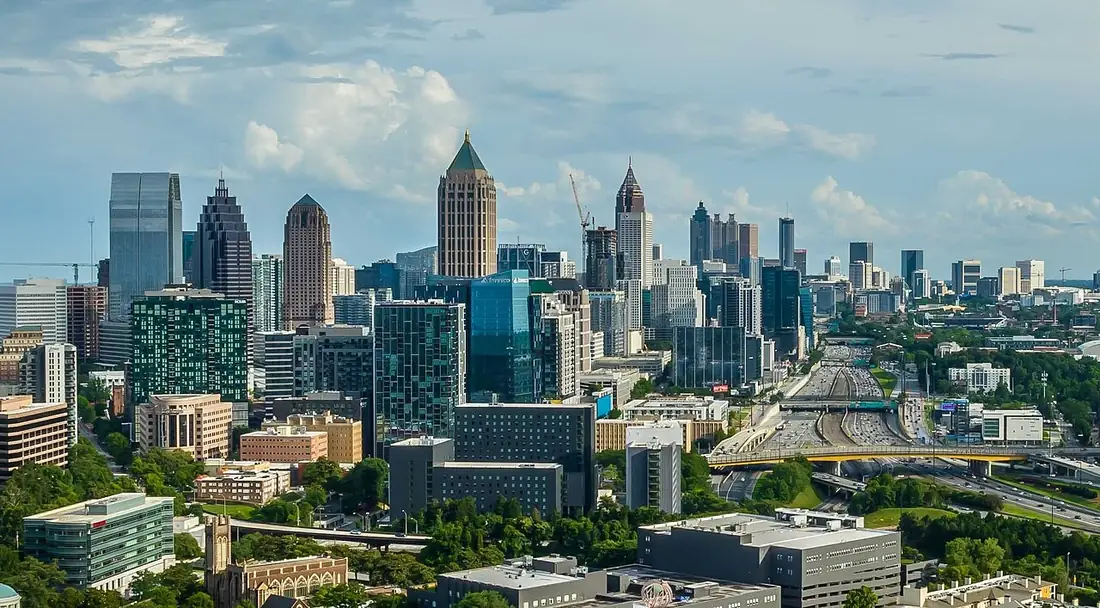
Atlanta breaks the pattern of this flagship set. Its housing is the newest here, median year built 1989, with 41.4 percent of homes built after 2000 and only 25.3 percent before 1960. By the logic of the northern pages, drains should be the least of this city's worries. Then the other numbers arrive: 59.6 inches of rain a year, about 14.1 heavy rain days, a famous tree canopy rooting over the older neighbourhoods, and a sewer system that has spent a generation under federal consent decrees, first for combined sewer overflows in 1998 and then for the wider collection system. Atlanta's drain story is not old pipes everywhere. It is a young city wrapped around an old core, in a very wet climate. DrainFlowed connects you with an independent local contractor. Call (866) 555-0134.
The entire lateral is the owner's: Atlanta's plain rule
Atlanta states its lateral rule with unusual completeness. Guidance published by the city through ATL311, updated in February 2025, says that the maintenance and repair of the entire sewer service lateral is the property owner's responsibility. Entire is the operative word. There is no split at the property line in the city's formulation, no public way exception of the Chicago kind, and no rebate programme of the Los Angeles kind attached to soften it. The Department of Watershed Management maintains the public mains. The line that connects your building to those mains is yours, all of it.
The practical consequence is that Atlanta owners should think about their lateral the way they think about their roof: a private asset with a finite life, whose condition is their information to gather and their cost to carry. That mindset changes the value of a camera inspection. At $125-$500 it is not an upsell in Atlanta. It is the survey of an asset you wholly own, and its findings decide whether you are budgeting for periodic cleaning or for a repair that, unplanned, arrives as an emergency with a much worse negotiating position.
One procedural habit follows from the rule. When several drains back up at once, report the problem to ATL311 first, on 404-546-0311, before paying anyone. If the blockage turns out to be in the city's main, that is the city's work and the city's bill. If the main is clear, you have lost an hour and gained certainty that the lateral, and the invoice, are yours. In a city with this rule, that phone call is the cheapest diagnostic step available.
Drain problems we handle in Atlanta
The problems Atlanta's own housing, ground and weather produce most. The full symptom list is on the problems hub; these are the ones that earn their place here.
Recurring Clogs in Atlanta
A clog that returns is not bad luck. It is an undiagnosed cause - roots, scale, a belly, or a cleaning that never removed the material..
Slow Drain in Atlanta
One slow fixture is a narrowing pipe. Several slow fixtures are a main-line warning. How to tell the difference and what fixes each..
Multiple Drains Backing Up in Atlanta
Several drains failing together is the main line or sewer until proven otherwise. Stop the water, protect the floor, make the call..
A young city with an old core: reading Atlanta's two stocks
The census figures describe a city of two layers. The outer and newer layer dominates the totals: median build year 1989, 41.4 percent of the 265,899 housing units built after 2000, only 25.3 percent before 1960. That layer drains through modern plastic laterals, and its drain problems are mostly content problems, grease, hair, wipes and habits, solved by cleaning and behaviour. If your home is in this layer and your drain clogs, the pipe is an unlikely suspect and an expensive camera is rarely the first move.
The inner layer is where Atlanta's drain reputation is earned. The pre 1960 and 1960 to 1979 stock, together about 42.6 percent of homes, concentrates in the intown neighbourhoods where the canopy is densest and the sewers are oldest. Those laterals are clay and cast iron, jointed, and old enough to have hosted decades of root pressure. In this layer, recurring clogs invert the diagnosis: the pipe is the prime suspect, contents are the accomplice, and a camera is the correct first serious spend.
The single family share, 41.4 percent, matches the detached figure exactly by coincidence in this data set, and it underlines who carries these decisions. Atlanta drain choices are made household by household, with no building management to share them. The intown owner of a 1928 bungalow and the suburban owner of a 2015 build are both fully responsible for their laterals, but they are responsible for very different objects, and this page is mostly written for the first of them.
The cleanout detail in the city's guidance is easy to skim past and expensive to ignore. Atlanta's 311 information describes the cleanout as the direct access point to the sewer drain and notes that in homes built within roughly the last forty five years it is usually near the front of the house, sometimes buried under soil. For the intown stock older than that window, there may be no usable exterior cleanout at all, which means every camera run and every cable job begins with an access problem: work through a pulled toilet, a roof vent, or a newly installed cleanout the owner pays to add. Owners of pre 1970s Atlanta homes who install a proper cleanout during any other drain work are making the single best investment available in their system's future, because every subsequent inspection, cleaning and repair becomes faster, cheaper and more thorough the moment real access exists.
About Atlanta: the local snapshot
Atlanta is the capital and most populous city of the U.S. state of Georgia.
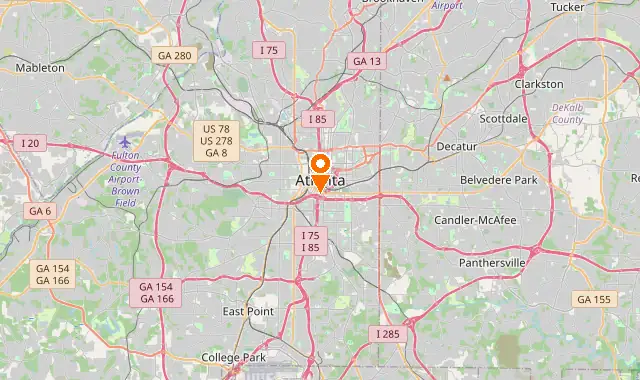
Local facts from Wikipedia and Wikidata, retrieved 2026-10-25. Population and area describe the city itself; the drain coverage counted on this page spans the wider area around it.
Consent decrees, combined sewers, and the Chattahoochee
Atlanta's sewer history is written in court orders. In 1998 the city signed a federal consent decree on combined sewer overflows, settling Clean Water Act litigation brought after storms washed sewage toward the Chattahoochee River and its tributaries. The decree committed Atlanta to an accelerated programme to end water quality violations from its combined sewers, the old intown network where one pipe carries stormwater and sewage together. A second consent decree in 1999 addressed the wider collection system, sanitary sewer overflows, treatment centres and pump stations, and the work was later extended, with remaining sewer projects running toward a July 2027 deadline at a cost measured in billions.
For a homeowner, this history is not trivia. It explains why intown Atlanta, despite the city's young average age, has a combined sewer problem of the northern kind: in a hard storm, the combined system surcharges, and a private lateral that is cracked or half closed by roots becomes the path of least resistance for water looking for somewhere to go. It also explains the city's institutional focus. Atlanta has spent twenty five years and enormous sums reducing overflow volumes, by the Department of Watershed Management's account some 99 percent, but every gallon of that achievement sits downstream of your lateral.
The household translation is the familiar one, with local weight behind it. Keep the private line fully open, because in a combined area a restricted lateral fails first and worst. Treat a rain linked backup as a system signal, report it, and get the line camera checked in dry weather. And if you are buying an older intown home, put a sewer scope in the purchase process. In the city of the consent decrees, it is the inspection most specific to the place.
59.6 inches of rain under a tree canopy
Atlanta's rainfall is the second highest in this set after Houston: 59.6 inches a year, arriving with about 14.1 heavy rain days. That water feeds the city's defining feature, its canopy, and the canopy returns the favour underground. Mature oaks and pines over older neighbourhoods send root systems through exactly the soil where clay laterals lie, and a joint that leaks moisture in a wet climate advertises itself constantly. Root intrusion is, by wide local agreement among the contractors who work these lines, the leading cause of sewer failure in the older stock, with the rainfall as its full time accomplice.
Rain also works the system from above ground. Fourteen heavy rain days a year load the combined intown sewers, infiltrate cracked laterals with groundwater, and reveal every marginal slope and partial restriction on a schedule no homeowner chooses. A line that drains adequately in a dry week and fails in a wet one is not haunted. It is measured, repeatedly, and the measurement says its capacity is smaller than its job.
Between storms, the same climate keeps soil moist and roots growing for most of the year, with only 33 freeze days and 1.9 inches of snow to interrupt. Atlanta root problems therefore recur on a shorter leash than northern ones. A root mass cut in early spring has warmth and water to regrow with immediately, which is why intown owners with known root joints are better served by a planned cutting or jetting interval, priced in daylight, than by the emergency version of the same work after the next big rain.
Grease, the second decree, and what the city manages on its side
One element of Atlanta's second consent decree deserves a homeowner's attention because it reaches into the kitchen. The city's sewer improvement programme included a grease management programme alongside pipe rehabilitation and capacity work. Grease is not a side issue in a collection system. It is a leading builder of blockages in mains and laterals alike, congealing in cool sections of pipe, binding with wipes and solids, and narrowing lines from the wall inward until a heavy use day finishes the job.
In the private lateral, the grease story is entirely within the household's control, which makes it the cheapest risk in this entire page to eliminate. Cooled cooking grease goes in a container and into the trash, never into the sink, and pans get wiped before they get washed. In a newer Atlanta home on plastic pipe, that single habit removes the most likely cause of a clog altogether. In an older home, it removes the accomplice that turns a root narrowed line into a blocked one.
The pairing of grease discipline with root management covers most of Atlanta's recurring clog problem between them. What remains after those two are handled, a line that still slows or backs up, has earned its camera inspection honestly, and the footage in that case usually finds the third actor: the pipe itself, offset, cracked, or bellied, in a section whose repair can then be planned rather than discovered at the worst moment of the wet season.
Buying intown: the sewer scope as an Atlanta ritual
Nowhere in this set has the pre purchase sewer scope become as standard a ritual as in older intown Atlanta, and the city's own guidance structure explains why. When the entire lateral is the owner's responsibility, when the intown stock includes clay lines approaching a century old, and when the seller's disclosure tells you little about buried pipe, the camera run during a buyer's inspection period is the only moment the pipe gets an advocate. Local practice, described in Atlanta guidance aimed at buyers of older homes, treats the scope as the document that converts the lateral from an unknown into a priced fact before the contract closes.
What the scope is looking for is specific to this city's ground. It checks for root entry at clay joints under the canopy, for offsets where soil and time have shifted a rigid line, for the low belly that will hold water and solids, and for the cleanout itself, which in homes older than the last forty five years or so may be absent, buried, or unusable, a finding that changes the price of every future job. It also establishes the most useful negative in Atlanta real estate: a modern or renewed lateral, in verified condition, on a street where the neighbours' lines are failing on schedule.
For sellers, the same logic runs in reverse. A recent scope with a sound report is a salable document in intown Atlanta, and a scope that finds a problem allows the repair to be made, or priced, in calm conditions rather than discovered by the buyer's inspector at the worst negotiating moment. Either way, the camera's footage outlives the transaction. It becomes the baseline record of an asset the new owner wholly owns, in the city that assigns that ownership more completely than any other in this set.
Atlanta pricing for a two layer city
The standard ranges govern here. Standard drain cleaning runs $99-$450, main line cleaning $200-$650, sewer line cleaning $250-$900, hydro jetting $300-$900, a camera inspection $125-$500, and an emergency visit $150-$700. Which end of those ranges an Atlanta job occupies tracks the two layer story closely: newer stock with a content clog sits low, intown stock with roots, jetting and a camera sits high, and any lateral repair is quoted separately once its location and condition are proven.
DrainFlowed is a connection service. When you call (866) 555-0134, give the year the home was built, whether the problem follows rain, and whether it has happened before, and you will be connected with an independent local contractor. Verify licence and insurance, agree the range before work starts, and remember the ATL311 step: for a whole house backup, a quick report first can establish whether the problem is the city's main, which is not your bill, before the contractor's meter starts running.
Atlanta's closing lesson is about its calendar. With heavy rain arriving fourteen or so times a year and roots growing nearly year round, waiting is not a neutral choice here. It is a decision to meet a known problem later, wetter, and at emergency prices. The owners who handle this city's drains best treat the dry week after the first warning as the appointment window it actually is.
Drain services available in Atlanta
The services that answer Atlanta's lead problems, from the independent contractors who cover the city. Ranges are the national typical ranges used across this site.
| Service | Typical range | What it is |
|---|---|---|
| Drain Cleaning | $99-$450 | The core service: mechanical cleaning that clears the clog and scrapes the pipe walls, not just a hole poked through the blockage.. |
| Clogged Drain Repair | $120-$550 | For the drain that is already blocked: diagnosis first, then the right fix, so the same clog does not come back next month.. |
| Main Line Cleaning | $200-$650 | When every drain in the house slows at once, the problem is the main line. |
| Sewer Line Cleaning | $250-$900 | The buried line from your house to the street: root cutting, scale removal and jetting, with camera proof of the pipe's condition.. |
| Hydro Jetting | $300-$900 | High-pressure water that scours pipe walls clean - the answer for grease, scale and lines that keep re-clogging after cabling.. |
| Drain Camera Inspection | $125-$500 | See inside the pipe before you spend on the fix: roots, cracks, bellies and blockages located precisely, with footage to decide on.. |
Full detail on every service, with signs and causes, is on the services hub, and every range on the site is collected in the cost guide.
Atlanta coverage snapshot
Nearby covered cities: Alpharetta, Roswell, Sandy Springs, Red Oak.
Atlanta sewer and water resources
The city and utility pages this page's local facts rest on, worth bookmarking if you own a home in Atlanta:
Sources for this page
- housing age and mix: Median year built 1989, 25.3 percent pre 1960, 41.4 percent post 2000, 41.4 percent single family, 265,899 units (source)
- climate: 59.6 in annual precipitation, 14.1 heavy rain days, 33 freeze days, 1.9 in snow per year (source)
- sewer lateral responsibility: City of Atlanta via ATL311 (updated Feb 2025): maintenance and repair of the entire sewer service lateral is the property owner's responsibility (source)
- combined sewer and consent decrees: 1998 CSO consent decree and 1999 collection system consent decree under Clean Water Atlanta; combined sewers in older areas (source)
- Housing age: median year built and build-era shares (US Census Bureau ACS)
- Weather averages: 2014-2023 daily record (Open-Meteo archive, ERA5)
Coverage around Atlanta
Nearby cities we cover in Georgia
- Drain cleaning in Alpharetta, GA
- Drain cleaning in Roswell, GA
- Drain cleaning in Sandy Springs, GA
- Drain cleaning in Red Oak, GA
- Drain cleaning in Augusta, GA
- Drain cleaning in Savannah, GA
- Drain cleaning in Columbus, GA
- Drain cleaning in Gainesville, GA
The full list for the state is on the Georgia locations page.
Beyond Atlanta
Coverage at this depth continues nearby: see drain cleaning in Augusta, GA and drain cleaning in Savannah, GA, each written from its own city's data the same way this page is.
Questions, answered
Who is responsible for the sewer lateral in Atlanta?
You are, for the whole run. City of Atlanta guidance published through ATL311 states that maintenance and repair of the entire sewer service lateral is the property owner's responsibility. The Department of Watershed Management maintains the public mains, not the line from your building to them.
Does Atlanta have combined sewers?
Older intown areas are served by combined sewers that carry stormwater with sewage, the system at the heart of Atlanta's 1998 CSO consent decree and its ongoing work toward a 2027 deadline on the remaining sewer programme. In a hard storm, a combined area line and a restricted private lateral are a poor combination, which is why rain linked backups here deserve a camera diagnosis.
Why does my drain keep clogging after it was cleaned?
Usually roots, a regrown joint, or buildup that was pierced rather than removed. Atlanta's canopy over older clay and iron laterals, plus 59.6 inches of rain a year feeding root growth, makes recurrence the default diagnosis until a camera proves otherwise. The inspection runs $125-$500.
Can an Atlanta cold snap cause drain trouble?
It can, as a contributor. Atlanta averages 33 freeze days a year, enough for occasional cold snaps to stress exposed plumbing, but frozen drains are not the local pattern. Cold linked gurgling that clears with a thaw is more likely a vent effect; slowness that persists is the pipe.
How much does drain cleaning cost in Atlanta?
A single line is $99-$450, main line cleaning $200-$650, sewer line cleaning $250-$900, and hydro jetting $300-$900. A camera inspection is $125-$500 and emergency work $150-$700. In the older intown stock, root work pushes jobs toward the upper ends.
Several drains are backing up at once. What comes first?
Start by reporting it to ATL311 on 404-546-0311 if a city main problem is possible, since you should not pay to fix the city's portion. If the main is clear, the pattern points at your lateral, and that is a main line cleaning job in the $200-$650 range, followed by a camera look if it has happened before.
Drain problem in Atlanta? Make the call
A live person answers around the clock. Describe the problem, hear the likely range, and get an independent local contractor on the way.
(866) 555-0134 Tap to call nowA live person answers, day or night. Describe the problem, hear the likely range, then decide.