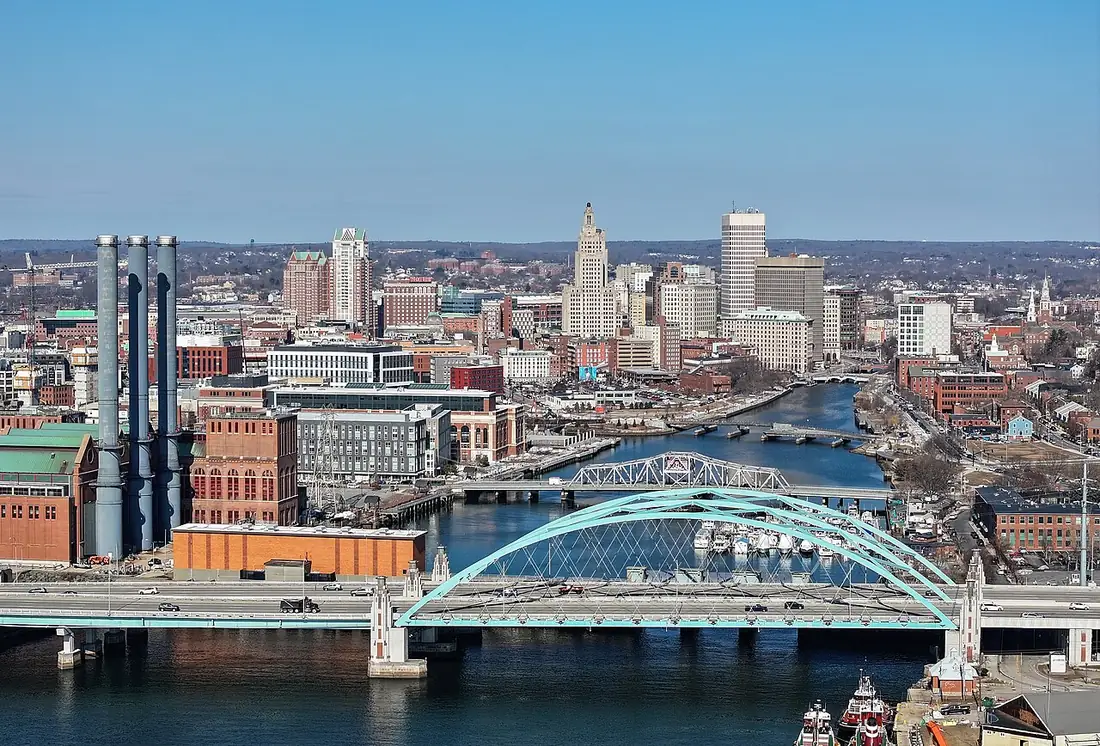
Drain cleaning in Providence, RI - Providence County - 12 ZIP codes covered
Drain Cleaning in Providence, RI
Providence is the smallest city in this group and, pipe for pipe, possibly the most concentrated. Its 190,934 residents live in just 53 square kilometres, in a housing stock with a median build year of 1938, the oldest here, where 67.5 percent of homes predate 1960 and only 30.1 percent are single family. This is a triple decker city: multi unit buildings where one clay lateral and one cast iron stack serve several households stacked on top of each other. Underneath it all, the Narragansett Bay Commission has spent decades building one of the largest combined sewer overflow tunnel systems in New England to stop storm driven sewage reaching the bay. Above ground, the work is more modest and more personal: keep an old shared line clear through 105 freeze days, 36.3 inches of snow and 10.9 heavy rain days a year. Standard drain cleaning runs $99-$450.
A tunnel 270 feet down, built for the rain you see at street level
Start underground, because Providence's defining drain fact is invisible from the sidewalk. The Narragansett Bay Commission, NBC, owns and operates the region's wastewater treatment and the combined sewer overflow program built to clean up Narragansett Bay. Its centrepiece, completed in the first phase by October 2008, is a deep rock tunnel about 16,284 feet long with a 26 foot inside diameter, set at an average depth of roughly 270 feet, with drop shafts and adits feeding it. The tunnel collects combined sewage during wet weather, stores it, and pumps it to treatment instead of letting it overflow to the bay. Project reporting records about a billion gallons captured in its first period of operation, and later phases extend the same approach toward Pawtucket, Central Falls and East Providence.
Why should a homeowner care about a tunnel deeper than most buildings are tall. Because it confirms what your basement already suspects: Providence's older sewers combine sanitary flow and stormwater, the system was designed in the late 1800s and early 1900s in that combined form, and rain is a sewer event in this city, not just a weather event. When heavy rain fills the collection system, capacity upstream of that tunnel is finite, and a building whose own line is narrowed by roots or scale is the building that complains first. The tunnel has reduced overflows at the regional scale. It has not widened your lateral by a millimetre.
The climate numbers give the tunnel plenty to do. Providence averaged 49.7 inches of precipitation a year over 2014 to 2023, with 10.9 heavy rain days, the joint highest pattern of storm frequency in this group, plus 36.3 inches of snow whose melt arrives as a second, slower flood. A backup history that tracks either rain or thaw belongs in the first sentence of any booking call here. It is the difference between a diagnosis aimed at the building and one that also weighs the system the building drains into.
Drain problems we handle in Providence
The problems Providence's own housing, ground and weather produce most. The full symptom list is on the problems hub; these are the ones that earn their place here.
Multiple Drains Backing Up in Providence
Several drains failing together is the main line or sewer until proven otherwise. Stop the water, protect the floor, make the call..
Drain Odors in Providence
Sewer smell, rotten-egg smell, sour buildup smell.
Recurring Clogs in Providence
A clog that returns is not bad luck. It is an undiagnosed cause - roots, scale, a belly, or a cleaning that never removed the material..
Gurgling Drains in Providence
Gurgling is air moving where it should not - displaced by a partial blockage or a vent problem. It is one of the earliest main-line warnings..
1938 housing and the triple decker drainage problem
No city in this group is older at the median than Providence. A median build year of 1938, 67.5 percent of homes built before 1960, 14.0 percent from 1960 to 1979 and only 8.4 percent after 2000, across 79,423 housing units, describes a stock that was substantially complete before plastic pipe existed. The default building drain is cast iron, the default lateral is sectional clay, and the default failure pattern is the slow narrowing of both: iron scaling and channelling inside, roots working the clay joints outside, until a line that served a building for eighty years starts failing its busiest hour of the week.
The 30.1 percent single family share is the other half of the diagnosis. Most Providence properties are multi unit, the classic triple decker form among them, where three households share one stack and one lateral. Shared drainage creates shared illusions. The ground floor reports the backup and assumes its own drains caused it, while the actual restriction sits in the common run and the actual load came from every floor. Cleaning one unit's branch in that situation is theatre. The building needs the main line assessed, at $200-$650, with a camera, at $125-$500, run through the shared cleanout, and the findings shared with whoever owns the building, because the fix and the bill both belong at building level.
For owners of these properties, the camera file is a management asset. It shows joint by joint root severity, iron condition, and any belly holding water, and it converts tenant complaints from anecdote to evidence. Keep it with the lease records. A building that can show a buyer or a tenant exactly what its eighty eight year old lateral looks like inside is a building whose drains will be maintained on a schedule instead of on a scream.
Student and multi family turnover adds a Providence rhythm the suburbs never see. Buildings near the city's colleges and hospitals change occupants on academic and contract calendars, and incoming tenants inherit drains whose recent history left with the previous household. Owners who clean and camera shared lines at turnover, rather than at complaint, catch the grease load and the wipes accumulation of the departing year while the units are empty and access is free. It is unglamorous property management, and in a housing stock built when Theodore Roosevelt was a young man, it is the difference between maintenance and archaeology.
About Providence: the local snapshot
Providence is the capital and most populous city of the U.S. state of Rhode Island.
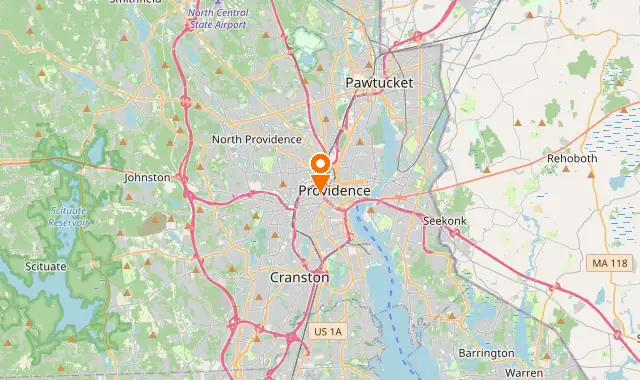
Local facts from Wikipedia and Wikidata, retrieved 2026-10-25. Population and area describe the city itself; the drain coverage counted on this page spans the wider area around it.
Freeze, snow and the long Providence winter
Providence ties Pittsburgh for the coldest profile in this group: 105 freeze days a year, 36.3 inches of snow, the second heaviest snowfall here, and rain on top of it. Winter stresses old drainage in specific ways. Shallow laterals and lines under porches or unheated garages narrow as standing water in low sections skins with ice. Grease that a September line carries away sets hard in a January line. Traps in little used basement fixtures dry or siphon until sewer odor enters rooms that were fine in October, a complaint that peaks in exactly the months when windows stay shut and nobody can air the evidence out.
Snow storage is a plumbing act in a dense city. Piles placed over cleanouts and area drains hide the access and the warning points a crew needs in an emergency, and meltwater from those piles finds every crack in the ground around your foundation and lateral trench. Keep the cleanout location marked before the first storm, in a way that survives ploughing. If a plough berm must live somewhere, it should not live on top of the one cap that stands between a routine cleaning and an excavation.
Melt timing matters for booking, too. A line that complains every March is describing its slope and joints under saturated, thawing ground. Schedule its camera work for that season if you can, because infiltration and standing water show themselves honestly then, while an August inspection of the same line can look deceptively respectable. Contractors who work Providence know this calendar. Use it, and you will get findings that predict your worst month instead of describing your best one.
Responsibility, stated honestly for Providence
This page treats the Providence responsibility question differently from the others, on purpose. In most cities here, a utility or code source states the lateral split in one quotable sentence. The sources reviewed for Providence establish the structure without that single sentence. The Narragansett Bay Commission's Use of the Wastewater Facilities rules govern connections to its system, define a combined sewer as one intended to receive both wastewater and storm runoff, and distinguish direct connections to Commission facilities from indirect connections that reach them through other sewers. City sewers sit between most Providence buildings and the Commission's facilities. Rather than invent a crisp boundary the research did not verify, this page leaves the precise split to be confirmed for your address with the city and the Commission.
That honesty has a practical shape. What you can control is the evidence. A camera inspection with locating places a defect by distance from the building, on your property or beyond it, and that located finding is what any responsibility conversation with the city or the Commission will be built on. Get it in writing, with the date and the footage file, before repair is priced by anyone. If a contractor quotes major work without located evidence in a city where the boundary needs confirming, slow the process down. The footage is cheaper than the argument.
DrainFlowed's own position is constant across every city on this site. It is a connection service that links you with independent local contractors. It does not perform the work, set the final price, or warrant the result. Verify your contractor's license and insurance directly with them. What changes in Providence is only the homework: one extra confirmation about the boundary, done with the footage in hand, before the digging decision. That is a small price for a city that buried its sewer solution 270 feet down to get its own facts straight.
Tenants can help more than they are usually asked to. In a triple decker, the household that notices a drain slowing in June and says so is giving the building a cleaning sized problem. The household that says nothing until the February backup is giving it an emergency sized one, in the hardest month to work in. Owners who respond to early reports with thanks and a booked visit, rather than with a lecture about what goes in the toilet, get told about the next slowdown early too. Providence's old pipes reward that culture measurably, in invoices that stay in the cleaning ranges instead of the emergency ones.
Soft water in an old pipe city
Providence water is soft on the figures compiled from utility data: about 40 mg/L of hardness in the Aquatell compilation for the city, and about 42.4 mg/L in utility reported data compiled for Rhode Island, roughly 2.4 to 2.5 grains per gallon either way. At that level, mineral scale is a bit player. Fixtures crust slowly, water heaters sediment lightly, and no honest diagnosis of a Providence sewer backup starts with water chemistry when clay joints, iron scale of the corrosion kind, roots and shared loads are all standing in line ahead of it.
Name the iron point correctly, because the two kinds of scale get confused. Providence's cast iron problem is not mineral deposit left by hard water. It is the pipe's own material oxidising and roughening from inside over eight decades, until the bore is a gravel road for hair, grease and paper. Jetting, at $300-$900, can scour a sound iron or clay line back to a workable surface. It cannot restore metal that has thinned away, and on the oldest stacks the camera sometimes delivers that verdict. Hearing it from footage, with a repair plan priced calmly, beats hearing it from a collapse during the holidays with emergency service, at $150-$700, as the opening line item.
Odors follow the same logic. In a soft water, old pipe, multi unit city, a persistent drain odor is most often a dry or defective trap, a venting fault, or organic buildup in a narrowed shared line. Each has a distinct fix and a distinct price, and none of them is solved by fragrance. Report where the smell is strongest, which floor, and when it peaks. In a triple decker, that geography is the diagnosis's first draft.
Booking for a building, not just a drain
Book Providence work as building work. Tell the contractor the unit count, the build era, where the main cleanout is, whether the problem tracks rain, melt or laundry day, and which unit reports it. Standard cleaning at $99-$450 fits a single branch problem. A shared main restriction is main line work at $200-$650, and in stock this old the camera belongs in the same visit unless recent footage already exists. Sewer line services run $250-$900. Get the scope in writing, with located findings, and a recommendation that distinguishes cleaning intervals from repairs in plain terms.
If you own or manage the property, leave the visit with three artefacts: the footage, a note of joint and material condition by distance, and a maintenance interval based on observed root regrowth rather than on a sales calendar. If you are a tenant, your contribution is precision: report slowness early, while it is still a cleaning, instead of loyalty testing the line until it backs up into your kitchen. Owners who hear about slow drains in week one spend cleaning money. Owners who hear about them in month three spend emergency money.
Call (866) 555-0134 to be connected with an independent local contractor through DrainFlowed. In the oldest, densest, wettest per square kilometre city in this group, the winning habit is documentary: know your cleanout, keep your footage, respect the melt calendar, and let evidence, in a city of tunnels and triple deckers, do the arguing.
Drain services available in Providence
The services that answer Providence's lead problems, from the independent contractors who cover the city. Ranges are the national typical ranges used across this site.
| Service | Typical range | What it is |
|---|---|---|
| Drain Cleaning | $99-$450 | The core service: mechanical cleaning that clears the clog and scrapes the pipe walls, not just a hole poked through the blockage.. |
| Main Line Cleaning | $200-$650 | When every drain in the house slows at once, the problem is the main line. |
| Sewer Line Cleaning | $250-$900 | The buried line from your house to the street: root cutting, scale removal and jetting, with camera proof of the pipe's condition.. |
| Drain Camera Inspection | $125-$500 | See inside the pipe before you spend on the fix: roots, cracks, bellies and blockages located precisely, with footage to decide on.. |
| Bathroom Drain Cleaning | $99-$400 | Hair, soap scum and toothpaste: tubs, showers and bathroom sinks cleared at the trap and the branch, not just at the surface.. |
| Emergency Drain Cleaning | $150-$700 | Sewage backing up, water rising, guests arriving: what counts as a drain emergency, what to do in the first ten minutes, and how the visit works.. |
Full detail on every service, with signs and causes, is on the services hub, and every range on the site is collected in the cost guide.
Providence coverage snapshot
Nearby covered cities: Cranston, Warwick, Pawtucket, East Providence.
Providence sewer and water resources
The city and utility pages this page's local facts rest on, worth bookmarking if you own a home in Providence:
Sources for this page
- combined sewer: NBC three phase CSO program with deep rock tunnel about 16,284 feet long, 26 foot diameter at about 270 feet depth, operating since November 2008 capturing combined flow (source)
- sewer rules and definitions: NBC Use of the Wastewater Facilities rules define combined sewer and direct and indirect connections, no single published lateral split verified in sources reviewed (source)
- water hardness: Providence hardness about 40 mg/L, 2.4 grains per gallon, soft, per Aquatell compilation from municipal reports (source)
- housing age: Median year built 1938, 67.5 percent pre 1960, 30.1 percent single family, ACS 2024 5 year (source)
- Housing age: median year built and build-era shares (US Census Bureau ACS)
- Weather averages: 2014-2023 daily record (Open-Meteo archive, ERA5)
Coverage around Providence
Nearby cities we cover in Rhode Island
- Drain cleaning in Cranston, RI
- Drain cleaning in Warwick, RI
- Drain cleaning in Pawtucket, RI
- Drain cleaning in East Providence, RI
- Drain cleaning in Woonsocket, RI
The full list for the state is on the Rhode Island locations page.
Beyond Providence
Coverage at this depth continues nearby: see drain cleaning in Jacksonville, FL and drain cleaning in Milwaukee, WI, each written from its own city's data the same way this page is.
Questions, answered
Who is responsible for my building sewer in Providence?
This page does not state a single split, because the sources reviewed for it did not publish one clean boundary for Providence the way other cities here do. What is established is the structure: building sewers connect through city sewers to Narragansett Bay Commission facilities under the Commission's Use of the Wastewater Facilities rules. Confirm the boundary for your address with the city and the Commission, and use located camera findings, $125-$500, to place any defect before repair is priced.
What is the big tunnel under Providence for?
The Narragansett Bay Commission built a three phase Combined Sewer Overflow program around a deep rock tunnel, about 16,284 feet long and 26 feet in diameter at roughly 270 feet below grade, which captures combined flow and sends it to treatment. The first phase has operated since November 2008 and captured about a billion gallons in its first period of operation. For your building, heavy rain still loads the combined system, so a narrowed house line backs up sooner during storms.
My Providence triple decker was built in the 1920s. What should I expect?
Very likely in original materials. With 67.5 percent of homes built before 1960, a median year of 1938 and only 30.1 percent single family stock, most Providence properties drain through clay laterals and cast iron stacks in multi unit buildings, unless renovated. Shared lines serve several households, so a backup in the lowest unit is a building problem to diagnose at the main, not a single flat's clog.
Is Providence water hard?
Utility compiled figures put Providence water at about 40 to 42 mg/L of hardness, roughly 2.4 to 2.5 grains per gallon, which is soft. Mineral scale is a minor factor here. Slow drains in Providence are overwhelmingly an age, roots, grease and shared load story, not a hardness story, and a water treatment pitch should not displace a camera inspection.
What does drain cleaning cost in Providence?
Standard drain cleaning runs $99-$450, main line cleaning $200-$650, hydro jetting $300-$900, sewer line services $250-$900, camera inspection $125-$500, and emergency service $150-$700. The independent contractor confirms the amount for your building, access and unit count before work starts. DrainFlowed is a connection service and does not set the final price.
Why do problems cluster around snowmelt?
Melt is a load event here. Providence averages 36.3 inches of snow and 10.9 heavy rain days a year. A thaw sends sustained meltwater into a combined system while saturated, cold soil surrounds every shallow lateral. If stoppages cluster in late winter and early spring, report that timing. It points the camera at slope, standing water and joint condition rather than at a simple blockage.
Drain problem in Providence? Make the call
A live person answers around the clock. Describe the problem, hear the likely range, and get an independent local contractor on the way.
(866) 555-0134 Tap to call nowA live person answers, day or night. Describe the problem, hear the likely range, then decide.