Drain problem, diagnosed
Why do my drains smell?
Sewer smell, rotten-egg smell, sour buildup smell: each points to a different cause, from a dry trap you can fix today to a cracked line.
Drain odors have addresses. A sewer smell in a basement is usually a dry floor-drain trap. A sour, old-food smell at the kitchen sink is decomposing sludge inside the pipe. A rotten-egg note near one bathroom drain is often biofilm in the trap and overflow. Locating the smell - which room, which fixture, constant or after water use - narrows the cause before anyone picks up a tool, which is why this page is organised by smell and source rather than by product.
Most drain smells are hygiene problems in the pipes rather than emergencies, but they should not be waved away either. A smell means something is sitting in the system that should not be: stagnant water, decomposing material, or sewer gas crossing a barrier that exists precisely to stop it. One of those causes - sewer gas entering through a failed trap or a cracked pipe - deserves prompt attention, because the trap system is a health barrier, not just a comfort feature.
What this symptom usually means
Start with two questions. Is the smell there all the time, or mainly after running water? A constant smell suggests sewer gas finding a steady path: a dry trap, a cracked pipe, a failed seal. A smell that blooms when water runs suggests disturbed buildup: water moving over a sludge layer or through a partial clog releases the odor as it goes. And is it one fixture or the whole house? One fixture is local - trap, overflow, or that branch. Everywhere, especially with gurgling or slowness, points at the main line or venting.
Rotten-egg smell deserves a special note: it is hydrogen sulfide, produced by bacteria breaking down material in drains and also present in sewer gas. At drain-odor levels it is a nuisance and a signal, not an acute danger, but a strong, persistent rotten-egg smell throughout a house should be checked promptly - and if it arrives suddenly and strongly, treat it seriously and ventilate while you call.
The likely causes
A dry trap
The water seal in a little-used drain - a floor drain, a guest bathroom - evaporates over weeks, opening a straight path for sewer gas. The most common whole-room sewer smell, and the simplest fix.
Sludge and grease buildup
Kitchen lines especially: a coating of grease and food residue decomposes inside the pipe and smells through the sink.
Biofilm in traps and overflows
The black, slimy growth on hair and soap residue in bathroom traps and tub overflow channels produces a sour, musty odor.
A partial blockage
Material sitting in a line instead of passing through it will smell, and the smell strengthens as the blockage matures.
A cracked or leaking pipe
A damaged drain or sewer section lets gas (and sometimes wastewater) escape where it should not - often behind walls or under floors.
Vent problems
A blocked vent can let traps siphon dry or push sewer gas toward fixtures under load.
How urgent is it?
A smell at one fixture with normal drainage is a routine call. A sewer smell that is strong, house-wide, or new after years of none deserves a prompt visit, because it suggests a barrier failure - a dry trap at best, a cracked line or vent fault at worst. Smell plus slow drains or gurgling together means the system has a blockage as well as an odor, and that combination should not wait.
The fix that matches
The elegant cases fix fast: refill the dry trap (and a little mineral oil slows it drying again), clean the trap and overflow, or mechanically clean the sludge-coated line so the source is physically removed. Odor work fails when it is cosmetic - scented products over a sludge layer - and succeeds when the material causing it comes out of the pipe, which is the professional standard here.
Where the cause is a crack or a vent fault, the visit becomes diagnosis: smoke or camera work can locate a break, and trap and vent faults are identified by testing. You should be told which cause was found, shown it where possible, and given the repair options in ranges. A smell nobody can source after basic checks is a legitimate reason for a camera inspection, not a mystery to live with.
What it typically costs
Odor work that resolves with trap service or a standard line cleaning falls in the usual $99-$450 range. Diagnosis that needs a camera inspection falls in the $125-$500 inspection range. Repairs to a cracked section are priced separately once the damage is located and seen, always in a range agreed before work - and the location work is what makes that repair price honest instead of exploratory.
Keeping it from coming back
- Refill little-used drains - floor drains, guest baths, spare sinks - with a bucket of water every few months to keep their traps sealed.
- Keep grease out of the kitchen line; yesterday's grease is next month's smell.
- Clean stoppers and overflow openings when you clean the bathroom; biofilm starts there.
- Treat a new smell as information and note when it started and where it is strongest - that history speeds diagnosis enormously.
- Never mask a persistent sewer smell with fragrance for months; the barrier fault behind it does not improve with time.
Talk it through with a local contractor
Describe the symptom and how long it has been happening. You will hear the likely cause and the price range for the matching fix before you book anything.
(866) 555-0134 Tap to call nowA live person answers, day or night. Describe the problem, hear the likely range, then decide.
Questions, answered
Why does the smell come and go?
Traps dry and refill, water use disturbs buildup, and wind and pressure changes move air through vents. An intermittent pattern is still diagnostic - note what triggers it (laundry day, rain, a particular fixture) and tell the technician, because the trigger usually points at the cause.
Is the smell from my drain harmful?
Ordinary drain odor is mostly a nuisance signal. Sewer gas in quantity is unhealthy, which is why a strong, constant sewer smell should be checked rather than tolerated. The trap water seals in your home exist to keep it out; a smell means one of those seals or pipes is not doing its job.
I poured bleach down and it helped for a day. Why?
Bleach kills surface bacteria and masks odor briefly, but it does not remove the sludge, mat or dry trap causing the problem - and repeated bleach use is hard on traps and seals. Removing the source material is the fix that lasts.
The smell is worst in the basement. What is it likely to be?
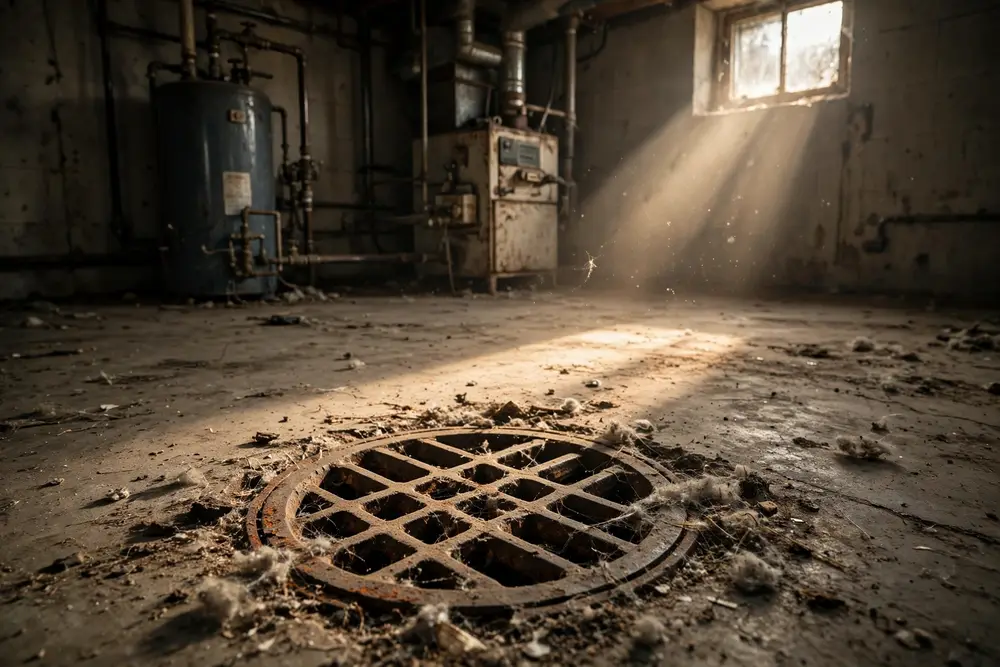
First suspect is the floor drain trap, dried out from disuse - the single most common basement sewer smell. Pour a bucket of water in and wait a day. If the smell survives a full trap, a camera look at the line and a vent check are the next steps.
Can a smell mean my sewer line is broken?
It can, especially a constant sewer smell with no dry trap to explain it, or a smell concentrated near one wall or floor area. A crack lets gas escape continuously. Camera inspection is how that suspicion is confirmed and the break located precisely.