
Drain cleaning in Columbus, OH - Franklin County - 87 ZIP codes covered
Drain Cleaning in Columbus, OH
Columbus is the growth story in this group, and its drains reflect a city of two halves. The median home was built in 1980, only 25.2 percent predate 1960, and 23.9 percent were built after 2000, so large parts of the city drain through modern PVC laterals that fail in modern ways. But the older core tells a different story, one the city itself has organised around: wet weather surcharging that pushes sewage into basements, answered by a named program, Project Dry Basement, that has fitted backflow prevention devices since 2004, and by Blueprint Columbus, which lines private laterals to keep rain out of sanitary sewers. Which Columbus you live in decides which problem you are solving. DrainFlowed connects homeowners across the city with independent local contractors, and standard drain cleaning runs $99-$450.
Project Dry Basement comes first, because timing decides eligibility
Most city pages bury their programs. Columbus earns the opposite treatment, because this one has a clock on it. Project Dry Basement, the city's sewer backflow prevention program, began in July 2004 and covers the cost of an approved backflow prevention device for single and two family homes in Columbus that have experienced sewer backups from surcharging of the public sewer system during wet weather or blockages. The condition that catches people out is procedural. You must report your basement backup to the 24 hour Sewer Maintenance Operations Center, SMOC, at 614-645-7102, and keep the service request number you are given. A backup that was never reported is a backup the program cannot easily act on.
Do that call before you call anyone else, including us. It costs nothing to report, it starts the eligibility record, and city guidance for Columbus says to call the city first so it can check its own main. If the crew finds a public problem, that is the city's to address. If the problem is in your lateral, you will know that from the check rather than from a guess, and you can then book a contractor with the right problem in hand. DrainFlowed connects you with independent local contractors at (866) 555-0134 for that private side work.
Once a device is installed under the program, the maintenance duty is yours and it is specific. The city instructs owners to inspect and clean the backflow device monthly, cleaning the flapper and its seat with dish soap and a soft brush, nothing acidic or corrosive, and keeping the lid properly tightened so the alarm works in a backwater condition. A backwater valve that is never cleaned is a valve that may not seal on the one night it is needed. Put the monthly check on the same list as the furnace filter, and show anyone house sitting where the valve access is.
Drain problems we handle in Columbus
The problems Columbus's own housing, ground and weather produce most. The full symptom list is on the problems hub; these are the ones that earn their place here.
Multiple Drains Backing Up in Columbus
Several drains failing together is the main line or sewer until proven otherwise. Stop the water, protect the floor, make the call..
Slow Drain in Columbus
One slow fixture is a narrowing pipe. Several slow fixtures are a main-line warning. How to tell the difference and what fixes each..
Recurring Clogs in Columbus
A clog that returns is not bad luck. It is an undiagnosed cause - roots, scale, a belly, or a cleaning that never removed the material..
Gurgling Drains in Columbus
Gurgling is air moving where it should not - displaced by a partial blockage or a vent problem. It is one of the earliest main-line warnings..
One code line for the whole lateral
Columbus draws its responsibility line at the far end of your pipe. City Code section 1145.05 makes the property owner responsible for maintaining the building sewer to the point of connection with the publicly owned sewer, and summaries of the central Ohio codes note that Columbus names no stopping point short of that connection, not the property line and not the curb. Several suburbs adopt the same Columbus chapter into their own codes, so the rule travels with the metro more than owners expect. The practical meaning is consistent: the section under your lawn, the section under the sidewalk, and the section under the street edge are all maintained at your expense.
That reach is why locating matters so much here. A defect described as somewhere underground is an open cheque. A defect located by camera and surface marker at a stated distance and depth, relative to your property line and the connection, is a scope of work. Main line cleaning runs $200-$650 and a camera inspection $125-$500, and in Columbus the camera's locating function is worth as much as its pictures, because the code makes the whole run your concern.
The call the city first habit protects you under this rule too. If the public main is blocked, city crews address the main. If you excavate your lateral first and the cause was in the main, you have spent private money on a public problem. Report, get the main checked, keep the service request number, and keep every invoice and camera file with the house records. In a code regime this owner weighted, documentation is not bureaucracy. It is how you prove what was yours and what was not.
About Columbus: the local snapshot
Columbus is the capital and most populous city of the U.S. state of Ohio.
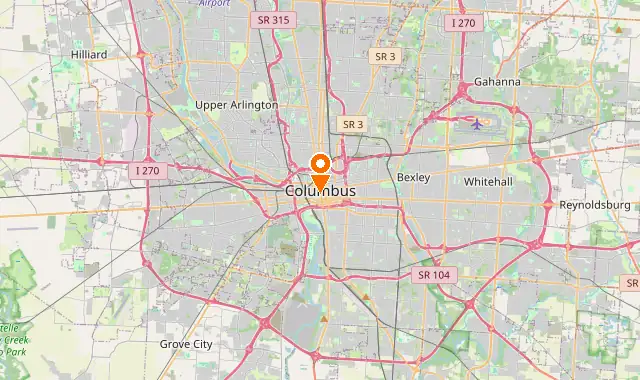
Local facts from Wikipedia and Wikidata, retrieved 2026-10-25. Population and area describe the city itself; the drain coverage counted on this page spans the wider area around it.
A young city overall, with an old sewer core
Columbus's numbers explain its split personality. Across 425,182 housing units, more than in any other city in this group except Jacksonville, the median build year is 1980. Homes from 1960 to 1979 make up 24.6 percent, post 2000 homes 23.9 percent, and pre 1960 homes 25.2 percent. The newer majority drains through PVC laterals where the typical findings are grease, wipes, settled bellies in trench backfill and the occasional construction debris legacy, rather than the root carved clay joints of the older Ohio cities. Cleaning a modern line is usually about restoring full diameter and correcting habits, and the prognosis afterward is good.
The older core is a different system in age and partly in kind. Published summaries put Columbus at about 156 miles of combined sewer against 2,626 miles of sanitary sewer, with the combined mileage described as the oldest part of the collection system, serving downtown and surrounding areas, with 19 combined discharge points along the Olentangy, the Scioto and Alum Creek. A homeowner near that core can face the classic combined city pattern of wet weather surcharging, which is precisely the pattern Project Dry Basement was built for. A homeowner in a post 2000 subdivision faces none of that, and should be sceptical of any sales conversation that imports downtown's problems to their street.
Single family homes are 54.6 percent of the stock, with the balance in the multi unit and rental property that a state capital and a very large university generate. In shared buildings, the diagnostic rule holds: the lowest fixture reports the shared line's condition. Owners should schedule cleaning on the building's calendar rather than the tenant's emergency, and keep the footage. It settles deposit and responsibility arguments with evidence instead of recollection.
Renters and owners split this knowledge unevenly in Columbus, and closing the gap is practical. If you rent out a home in the older core, tell your tenants in writing what to do in a storm backup: stop water use, call you, and know that the city report to SMOC is the step that protects everyone, including them. Tenants who improvise with a plunger and a mop for six hours before calling turn a reportable public event into an undocumented private loss. The lease is a plumbing document in a surcharge city, whether it was drafted as one or not.
Blueprint Columbus and the rain that enters through your own pipes
Columbus's second program attacks the cause upstream of the backup. Blueprint Columbus, approved by Ohio EPA in 2015 as an alternative to parts of the city's earlier wet weather plan, targets inflow and infiltration, rain and ground water entering sanitary sewers through cracks, joints and improper connections. Its four pillars are lining private sewer laterals, redirecting roof water away from house perimeters, installing sump pumps, and building green infrastructure, and the city describes a rollout across 21 neighbourhoods over thirty years, with construction in each area generally running eighteen to twenty four months. Three of the four pillars happen on private property, which is why residents encounter the program at their own foundations.
The connection to your drains is direct. A cracked lateral does not only leak sewage out. During wet weather it leaks storm driven groundwater in, adding your share to the volume that surcharges mains and backs up basements downhill and downstream. Lining seals those joints. That is also why a camera finding of infiltration, water weeping through joints on a wet day, deserves more attention than the same footage on a dry day might suggest. It is your pipe acting as a drain for the whole street's groundwater.
Code summaries note that within designated program areas the city pays for the corrective measures it installs on private property, and the owner is afterward responsible for maintaining the lined lateral, redirected downspouts and sump pump, with later repair or replacement at the owner's cost and any warranty transferring to the owner. If your neighbourhood has had Blueprint work, tell the contractor before they clean or quote anything. A lined lateral is cleaned differently from a raw clay one, and damaging a liner with the wrong cutter head converts a city investment into your repair bill.
Softened water, freeze days, and the rest of the Columbus picture
Columbus treats its water to a chosen hardness rather than accepting whatever the rivers provide. The city reports softening to an average of about 120 parts per million, roughly 7 grains per gallon, described as moderately hard, and explains the target as a balance, since very soft water can be corrosive to home plumbing. At that level, scale accumulates slowly in water heaters and at fixtures. It is a maintenance footnote, not a leading cause of drain failure, and any contractor who puts a softener at the centre of a sewer conversation in Columbus is changing the subject. Mention fixture crusting if you see it, then return to the pipe.
The climate data adds one surprise. Columbus recorded 103 freeze days a year on 2014 to 2023 data, the highest count in this ten city group alongside Pittsburgh, with 46.8 inches of precipitation, 19.7 inches of snow and 7.4 heavy rain days. Freeze days at that count mean shallow lines, unheated crawlspaces and seldom used basement fixtures deserve the same winter attention colder cities give them. A trap that dries or a line that narrows in deep cold announces itself as odor or slowness that mysteriously improves in spring. Note the season when you report symptoms. It is diagnostic information, not small talk.
Growth itself is the last factor. A city adding housing at Columbus's pace has constant trench work, utility crossings and young landscaping whose roots will matter in fifteen years, not today. For newer homes, the drain task is mostly discipline: grease in the bin, wipes in the bin, and a camera check before any warranty conversation if a line has been slow since move in. Construction debris in a new lateral is a known finding, and the time to document it is early.
One more growth related habit is worth adopting in the newer districts. Keep the cleanout visible as landscaping matures. Columbus subdivisions plant fast, mulch deep and edge aggressively, and a cleanout buried under three seasons of mulch and a decorative rock is a cleanout that does not exist at midnight in the rain. A small marker or a photographed location note in the house file preserves access that the builder provided and the garden quietly removed. It is the sort of detail that never appears in a sales brochure and decides real visits every week.
Booking in Columbus, in the right order
The Columbus order of operations is unusually definite, so follow it. Storm backup: report to SMOC first at 614-645-7102, keep the number, limit water use, then arrange private diagnosis. Dry weather stoppage: book the contractor directly, and expect the work to sort the line into standard cleaning at $99-$450, main line cleaning at $200-$650, hydro jetting at $300-$900 for grease heavy or coated lines, or a camera inspection at $125-$500 where age, recurrence or a repair decision justifies it. Emergency service runs $150-$700.
Tell the contractor three local facts about your property: whether the home is in or near the older combined core, whether it has a Project Dry Basement device or Blueprint Columbus work, and whether the problem tracks rain. Each fact changes the visit. A backwater device needs its monthly maintenance state checked. A lined lateral needs liner safe tooling. A rain linked pattern needs infiltration looked for, not just a blockage cleared. Contractors are independent businesses connected through DrainFlowed, which is a connection service only. Verify license and insurance with the contractor, and keep their report with your city paperwork.
Done in that order, a Columbus drain problem usually resolves into one of three clear outcomes: a public surcharge with a program path, a private restriction with footage and a price range, or a maintenance habit with a date on the calendar. All three are manageable. The expensive version is the one where nobody reported the storm, nobody ran a camera, and the same basement floods twice.
Drain services available in Columbus
The services that answer Columbus's lead problems, from the independent contractors who cover the city. Ranges are the national typical ranges used across this site.
| Service | Typical range | What it is |
|---|---|---|
| Drain Cleaning | $99-$450 | The core service: mechanical cleaning that clears the clog and scrapes the pipe walls, not just a hole poked through the blockage.. |
| Clogged Drain Repair | $120-$550 | For the drain that is already blocked: diagnosis first, then the right fix, so the same clog does not come back next month.. |
| Main Line Cleaning | $200-$650 | When every drain in the house slows at once, the problem is the main line. |
| Sewer Line Cleaning | $250-$900 | The buried line from your house to the street: root cutting, scale removal and jetting, with camera proof of the pipe's condition.. |
| Drain Camera Inspection | $125-$500 | See inside the pipe before you spend on the fix: roots, cracks, bellies and blockages located precisely, with footage to decide on.. |
| Emergency Drain Cleaning | $150-$700 | Sewage backing up, water rising, guests arriving: what counts as a drain emergency, what to do in the first ten minutes, and how the visit works.. |
Full detail on every service, with signs and causes, is on the services hub, and every range on the site is collected in the cost guide.
Columbus coverage snapshot
Nearby covered cities: Grove City, Dublin, Dayton, Akron.
Columbus sewer and water resources
The city and utility pages this page's local facts rest on, worth bookmarking if you own a home in Columbus:
Sources for this page
- city programs: Project Dry Basement since July 2004 covers cost of approved backflow device for single and two family homes after reported public sewer surcharge backups, report to SMOC 614-645-7102, monthly device cleaning required (source)
- sewer lateral responsibility: Columbus City Code 1145.05 owner maintains building sewer to point of connection with public sewer, no property line stopping point (source)
- combined sewer: About 156 miles combined sewer in oldest downtown system versus 2,626 miles sanitary, 19 discharge points, Blueprint Columbus pillars include lining private laterals (source)
- water hardness: City of Columbus softens water to about 120 ppm, roughly 7 grains per gallon, moderately hard, for corrosion control (source)
- housing age: Median year built 1980, 25.2 percent pre 1960, 425,182 housing units, ACS 2024 5 year (source)
- Housing age: median year built and build-era shares (US Census Bureau ACS)
- Weather averages: 2014-2023 daily record (Open-Meteo archive, ERA5)
Coverage around Columbus
Areas and neighbourhoods in and around Columbus
Calls also come in from Amlin, Blacklick, Galloway and the streets between them. Those areas sit inside the same coverage, on the same contractor rounds.
AmlinBlacklickGalloway
Nearby cities we cover in Ohio
- Drain cleaning in Grove City, OH
- Drain cleaning in Dublin, OH
- Drain cleaning in Dayton, OH
- Drain cleaning in Akron, OH
- Drain cleaning in Toledo, OH
- Drain cleaning in Youngstown, OH
- Drain cleaning in Canton, OH
- Drain cleaning in Lorain, OH
The full list for the state is on the Ohio locations page.
Beyond Columbus
Coverage at this depth continues nearby: see drain cleaning in Cleveland, OH and drain cleaning in Cincinnati, OH, each written from its own city's data the same way this page is.
Questions, answered
Who is responsible for the sewer lateral in Columbus?
Columbus City Code section 1145.05 makes the property owner responsible for maintaining the building sewer, the lateral, all the way to the point of connection with the publicly owned sewer, with no stopping point at the property line or curb. A camera inspection, $125-$500, with locating, confirms where a defect sits along that run.
What is Project Dry Basement and how do I qualify?
Project Dry Basement is the city's sewer backflow prevention program, running since July 2004. It covers the cost of an approved backflow prevention device for single and two family homes that have experienced backups from surcharging of the public sewer during wet weather or blockages. You must report the backup to the 24 hour Sewer Maintenance Operations Center at 614-645-7102 and keep the service request number.
My basement backed up during a storm. What should I do first?
Report it immediately, because the program requires the incident on record. Call the Sewer Maintenance Operations Center at 614-645-7102, keep the service request number you are given, and limit water use while the system is surcharged. Then have your own lateral checked, since a private restriction and a public surcharge can coexist and only the public caused part fits the program.
How hard is Columbus water?
Columbus reports softening its water at the plant to an average of about 120 parts per million, roughly 7 grains per gallon, described as moderately hard, and chosen as a balance for corrosion control, since very soft water can be corrosive to home plumbing. Expect modest scale over time in hot water equipment rather than severe buildup.
What does drain cleaning cost in Columbus?
Standard drain cleaning runs $99-$450, main line cleaning $200-$650, hydro jetting $300-$900, sewer line services $250-$900, camera inspection $125-$500, and emergency service $150-$700. The independent contractor confirms the price for your line before work begins. DrainFlowed is a connection service and does not set the final price.
What is Blueprint Columbus doing on private property?
Blueprint Columbus is the city's program to cut rain driven inflow and infiltration, the water that enters sanitary sewers through cracks and improper connections and causes overflows and basement backups. Its pillars include lining private sewer laterals, redirecting roof drainage, installing sump pumps and building green infrastructure, rolled out neighbourhood by neighbourhood over many years. After city work in a designated area, owners maintain the lined lateral and other measures.
Drain problem in Columbus? Make the call
A live person answers around the clock. Describe the problem, hear the likely range, and get an independent local contractor on the way.
(866) 555-0134 Tap to call nowA live person answers, day or night. Describe the problem, hear the likely range, then decide.