
Drain cleaning in Nashville, TN - Davidson County - 39 ZIP codes covered
Drain Cleaning in Nashville, TN
Nashville is the wettest city in this batch by a wide margin. The ten year record averages 66.3 inches of precipitation a year, with 16.3 heavy rain days, more than triple the count in drier cities on this list. That water tests every joint in every private sewer service line in Davidson County, and Metro ordinances place that line, from the building all the way to the public main, on the property owner. Meanwhile the Clean Water Nashville program has been rehabilitating public sewers and thousands of private service laterals inside Metro rights of way. This page connects those threads: the rain load, the ownership rule, the rehabilitation program, and what a homeowner should do when several drains slow down at once.
Sixty six inches of rain, and what it does underground
Climate is the opening fact in Nashville because the numbers dominate everything else. An average of 66.3 inches of precipitation a year, spread across a system of older public sewers and private laterals, means the ground in Davidson County spends much of the year wet. Add 16.3 heavy rain days annually and only 55 freeze days, and the local drain story is not about ice. It is about volume: storm after storm loading soil, raising groundwater, and finding every crack where a private line has opened up.
Metro Water Services is candid about why it cares about private lines. Deteriorated or damaged service lines leak in both directions. Sewage can escape into the ground, and groundwater and rain can pour in, overloading the public system and driving overflows and treatment costs. That two way leak is the mechanism behind a familiar Nashville pattern: a line that drains acceptably in dry weeks and struggles in wet ones, because rain is entering the pipe through defects and crowding out the wastewater trying to leave.
For a homeowner the implication is practical. If your slowdowns cluster in wet periods, say so when you call. That single observation moves the visit from routine cleaning toward inspection: where is water getting in, and where is material catching? Standard cleaning at $99-$450 still handles the buildup. But in the wettest city in this set, a recurring wet weather pattern is information about the pipe itself, and it deserves a camera, $125-$500, rather than a third identical clearing.
Davidson County geography sharpens the point. Nashville covers a large, hilly county where service lines in the older districts run long and slope through ground that stays saturated for weeks in the wet season. A line that crosses a low, damp stretch of its own yard lives with groundwater against its joints for much of the year, not just during storms. That is the physical backdrop to Metro concern about private lines leaking in both directions, and it explains why a Nashville lateral can pass a dry weather test, behave for a month, and then fail across one wet weekend. The pipe did not change that weekend. The water table did, and the joints were already waiting.
Drain problems we handle in Nashville
The problems Nashville's own housing, ground and weather produce most. The full symptom list is on the problems hub; these are the ones that earn their place here.
Multiple Drains Backing Up in Nashville
Several drains failing together is the main line or sewer until proven otherwise. Stop the water, protect the floor, make the call..
Slow Drain in Nashville
One slow fixture is a narrowing pipe. Several slow fixtures are a main-line warning. How to tell the difference and what fixes each..
Gurgling Drains in Nashville
Gurgling is air moving where it should not - displaced by a partial blockage or a vent problem. It is one of the earliest main-line warnings..
Your line runs to the main, and Metro says so in its ordinances
Ownership in Nashville is unambiguous. According to Metro ordinances, the property owner owns and is responsible for maintaining the sewer service line from the building to the public sewer main. Clean Water Nashville repeats the rule in plain language, and Metro Water Services guidance says the same: the private sewer service from the residence or business to the tap on the Metro sewer is the homeowner responsibility. There is no property line split to hide behind. The stretch under the yard, and the stretch reaching the tap, are both yours.
That rule shapes the economics of a Nashville backup. A root mass at the tap costs the same to clear as one at the foundation wall, and both are private bills. Main line cleaning runs $200-$650 nationally, and sewer line work $250-$900, before any repair decision. Because the whole run is yours, locating the problem precisely matters more here than in split responsibility cities. A camera that places the defect at a measured distance, in a named section of your line, turns an alarming symptom into a scoped job you can price properly.
One more Nashville specific detail helps future visits go faster. Clean Water Nashville rehabilitation work typically installs a cleanout near the boundary between private property and the Metro right of way, a capped vertical pipe in a utility box that gives direct access to the service line for cleaning and inspection. If your property has one, know where it is and keep it findable. A contractor who can open a boundary cleanout can test which side of the line holds the blockage in minutes, instead of starting every diagnosis from inside the house.
About Nashville: the local snapshot
Nashville is the capital and most populous city in the U.S. state of Tennessee.
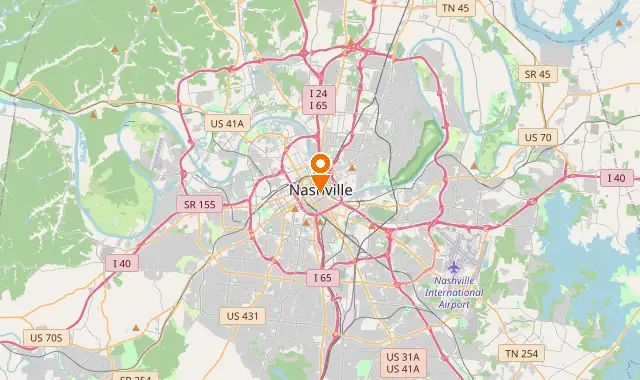
Local facts from Wikipedia and Wikidata, retrieved 2026-10-25. Population and area describe the city itself; the drain coverage counted on this page spans the wider area around it.
Clean Water Nashville, and the 6,500 laterals already rehabilitated
Nashville runs one of the more substantial sewer renewal efforts in this group. The Clean Water Nashville program exists to renew sewer infrastructure and reduce overflows that impair water quality, with rehabilitation projects spread across Davidson County. Its crews repair sewers in Metro rights of way and easements, under streets and alleys, along creeks, and in places along property boundaries. That public work regularly reaches the edge of private property, which is where the interesting part for homeowners begins.
The program reports that it has repaired approximately 6,500 service laterals to date, with the long term count in Metro rights of way and easements expected to reach into the tens of thousands. Depending on location and condition, a lateral rehabilitation means digging and replacing the pipe or installing a liner that seals and supports it, and in most cases a cleanout is added near the property boundary. Eliminating thousands of small leaks is the stated strategy: each sealed lateral keeps rain and groundwater out of a system that overflows when it fills with water that was never sewage.
What does that mean at your address? Two things. First, if Metro work is scheduled on your street, ask what it covers at the boundary, because a rehabilitated public side segment and a new cleanout can change what your own future maintenance looks like. Second, do not mistake the program for a transfer of ownership. The service line remains yours to maintain. The program is best understood as the city fixing its half of a shared problem, the half under streets and easements, while the run from your foundation to that boundary stays on your side of the ledger.
The rehabilitation count carries a quieter lesson about scale. Six and a half thousand laterals repaired sounds large until it is set against a county of private lines, and the program itself projects tens of thousands more within rights of way and easements over the long haul. Infiltration in Nashville is not a few bad actors. It is the accumulated condition of an aging private network meeting the wettest climate in this series. That framing should change how a homeowner hears a camera finding. A leaking joint at your address is not an accusation and it is not rare. It is the normal state of the stock, and fixing yours is a contribution to the same arithmetic the program is working at county scale.
How Nashville backups usually announce themselves
Because the private line here is long and the rain load is heavy, Nashville problems tend to present as patterns rather than single fixture dramas. Several fixtures slowing together points downstream, to the shared service line. Gurgling when a large appliance discharges points the same way: air displaced by water meeting a restriction. A single slow bathroom sink, in contrast, is usually local material at the trap or branch, and it is the cheapest call in drain work when it is caught early.
Wet weather adds a signature worth recognizing. Sewage odors after rain, slowness that appears in clusters during stormy weeks, or a basement or lowest level fixture that misbehaves only when the ground is saturated all fit the infiltration story Metro describes: rain entering through compromised joints and overwhelming a line that copes fine when it is dry. Metro also uses smoke testing to find compromised sections of public and private lines, watching for smoke rising where the pipe should be sealed. You cannot smoke test your own line from the kitchen, but you can report the timing pattern, which points the professional diagnosis in the same direction.
Urgency follows the pattern. One slow fixture with no other symptoms is a book it this week call. Several fixtures plus gurgling is a same day call, with water use kept light until the visit. Wastewater appearing where it should not is an emergency, $150-$700 nationally, and the first move is to stop adding water to the system. In a city with 16.3 heavy rain days a year, waiting out a main line warning because the weather turned dry is a gamble the calendar will punish within the month.
Grease, roots, and wipes: the three causes Metro names first
Ask Metro aligned sources what blocks Nashville lines and the same three culprits lead: grease, tree roots, and wipes that were sold as flushable and are not, in any practical sense, flushable at all. Grease coats a kitchen branch from the wall inward and traps food particles until the opening is a fraction of its size. Roots enter at joints, especially in older lines, and grow into mats that catch everything passing. Wipes do not break down like toilet paper. They snag, raft together, and turn a partial narrowing into a full stoppage at the worst bend in the line.
Each cause has a matched remedy, which is why naming the cause matters before choosing the tool. Grease responds to mechanical cleaning that scrapes the wall, and to hydro jetting at $300-$900 when the coating is established. Roots need cutting and then a decision, informed by camera footage, about whether the entry joint can be managed on an interval or should be lined or repaired. Wipe blockages clear well but return exactly as fast as the household habit that created them. A contractor who tells you which of the three they found, and where, has given you the prevention plan for free: change the input, or schedule the interval.
Prevention in Nashville is mostly discipline plus one structural check. Keep grease out of the kitchen line entirely, in a container to the trash. Treat only toilet paper as flushable, whatever the packet claims. And if roots were found once, put the line on a planned inspection rhythm instead of an emergency rhythm. The difference between those two rhythms, across a few years of Nashville rain, is roughly the difference between a $200-$650 main line cleaning you scheduled and a $150-$700 emergency you did not.
Rental and multifamily housing deserves a Nashville note as well, in a city growing as fast as this one. Tenants experience lateral problems as building problems: lowest floor symptoms, shared slowness, odors in common areas. Owners carry the service line under Metro ordinances regardless of who experiences the symptom, so the productive tenant report is a pattern report, dates, fixtures, and rain timing, and the productive owner response is a line level inspection rather than a fixture level one. Buildings that adopt that division of labor resolve Nashville drain problems in one visit. Buildings that do not tend to resolve them in four, at four times the inconvenience and roughly the same total spend.
Booking a Nashville drain visit without overpaying for the unknown
DrainFlowed connects you with an independent local contractor. It is a connection service, not the crew that arrives. The contractor who takes your Nashville job quotes it, schedules it, and stands behind the work. Reach the connection at (866) 555-0134, and have three facts ready: which fixtures are affected, whether the pattern tracks rainfall, and whether your property has a boundary cleanout from earlier Metro work. Those details route the visit correctly the first time, which is where most of the avoidable cost in drain work hides.
Hold the national ranges in mind as a sanity frame: standard drain cleaning $99-$450, main line $200-$650, hydro jetting $300-$900, sewer line work $250-$900, camera inspection $125-$500, emergency $150-$700. A single fixture cleaning and a full service line rehabilitation are different universes of work, and a careful contractor separates them in conversation: clean first, see the line, then price any repair as its own decision. Be wary of any visit that jumps from a slow drain to a major repair price without footage or a located defect in between.
Finally, remember the Nashville specific asset you may already own. If Clean Water Nashville previously rehabilitated the public side segment at your address or installed a cleanout, mention it. Work done in the right of way segment is documented public side history, and it narrows what remains unknown to your own run from the house. In the wettest city in this series, narrowing the unknown is not a small thing. It is most of the job.
Drain services available in Nashville
The services that answer Nashville's lead problems, from the independent contractors who cover the city. Ranges are the national typical ranges used across this site.
| Service | Typical range | What it is |
|---|---|---|
| Drain Cleaning | $99-$450 | The core service: mechanical cleaning that clears the clog and scrapes the pipe walls, not just a hole poked through the blockage.. |
| Clogged Drain Repair | $120-$550 | For the drain that is already blocked: diagnosis first, then the right fix, so the same clog does not come back next month.. |
| Main Line Cleaning | $200-$650 | When every drain in the house slows at once, the problem is the main line. |
| Sewer Line Cleaning | $250-$900 | The buried line from your house to the street: root cutting, scale removal and jetting, with camera proof of the pipe's condition.. |
| Drain Camera Inspection | $125-$500 | See inside the pipe before you spend on the fix: roots, cracks, bellies and blockages located precisely, with footage to decide on.. |
| Emergency Drain Cleaning | $150-$700 | Sewage backing up, water rising, guests arriving: what counts as a drain emergency, what to do in the first ten minutes, and how the visit works.. |
Full detail on every service, with signs and causes, is on the services hub, and every range on the site is collected in the cost guide.
Nashville coverage snapshot
Nearby covered cities: Memphis, Knoxville, Chattanooga, Clarksville.
Nashville sewer and water resources
The city and utility pages this page's local facts rest on, worth bookmarking if you own a home in Nashville:
Sources for this page
- climate: 66.3 in annual precipitation, 5.8 in snow, 55 freeze days, 16.3 heavy rain days per year, 2014 to 2023 average. No ACS housing block was present in the datapack for this city, so no housing age claims are made (source)
- sewer lateral responsibility: Per Metro ordinances the property owner owns and maintains the service line from the building to the public sewer main (source)
- city programs: Clean Water Nashville has repaired approximately 6,500 service laterals, by replacement or lining, typically adding a boundary cleanout, as part of overflow reduction rehabilitation (source)
- local fact infiltration: Metro Water Services notes deteriorated service lines leak sewage out and let groundwater and rain in, overloading the system and raising overflow and treatment costs; smoke testing is used to find compromised sections (source)
- Housing age: median year built and build-era shares (US Census Bureau ACS)
- Weather averages: 2014-2023 daily record (Open-Meteo archive, ERA5)
Coverage around Nashville
Areas and neighbourhoods in and around Nashville
Calls also come in from Antioch, Hermitage, Joelton, Madison, Old Hickory, Whites Creek and the streets between them. Those areas sit inside the same coverage, on the same contractor rounds.
AntiochHermitageJoeltonMadisonOld HickoryWhites Creek
Nearby cities we cover in Tennessee
- Drain cleaning in Memphis, TN
- Drain cleaning in Knoxville, TN
- Drain cleaning in Chattanooga, TN
- Drain cleaning in Clarksville, TN
- Drain cleaning in Murfreesboro, TN
- Drain cleaning in Johnson City, TN
The full list for the state is on the Tennessee locations page.
Beyond Nashville
Coverage at this depth continues nearby: see drain cleaning in Memphis, TN and drain cleaning in Knoxville, TN, each written from its own city's data the same way this page is.
Questions, answered
Who is responsible for the sewer service line at a Nashville home?
The property owner. Metro ordinances place ownership and maintenance of the service line on the owner for the full run from the building to the public sewer main, including the tap connection. Clean Water Nashville states the rule directly. Metro crews maintain the public mains, not your service line.
What is Clean Water Nashville doing about old sewer lines?
It is a Metro program renewing sewer infrastructure to reduce overflows. Crews rehabilitate sewers in rights of way and easements and, as part of that work, have repaired approximately 6,500 private service laterals so far, by replacement or lining, usually adding a cleanout near the property boundary. The program expects the long term count in rights of way and easements to reach the tens of thousands.
Why do my drains struggle more during Nashville rainy periods?
Nashville averages 66.3 inches of precipitation and 16.3 heavy rain days a year. Metro Water Services explains that deteriorated service lines let groundwater and rain pour in, overloading the line and the wider system. Slowness that tracks wet weather is a classic sign of infiltration through compromised joints, and it is a strong reason to choose a camera inspection, $125-$500, over repeated cleaning.
Does Nashville have a cleanout at my property line?
Possibly, if your lateral was touched by Clean Water Nashville rehabilitation. The program typically installs a cleanout, a capped vertical access pipe in a utility box, near the boundary between private property and the Metro right of way. It gives contractors direct access for cleaning and inspection. If you have one, keep it visible and tell any contractor it is there.
What are the most common causes of Nashville sewer blockages?
Grease, tree roots, and wipes marketed as flushable lead the list in Metro guidance. Grease coats kitchen lines, roots invade joints in older service lines, and wipes fail to break down and snag into blockages. Each clears differently, so a good visit ends with the cause named and located, not just water moving again.
How much does drain cleaning cost in Nashville?
National ranges: standard cleaning $99-$450, main line cleaning $200-$650, hydro jetting $300-$900, camera inspection $125-$500, emergency service $150-$700. Your independent contractor sets the final price based on access and findings. DrainFlowed at (866) 555-0134 connects you with that contractor. It does not perform the work itself.
Several drains slowed at once. How urgent is that in Nashville?
Treat it as a same day call. Multiple fixtures slowing together means the restriction is downstream in the shared service line, the run you own to the main. Limit water use, skip the chemical opener, and get the line inspected. With Nashville rainfall totals, a marginal main line rarely gets a long dry window to recover on its own.
Drain problem in Nashville? Make the call
A live person answers around the clock. Describe the problem, hear the likely range, and get an independent local contractor on the way.
(866) 555-0134 Tap to call nowA live person answers, day or night. Describe the problem, hear the likely range, then decide.