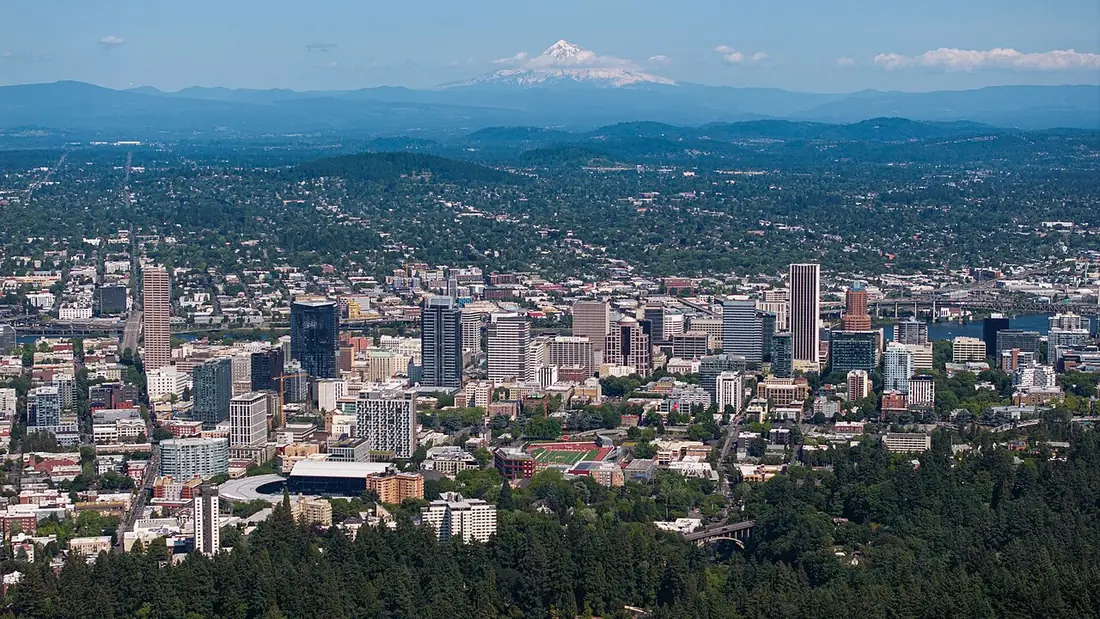
Drain cleaning in Portland, OR - Multnomah County - 94 ZIP codes covered
Drain Cleaning in Portland, OR
Portland splits its sewer responsibility at the curb, and that one fact organizes almost everything about drain work here. The property owner maintains the lateral from the building to the curb, while the city maintains the branch from the curb to the main in the street. Around that split sits an older city: median home built in 1966, about 45.2 percent of homes from before 1960, sewers that in older neighborhoods are combined, carrying sewage and stormwater in one pipe, and a two decade Big Pipe program that cut combined sewer overflows to the Willamette River by 94 percent. The water itself is gentle, with Bull Run hardness at just 7 milligrams per liter in the Water Bureau current data, so Portland drains are not fighting scale. They are fighting age, roots, rain and a famous local complication called the nonconforming sewer connection.
The curb is the border: lateral, branch and your wallet
Portland Bureau of Environmental Services describes the connection in two named parts. Your lateral runs from your building to the curb and is yours to maintain. The branch runs from the curb to the main sewer in the street and is maintained by the city. That vocabulary matters when a contractor gives you a diagnosis, because a defect located in the branch is a city conversation, while the same defect a few feet closer to the house is a private repair bill. Distance is money here, measured literally in feet from the curb.
A camera inspection with a surface locator is how that distance gets proven. The camera travels the line, the defect is found, and the locator marks its position on the ground relative to the curb line. In the $125-$500 inspection range, that single measurement can move a repair from your budget to the city maintenance program or confirm, just as usefully, that the problem is yours and a private fix will end it. Guessing at the location is the expensive option in a split responsibility city.
Permits follow the same border. Work in the right of way involves city permits for the lateral repair segment, while work on private property follows the plumbing permit route. An independent contractor who works Portland regularly will handle that sequencing without drama and will tell you before digging which side of the curb the job sits on and which permit it needs. Ask that question of anyone who quotes you sewer work here. The answer should be immediate and specific.
Renters and owners should both know which side of the curb a past repair touched, because Portland homes change hands and tenants with records the city respects. If a previous owner had branch work done by the city, that history explains the line current behaviour and saves a new camera crew from rediscovering it at your hourly rate. Ask for paperwork at closing the way you would for a roof, and file camera footage with it. In a split responsibility city, documentation is not bureaucracy. It is the mechanism by which the border at the curb gets enforced in your favor when the next defect appears.
Drain problems we handle in Portland
The problems Portland's own housing, ground and weather produce most. The full symptom list is on the problems hub; these are the ones that earn their place here.
Recurring Clogs in Portland
A clog that returns is not bad luck. It is an undiagnosed cause - roots, scale, a belly, or a cleaning that never removed the material..
Multiple Drains Backing Up in Portland
Several drains failing together is the main line or sewer until proven otherwise. Stop the water, protect the floor, make the call..
Slow Drain in Portland
One slow fixture is a narrowing pipe. Several slow fixtures are a main-line warning. How to tell the difference and what fixes each..
Gurgling Drains in Portland
Gurgling is air moving where it should not - displaced by a partial blockage or a vent problem. It is one of the earliest main-line warnings..
Combined sewers, the Big Pipe and what remains for homeowners
Portland began building sewers in the 1860s, when combined pipes carrying both sewage and stormwater were standard practice, and many older neighborhoods still drain through a combined system. For a century that design meant heavy rain pushed diluted sewage toward the Willamette River and the Columbia Slough. The Big Pipe Project, a twenty year, 1.4 billion dollar ratepayer investment built around enormous storage tunnels including the East Side Big Pipe, changed the arithmetic: the city reports combined sewer overflows reduced by 94 percent to the Willamette and 99 percent to the Columbia Slough.
That success is civic, and it is real, but it operates at the scale of rivers. At the scale of your basement, the combined system in an older neighborhood still means storm flow and sewage share capacity on the wettest days. Portland averages about 52.2 inches of precipitation a year in the climate record, with roughly 7.1 heavy rain days. A lateral narrowed by roots has less room to spare exactly when the combined main is busiest, which is why Portland backups so often carry a rain timestamp.
The homeowner share of the combined sewer story is therefore the same as it ever was: keep the private lateral at full capacity. Root cutting, jetting and, where the pipe has failed, repair or lining are what stand between a combined system storm and your floor drain. The Big Pipe holds the river end of the problem. Your lateral holds the house end, and it is the only end you control.
There is a second, quieter benefit to the Big Pipe era worth naming. Because river overflows have fallen so sharply, attention and ratepayer money now reach the smaller end of the system, the laterals and branches where homeowners actually live. Programs, permits and correction routes for private connections are more developed here than in most cities in this project. A Portland owner who engages that system early, with footage and a conforming connection, is working with a city that has already spent two decades learning this infrastructure from the river inward.
About Portland: the local snapshot
Portland is the most populous city in the U.S. state of Oregon.
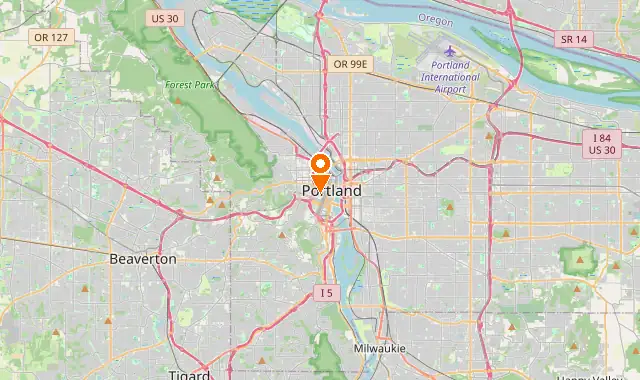
Local facts from Wikipedia and Wikidata, retrieved 2026-10-25. Population and area describe the city itself; the drain coverage counted on this page spans the wider area around it.
A 1966 housing stock under a very green canopy
Portland median home dates to 1966, with about 45.2 percent built before 1960 and another 18.2 percent from 1960 to 1979. That places most of the roughly 307,719 housing units in the era of clay and early plastic laterals, now 45 to 100 years into service. Only about 57.4 percent are single family in form, so a large share of drain calls involve duplexes, small apartment buildings and converted houses where more than one household shares a lateral history.
Then there are the trees. Portland canopy is a point of civic pride and a permanent pressure on old pipe joints. Roots do not break sound pipe; they exploit joints and cracks that age has already opened, entering as fine hairs and thickening season by season until the mat catches everything the house sends down. In a soft water city there is no scale story to blame, so a recurring Portland clog is a root or structure story until the camera proves otherwise.
That is why the rhythm of Portland drain care is inspection led. A line cleared without a look is a line whose root source remains, on a timer set by the growing season. Contractors here expect to show you footage, point to the joint the roots used, and discuss sealing, lining or replacing that section as the lasting answer, with cleaning in the $99-$450 range as the recurring cost of declining that answer.
Buyers in the older eastside and north Portland stock should budget a sewer scope into the purchase as a matter of routine, not suspicion. The scope answers four questions at once: material, condition, root load and conformity of the connection. Each answer has a price attached somewhere in the transaction, and the party holding the footage negotiates from knowledge. Sellers who scope before listing increasingly treat a clean or repaired lateral as a feature, which it is, in a city where the underground half of a 1920s house is the half most likely to surprise.
Nonconforming connections: the Portland only headache
Current Portland rules require every building to have its own direct connection to the main line. Older properties do not always comply. Shared laterals, connections routed across a neighbor lot, and other arrangements made generations ago are classed as nonconforming, and the city maintains guidance and permit routes for correcting them. A homeowner often discovers the status during a sale, a remodel or a sewer failure that suddenly involves two households and one broken pipe.
City code also addresses repair responsibility for private sewers serving more than one property where no written agreement exists, including city authority to abate a nuisance from a damaged shared sewer and recover costs from the properties served. The lesson is not legal, it is practical: if your home shares any part of its sewer path, get the arrangement understood and, where possible, documented before it fails. Shared infrastructure fails on nobody's schedule and argues with everybody's wallet.
A camera inspection paired with the city property records usually reveals whether a connection is conforming. For buyers in older Portland neighborhoods, that check belongs on the same list as the roof and the foundation. Correcting a nonconforming connection is a project with permits and, for eligible connection work, city financing routes exist for sewer conversion charges. Discovering it after closing, mid backup, is the version everyone regrets.
Do not overlook the humble cleanout in all this policy talk. Many older Portland homes lack an accessible one, or hide it under a porch or inside a remodeled wall. Every job that starts by establishing access costs more and diagnoses less than the same job started at a proper cleanout. Having one installed during a calm season, at a known location you can reach in the rain at midnight, is the single most practical upgrade a Portland owner can buy, and it pays for itself the first time a crew opens your line in minutes instead of hunting for an entry point.
Soft water, wet winters and the freeze that rarely comes
Portland drinking water is famously soft. The Water Bureau publishes hardness as calcium carbonate at 7 milligrams per liter for 100 percent Bull Run water, rising toward 68 milligrams per liter on full groundwater supply from the Columbia South Shore Well Field, which serves as the supplemental and emergency source. Even the higher figure is gentle by national standards. Scale is simply not a Portland drain factor, and any contractor selling descaling chemistry here should be asked hard questions.
What Portland water and weather do instead is keep the ground wet for months. About 35 freeze days a year and roughly 12 inches of snow appear in the record, but the dominant fact is sustained winter rain on saturated soil. Laterals sit in that soil, joints weep, groundwater infiltrates cracked lines and adds load to the system, and roots stay active in a mild, moist climate for most of the year. Drain problems here peak with the wet season for structural reasons, not coincidence.
For owners, the wet season calendar writes itself. Late summer and early fall are for clearing and filming doubtful lines while access is dry and schedules are open. Winter is for watching the lowest fixtures during long rain spells and treating a gurgle as a message. Spring is when the root growth that winter fed announces itself. None of this requires anxiety. It requires treating drainage as a seasonal system in a city where the season is rain.
Freeze is a minor Portland theme, but not an absent one. The roughly 35 freeze days a year rarely threaten buried laterals, yet exposed lines in crawl spaces and unheated additions do freeze in the occasional cold snap, and a thaw can reveal a split that drips quietly into a crawl space for weeks. After any hard freeze, a walkthrough with a flashlight, checking for damp, odor and slow fixtures, catches that damage while it is still a repair rather than a restoration. Mild climates breed complacency about cold, and the houses pay for it.
Costs in Portland and how the connection works
Private drain work in Portland follows the published ranges: standard cleaning $99-$450, main line cleaning $200-$650, sewer line work $250-$900, hydro jetting $300-$900, camera inspection $125-$500 and emergency service $150-$700. The camera figure carries unusual weight here because its location evidence decides the lateral versus branch question, and therefore whose budget a repair belongs to. Insist on footage with distances recorded, and keep it with the property records.
DrainFlowed is a connection service. It links Portland homeowners with independent local contractors; it does not employ the people who arrive, set their prices or do their work. Verify license and insurance, confirm which side of the curb proposed work sits on and which permits it needs, and agree the range in writing before work begins. To connect, call (866) 555-0134 and mention if your issue follows rain, involves a shared line, or affects more than one property, because each fact changes who should respond and how.
If the evidence shows the defect sits in the branch or the main, the city is your counterparty, and your contractor footage becomes your documentation. If it sits in your lateral, you hold both the problem and, thanks to the same footage, a precise scope to price. Either way, Portland rewards the homeowner who measures first. The curb is the border, and knowing which side of it your problem lives on is worth real money in this city.
A last word on trees, because Portland loves them and so do its sewer problems. Planting choices made today decide drain bills in twenty years. Keep new trees and large shrubs off the lateral route, which your camera footage or city records can show you, and give roots no reason to patrol your pipe. Where a beloved mature tree already stands over the line, plan on a camera rhythm of every few years and root maintenance before blockage, not after. Coexistence works in this city, but it works on a schedule, not on hope.
Drain services available in Portland
The services that answer Portland's lead problems, from the independent contractors who cover the city. Ranges are the national typical ranges used across this site.
| Service | Typical range | What it is |
|---|---|---|
| Drain Cleaning | $99-$450 | The core service: mechanical cleaning that clears the clog and scrapes the pipe walls, not just a hole poked through the blockage.. |
| Main Line Cleaning | $200-$650 | When every drain in the house slows at once, the problem is the main line. |
| Sewer Line Cleaning | $250-$900 | The buried line from your house to the street: root cutting, scale removal and jetting, with camera proof of the pipe's condition.. |
| Hydro Jetting | $300-$900 | High-pressure water that scours pipe walls clean - the answer for grease, scale and lines that keep re-clogging after cabling.. |
| Drain Camera Inspection | $125-$500 | See inside the pipe before you spend on the fix: roots, cracks, bellies and blockages located precisely, with footage to decide on.. |
| Emergency Drain Cleaning | $150-$700 | Sewage backing up, water rising, guests arriving: what counts as a drain emergency, what to do in the first ten minutes, and how the visit works.. |
Full detail on every service, with signs and causes, is on the services hub, and every range on the site is collected in the cost guide.
Portland coverage snapshot
Nearby covered cities: Eugene, Salem, Medford, Bend.
Portland sewer and water resources
The city and utility pages this page's local facts rest on, worth bookmarking if you own a home in Portland:
Sources for this page
- sewer lateral responsibility: Owner maintains lateral from building to curb; city maintains branch from curb to main (Portland Bureau of Environmental Services) (source)
- combined sewer: Combined sewers in older neighborhoods dating to the 1860s; Big Pipe Project, 1.4 billion dollars over 20 years, reduced CSOs 94 percent to the Willamette and 99 percent to the Columbia Slough (source)
- water hardness: Hardness as CaCO3 is 7 mg/L for 100 percent Bull Run water and 68 mg/L for 100 percent groundwater (Portland Water Bureau) (source)
- housing age: Median year built 1966, 45.2 percent pre 1960, 307719 housing units, 57.4 percent single family (ACS 2024 5-year) (source)
- climate: 52.2 in annual precipitation, 7.1 heavy rain days, 35 freeze days, 12.3 in snow (Open-Meteo ERA5 2014 to 2023) (source)
- Housing age: median year built and build-era shares (US Census Bureau ACS)
- Weather averages: 2014-2023 daily record (Open-Meteo archive, ERA5)
Coverage around Portland
Nearby cities we cover in Oregon
- Drain cleaning in Eugene, OR
- Drain cleaning in Salem, OR
- Drain cleaning in Medford, OR
- Drain cleaning in Bend, OR
- Drain cleaning in Gresham, OR
- Drain cleaning in Hillsboro, OR
The full list for the state is on the Oregon locations page.
Beyond Portland
Coverage at this depth continues nearby: see drain cleaning in Eugene, OR and drain cleaning in Salem, OR, each written from its own city's data the same way this page is.
Questions, answered
Who is responsible for my sewer line in Portland, me or the city?
Both, in named parts. The property owner maintains the lateral from the building to the curb. The city maintains the branch from the curb to the main in the street, per the Bureau of Environmental Services. A camera inspection with a locator proves which part a defect sits in.
What is a nonconforming sewer connection in Portland?
A connection that does not give the building its own direct line to the main, such as a shared lateral or a line crossing another property. City rules require direct individual connections, and permit and correction routes exist. The status often surfaces during sales, remodels or failures.
Does Portland have combined sewers?
Yes, in many older neighborhoods, a legacy of construction that began in the 1860s. The Big Pipe Project cut combined sewer overflows by 94 percent to the Willamette River and 99 percent to the Columbia Slough, but heavy rain still loads the shared system your lateral drains into.
How much does drain cleaning cost in Portland?
Standard cleaning typically runs $99-$450. Main line work runs $200-$650, hydro jetting $300-$900, camera inspection $125-$500 and emergency service $150-$700, confirmed by the contractor after inspection.
Is Portland water hard on drains?
No. The Water Bureau reports Bull Run hardness at 7 milligrams per liter as calcium carbonate, which is very soft, rising toward 68 on full groundwater supply. Portland drain failures are driven by age, roots and rain rather than mineral scale.
Why do my drains back up mainly in winter?
Sustained rain saturates the ground, loads the combined system in older areas and exposes any narrowing in your lateral. Portland averages about 52.2 inches of precipitation a year. A fall camera inspection and clearing is the practical countermeasure.
Does DrainFlowed employ Portland plumbers?
No. DrainFlowed is a connection service and the contractors are independent local businesses. Call (866) 555-0134 to connect, then verify license and insurance and agree the price range in writing.
Drain problem in Portland? Make the call
A live person answers around the clock. Describe the problem, hear the likely range, and get an independent local contractor on the way.
(866) 555-0134 Tap to call nowA live person answers, day or night. Describe the problem, hear the likely range, then decide.