Drain cleaning in Bronx, NY - Bronx County - 25 ZIP codes covered
Drain Cleaning in Bronx, NY
The Bronx needs a different frame from every other page in this group, because it is a borough of New York City, not a standalone Census place, and its drains run on citywide systems and citywide rules. The utility is the New York City Department of Environmental Protection, DEP. About 60 percent of New York City, a citywide figure, drains through combined sewers that carry sewage and stormwater in one pipe. The Bronx itself counted 1,472,654 residents in the 2020 Census as Bronx County. Responsibility in this city reaches further than owners elsewhere expect: your house sewer is yours from the building wall all the way into the street, including its connection to the city sewer, and the work must be done by a Licensed Master Plumber. Within that frame, the daily Bronx drain story is familiar: roots, grease, shared building lines and storm surcharges. Standard drain cleaning runs $99-$450.
About 60 percent combined: a citywide figure with a Bronx address
DEP states the headline fact plainly: about 60 percent of New York City has a combined sewer system, in which a single pipe carries both stormwater runoff and sewage from buildings to a treatment plant, while the remaining roughly 40 percent uses a separate system. Those percentages describe New York City as a whole, and this page uses them that way, not as a Bronx only measurement. During heavy rain, combined sewers receive far more flow than normal, treatment plants cannot handle flows beyond roughly twice their design capacity, and the excess mixture of stormwater and untreated sewage discharges into the city's waterways as a combined sewer overflow, a CSO.
For a Bronx building, the combined system shows up at the basement level before it shows up in any environmental report. When the shared pipe in the street is running at storm capacity, your house sewer is draining into a system with no spare room. A connection in perfect condition copes. A connection narrowed by a root fringe, a grease ledge or a settled joint is the building that backs up while its neighbours, on cleaner lines, ride out the same storm. That is why the Bronx version of the rain question is never just about the weather. It is about your margin, and margin is created by cleaning and camera work done on dry days.
The borough averaged 49.6 inches of precipitation a year over 2014 to 2023, with 9.6 heavy rain days, 27.4 inches of snow and 89 freeze days. That is a full stress calendar: summer downpours that surcharge combined sewers, autumn storms on leaf loaded catch basins, and winter freeze and thaw around shallow fittings. If your building's problems have a season, name it when you book. The pattern is the first diagnostic instrument anyone has, and in the Bronx it costs nothing to use well.
Drain problems we handle in Bronx
The problems Bronx's own housing, ground and weather produce most. The full symptom list is on the problems hub; these are the ones that earn their place here.
Multiple Drains Backing Up in Bronx
Several drains failing together is the main line or sewer until proven otherwise. Stop the water, protect the floor, make the call..
Gurgling Drains in Bronx
Gurgling is air moving where it should not - displaced by a partial blockage or a vent problem. It is one of the earliest main-line warnings..
Recurring Clogs in Bronx
A clog that returns is not bad luck. It is an undiagnosed cause - roots, scale, a belly, or a cleaning that never removed the material..
Drain Odors in Bronx
Sewer smell, rotten-egg smell, sour buildup smell.
Your responsibility runs into the street, and the plumber must be licensed
New York City draws the ownership line further out than almost any city in this group. Guidance for NYC sewer and water main work states the position directly: the owner is responsible for maintaining and correcting any defect in the sewer line from the point it leaves the building up to and including the connection to the city sewer in the street, including cleaning it when needed, and excavating and performing repairs or replacements where required. The city's administrative code mirrors the duty for curb to sewer connections, placing maintenance and repair on the property owner except where the need was caused by city sewer reconstruction or other city construction work. There is no sidewalk boundary to shelter behind. The street section is yours.
The second city rule is about who may do the work. Sewer and water main service line work in New York City must be performed by a Licensed Master Plumbing firm bonded as the city's Departments of Buildings and Environmental Protection require, because the work is permitted and inspected to code. That has a practical shopping consequence. When you are connected with a contractor, ask for the licence in the first conversation, and expect permits and inspection to be part of any repair scope that opens the street or alters the connection. Cleaning through existing access is simpler, but the moment excavation toward the main enters the discussion, the licensed and permitted route is the only route.
DrainFlowed is a connection service, and in the Bronx that distinction matters for authorisation as much as for work. In a multi unit building, the person booking should be the owner, the super with authority, or the managing agent, because decisions about shared lines, access through units and street work need someone who can say yes. Have that person on the call at (866) 555-0134, along with the building's trap and cleanout locations if they are known. It turns a vague emergency call into a schedulable job.
About Bronx: the local snapshot
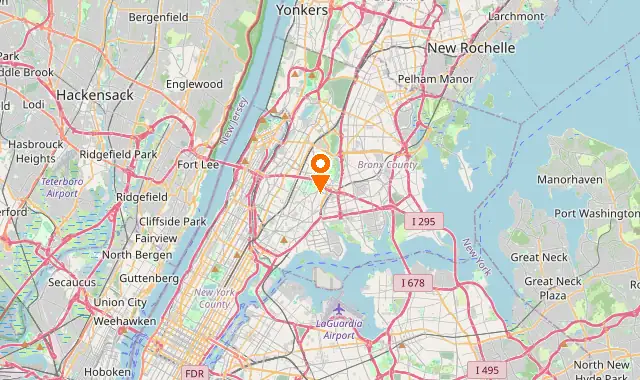
Local facts from Wikipedia and Wikidata, retrieved 2026-10-25. Population and area describe the city itself; the drain coverage counted on this page spans the wider area around it.
Shared lines in a dense borough
Bronx County's 1,472,654 residents in the 2020 count live at densities the suburban cities in this group never approach, and the building stock follows: multi unit buildings, mixed use properties with retail at street level and homes above, and single family houses in the borough's less dense reaches. Each type loads its house sewer differently. A mixed use building can send restaurant or shop waste into the same connection as residential flow. A large multi unit building runs laundry, kitchens and baths from dozens of households through one line sized generations ago. The first symptom of trouble in these buildings is rarely in the unit that caused it. It is in the lowest unit, or the basement, where everything arrives.
That arithmetic changes what a good visit looks like. Cleaning one apartment's branch line while the shared house sewer is restricted produces a brief improvement and a repeat call. The contractor needs the whole building picture: which stacks are affected, whether the problem follows laundry cycles or rain, and where the house trap sits. Gurgling in several units at once, odors in the lowest spaces, and backups that migrate between fixtures are shared line signatures. Main line cleaning runs $200-$650, and camera work at $125-$500 through the building cleanout establishes whether the restriction is in a branch, the house sewer, or at the street connection you own.
A note on evidence, borough style. This page deliberately quotes no Bronx median build year or pre 1960 share, because the Bronx data pack contains climate data for the borough and county population, but no Census place ACS housing pack equivalent to the other cities here. Rather than import a number that does not exist in the verified data, the page leaves it out. For your building, age and material are knowable facts from its own records and from a camera run, and those sources outrank any borough average anyway.
Cooperative and condominium governance adds one more Bronx layer worth planning around. Shared house sewers are common elements in effect, whatever the paperwork calls them, and boards that budget for periodic main line cleaning and a standing camera record avoid the special assessment argument that follows an emergency excavation into the street. If you sit on such a board, put the house sewer on the reserve conversation list alongside the roof and the boiler. It is older than both, it serves every unit at once, and unlike them it gives almost no visible warning before it becomes the building's most urgent problem.
Soft water, hard use: what actually narrows Bronx lines
New York City's drinking water is predominantly soft on DEP's own description. Its water quality reporting puts Catskill and Delaware System water at about 1.0 grain per gallon of hardness, and Croton System water at about 5 grains per gallon, again as citywide supply figures rather than a Bronx tap measurement. However a Bronx building is supplied on a given day, heavy mineral scaling is not the villain of its drain system. Fixtures may show other issues, including the brown water episodes DEP attributes to corrosion inside building plumbing and rusting water heaters, but the sewer side story is mechanical and biological, not mineral.
What narrows Bronx house sewers is the familiar trio at higher volume. Roots, entering clay or jointed sections from street trees and planted areas, grow thick in a nutrient rich line and catch solids from every unit above them. Grease, from many kitchens or a food business at street level, coats runs that cool between buildings and the main. And age, in pipe that has served through decades of the city's growth, brings offsets, sags and cracked fittings that turn minor buildup into repeat blockages. Hydro jetting, at $300-$900, scours grease heavy runs effectively where the pipe is sound. Where the camera shows collapse or separation, cleaning is a holding action and the licensed repair conversation, permits and all, is the honest next step.
Odors deserve their own sentence in a dense borough, because a drain odor in one unit can originate in a shared stack, a dry trap in a vacant unit, or buildup in the house sewer itself. Report exactly where the smell is strongest and when it peaks. That localisation, unglamorous as it is, separates a ten minute trap fix from a building wide cleaning more reliably than any general description of a bad smell.
Winter, traps and vacant units
With 89 freeze days and 27.4 inches of snow in the borough's climate data, Bronx buildings face a winter pattern the southern cities in this group skip. The vulnerable points are seldom the deep mains. They are the shallow fittings, the trap in an unheated space, the seldom used basement fixture whose trap water evaporates or is disturbed until sewer gas finds the path indoors. Drain odors that arrive with deep cold and vanish in spring belong to this family. So do slow fixtures on exposed runs during a hard freeze, which deserve patience and a check once temperatures lift before anyone prices a repair for what turns out to be ice.
Building management habits answer most of it. Run water periodically in vacant or rarely used units so traps stay filled. Keep basement floor drains and area drains known, located and accessible rather than buried under storage, because in a storm surcharge the floor drain is both the warning and the point of entry, and minutes spent moving boxes during an event are minutes the water uses better than you do. Know where the house trap cleanout caps are, and keep a clear path to them in all seasons. None of this is heroic. It is the difference between a building that meets a backup as a procedure and one that meets it as a crisis.
If sewage is backing up into your home, report it to 311 as well as arranging your own contractor. The city tracks those reports, a pattern of reports on one street is public system information, and your report creates the record that supports any later question about whether the cause sat in the city sewer or in your connection. In a city where the owner carries the line into the street, that record keeping is not red tape. It is how responsibility gets assigned fairly when the evidence is wet and the bill is real.
Booking Bronx drain work that fits the building
Book with building facts in hand: address, building type and unit count, whether any commercial use shares the line, where the sewer exits and where the trap and cleanouts are, whether symptoms track rain, laundry or neither, and who can authorise work and provide access. Standard drain cleaning runs $99-$450 for a single line problem, main line work $200-$650 for the shared run, sewer line services $250-$900, and emergency service $150-$700. The independent contractor confirms where your building lands in those ranges after seeing access and scope. Access, in Bronx buildings, is frequently the price driver, not the clog.
Ask the licensing question out loud, and ask who handles permits and inspection if the scope grows toward the street connection. Ask also for the camera findings in writing, with distances from the cleanout, because a shared building line generates shared decisions, and boards, owners and supers all act faster on footage than on recollections of footage. DrainFlowed connects you with independent local contractors and does not perform or warrant their work. Your verification of license and insurance, done directly with the contractor, is part of the job in this city, not an optional extra.
Handled that way, Bronx drain problems sort themselves the way the city's rules intend: private line, owner and licensed plumber, camera evidence, clean or repair as the footage dictates, and the city system brought in through 311 exactly when the pattern says the street is involved. It is a workable system. It just rewards buildings that keep their records and their cleanouts in equally good order.
Drain services available in Bronx
The services that answer Bronx's lead problems, from the independent contractors who cover the city. Ranges are the national typical ranges used across this site.
| Service | Typical range | What it is |
|---|---|---|
| Drain Cleaning | $99-$450 | The core service: mechanical cleaning that clears the clog and scrapes the pipe walls, not just a hole poked through the blockage.. |
| Main Line Cleaning | $200-$650 | When every drain in the house slows at once, the problem is the main line. |
| Sewer Line Cleaning | $250-$900 | The buried line from your house to the street: root cutting, scale removal and jetting, with camera proof of the pipe's condition.. |
| Hydro Jetting | $300-$900 | High-pressure water that scours pipe walls clean - the answer for grease, scale and lines that keep re-clogging after cabling.. |
| Drain Camera Inspection | $125-$500 | See inside the pipe before you spend on the fix: roots, cracks, bellies and blockages located precisely, with footage to decide on.. |
| Emergency Drain Cleaning | $150-$700 | Sewage backing up, water rising, guests arriving: what counts as a drain emergency, what to do in the first ten minutes, and how the visit works.. |
Full detail on every service, with signs and causes, is on the services hub, and every range on the site is collected in the cost guide.
Bronx coverage snapshot
Nearby covered cities: Buffalo, Rochester, Albany, Staten Island.
Bronx sewer and water resources
The city and utility pages this page's local facts rest on, worth bookmarking if you own a home in Bronx:
Sources for this page
- combined sewer: About 60 percent of New York City has a combined sewer system, citywide figure from NYC DEP, heavy rain flows beyond treatment capacity discharge as CSOs (source)
- sewer lateral responsibility: NYC owner responsible for sewer line from building to and including connection to city sewer in street, including cleaning and repairs, work by Licensed Master Plumber (source)
- water hardness: NYC water predominantly soft, Catskill Delaware about 1.0 grain per gallon, Croton about 5 grains per gallon, citywide DEP reporting (source)
- population framing: Bronx population 1,472,654 in 2020 as Bronx County, borough of New York City, no ACS place pack in datapack (source)
- Weather averages: 2014-2023 daily record (Open-Meteo archive, ERA5)
Coverage around Bronx
Nearby cities we cover in New York
- Drain cleaning in Buffalo, NY
- Drain cleaning in Rochester, NY
- Drain cleaning in Albany, NY
- Drain cleaning in Staten Island, NY
- Drain cleaning in Syracuse, NY
- Drain cleaning in Poughkeepsie, NY
- Drain cleaning in New York, NY
- Drain cleaning in Brooklyn, NY
The full list for the state is on the New York locations page.
Beyond Bronx
Coverage at this depth continues nearby: see drain cleaning in Buffalo, NY and drain cleaning in Brooklyn, NY, each written from its own city's data the same way this page is.
Questions, answered
Who is responsible for the house sewer in the Bronx?
You do, for the whole house sewer. In New York City the property owner is responsible for the sewer line from the point it leaves the building up to and including its connection to the city sewer in the street, including cleaning it when needed and excavating for repairs. Work on that line must be done by a Licensed Master Plumber under the city's DEP and Buildings requirements. DrainFlowed connects you with independent local contractors.
What does the combined sewer system mean for a Bronx building?
DEP states that about 60 percent of New York City has a combined sewer system, a figure for the city as a whole. In that system one pipe carries sewage and stormwater, and during heavy rain, flows beyond treatment capacity discharge as combined sewer overflows to local waterways. For a building, heavy rain also means the shared system runs full, so a house connection already narrowed by roots or grease backs up sooner. Report sewage backing up into your home to 311 as well.
Is Bronx water hard enough to scale my drains?
New York City water is predominantly soft. DEP reporting puts Catskill and Delaware System water at about 1.0 grain per gallon of hardness, with the Croton System at about 5 grains per gallon. That is citywide supply information, not a Bronx only measurement. Heavy mineral scale is not a leading explanation for Bronx drain problems compared with roots, grease and aging pipe.
What does drain cleaning cost in the Bronx?
National ranges on this page are standard drain cleaning $99-$450, main line $200-$650, hydro jetting $300-$900, sewer line $250-$900, camera inspection $125-$500 and emergency $150-$700. Bronx buildings vary from single family houses to large multi unit properties, and access, building size and permitting affect where a job lands. Your independent contractor confirms pricing for your building before work begins.
Can I book for a multi unit building in the Bronx?
Yes, but expect building logistics to matter. The contractor needs to know the building type, where the house sewer exits, where the trap and cleanout access are, and who can authorise work, an owner, a super, or a managing agent. In multi unit buildings, say upfront how many units share the line, because a shared house sewer changes both diagnosis and scheduling. Call (866) 555-0134 with those details ready.
Why does this page not list a median home build year for the Bronx?
Note the scope carefully. The housing and population figures for this page are framed as New York City or Bronx County figures where used, and the Bronx data pack contains climate data for the borough but no Census place ACS housing pack like the other cities on this site. That is why this page does not quote a Bronx median build year. Your building's own records and a camera inspection are the reliable sources for its pipe age and material.
Drain problem in Bronx? Make the call
A live person answers around the clock. Describe the problem, hear the likely range, and get an independent local contractor on the way.
(866) 555-0134 Tap to call nowA live person answers, day or night. Describe the problem, hear the likely range, then decide.