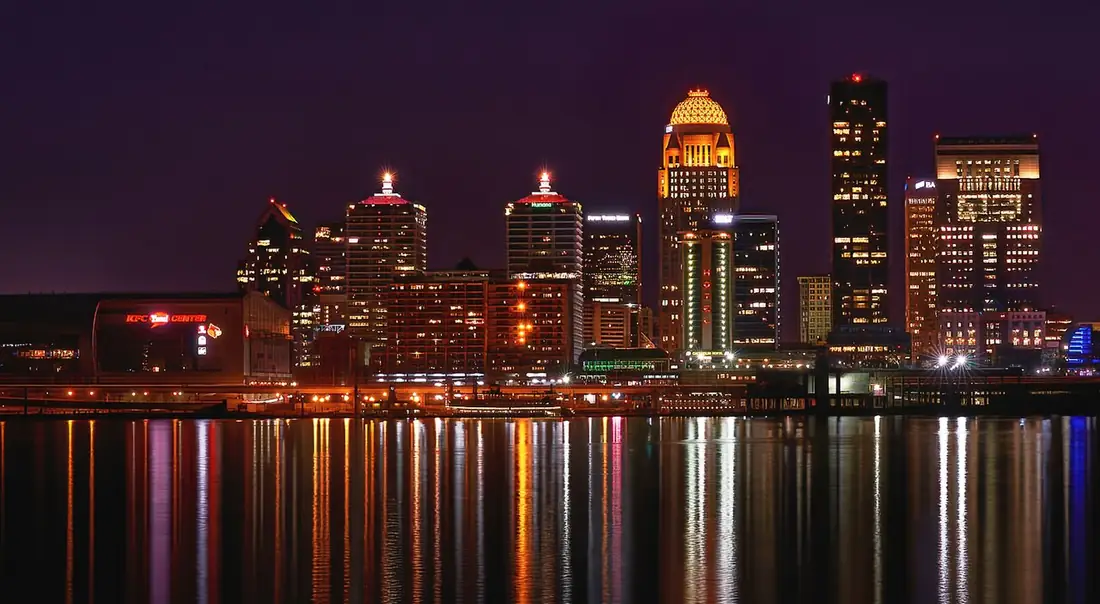
Drain cleaning in Louisville, KY - Jefferson County - 66 ZIP codes covered
Drain Cleaning in Louisville, KY
Louisville draws its sewer map with a highway. Inside I-264, the Watterson Expressway loop, the oldest part of the city runs on combined sewers first built in the 1800s, where one pipe carries sewage and stormwater together. Outside the loop, newer areas use separate systems that were never designed to overflow, and sometimes do anyway when storm water finds its way in. The whole arrangement operates under a federal consent decree, with MSD running an overflow abatement program called Project WIN and a Waterway Protection Tunnel that keeps 439 million gallons a year out of local waterways in a typical year. Louisville homes average 51.3 inches of rain a year across 10.8 heavy rain days, so the system is tested constantly. This page explains the two Louisvilles, old and new, and what each means for the drains in your house.
Inside the Watterson, outside the Watterson: two sewer cities
Louisville MSD tells the origin story plainly. The earliest sewers in Louisville were built in the 1800s to drain stormwater after rain. When indoor plumbing became common, homes needed a sanitary outlet, and the convenient solution was to combine sanitary waste with stormwater in the same pipe. Those combined sewers still exist, and MSD locates them in the area inside I-264. During dry weather and modest rain, combined flow goes to treatment. In heavy rain, the combined pipe can fill, and the system is designed to overflow to waterways rather than back sewage into buildings. Those events are combined sewer overflows, CSOs.
Outside the loop the design philosophy reverses. Separate sanitary sewers carry only wastewater, with stormwater in its own drainage system, and they were not built to overflow at all. Yet stormwater finds ways in, through cracks, connections, and saturated ground, and when a separate sanitary pipe fills, the overflow can go to a waterbody, onto the ground, or into a building. MSD calls those sanitary sewer overflows, SSOs. The homeowner translation is direct: inside the Watterson, your backup risk in a major storm includes a designed system behaving as designed. Outside it, a storm backup more often signals a defect letting rain into pipes that should never see it.
Either way, the first diagnostic question in Louisville is geographic. Which side of I-264 is the house on? Inside, storm timing and the state of your own line together explain most events, and keeping your lateral clean and your lowest fixtures protected is the private side of a public design. Outside, rain linked symptoms point the camera at your lateral joints and connections, hunting the entry point. A Louisville contractor who does not ask which system serves you is skipping the city defining question, and it costs nothing to volunteer the answer when you book.
A sense of proportion helps inside the combined area. A CSO is the system choosing the river over your basement, on purpose, under a design philosophy from the century before last, and the entire consent decree program exists to make that choice rarer and cleaner, not to pretend the choice can be abolished by next season. Homeowners who understand that distinction spend their money correctly: not on rage at a designed overflow, but on the private margin, a clean lateral, protected lowest fixtures, and belongings kept above the historic water line in the lowest room. The tunnel and basins raise the threshold storm by storm. Your job is to raise your household threshold in parallel.
Drain problems we handle in Louisville
The problems Louisville's own housing, ground and weather produce most. The full symptom list is on the problems hub; these are the ones that earn their place here.
Multiple Drains Backing Up in Louisville
Several drains failing together is the main line or sewer until proven otherwise. Stop the water, protect the floor, make the call..
Standing Water in Louisville
Water that will not go down has a blockage at a specific level. Which level decides whether it is a quick clean or a main-line job..
Gurgling Drains in Louisville
Gurgling is air moving where it should not - displaced by a partial blockage or a vent problem. It is one of the earliest main-line warnings..
Project WIN, the consent decree, and the tunnel under the city
Louisville sewer present is governed by a legal document. In 2005 MSD entered a consent decree with the United States Environmental Protection Agency and the Kentucky Department for Environmental Protection, amended in 2009 and again in 2021, committing the utility to an aggressive sewer overflow abatement program. That program is Project WIN, MSD program for waterways improvement, and its target is the overflow arithmetic of a growing city on old pipes: MSD counts over 3,200 miles of sewer in its system, with approximately 500 miles of it over 100 years old, and 111 active CSO locations that overflow on average about 30 times per year.
The flagship structure is the Waterway Protection Tunnel, the largest of many storage basins MSD has built under the decree. MSD credits the tunnel with preventing 439 million gallons of overflow in a typical year, holding combined flow during storms and releasing it to treatment when capacity returns, the same store and release logic as Richmond basin and Milwaukee tunnel, executed at Louisville scale. Basins and the tunnel attack the peak of the storm hydrograph, the hours when combined pipes would otherwise spill, and they are why CSO counts fall even as rainfall totals stay what they are.
For homeowners, Project WIN matters in two concrete ways. First, it is the reason a storm backup inside the combined area is a known system behavior being engineered down year by year, not a mystery: capture improves, overflow frequency drops, but the combined design itself remains until a street is separated or storage grows again. Second, the decree era has standardized how overflows and backups get documented in Louisville. If wastewater enters your home in a storm, note the time, the fixtures, and the weather, and report it through MSD channels as well as calling a contractor. Documentation feeds the same system that decides where the next basin dollar goes.
About Louisville: the local snapshot
Louisville is the most populous city in the U.S. state of Kentucky, sixth-most populous city in the Southeast, and the 27th-most-populous city in the United States.
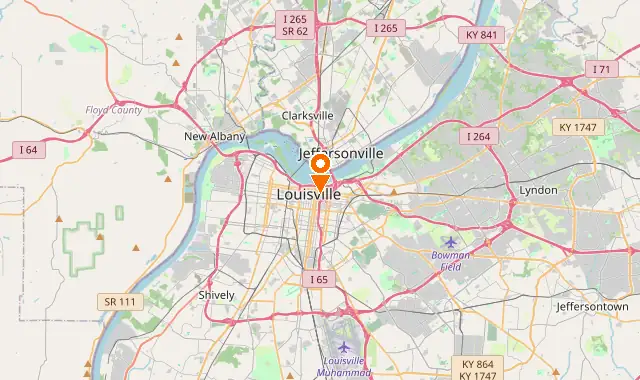
Local facts from Wikipedia and Wikidata, retrieved 2026-10-25. Population and area describe the city itself; the drain coverage counted on this page spans the wider area around it.
51.3 inches of rain on the Ohio River plain
Louisville climate delivers the load that the combined system must carry: 51.3 inches of precipitation in an average year, 10.8 heavy rain days, 79 freeze days, and 11.1 inches of snow. The city sits on the Ohio River at 142 meters elevation, in a river plain landscape where storm water moves slowly away and ground stays saturated after the multi day rain events the Ohio Valley specializes in. Combined pipes inside the Watterson were sized by nineteenth century assumptions about how much pavement and roof would drain into them. Every decade of added impervious surface since has raised the peak they face in the same rain.
At the scale of one house, the rain pattern produces a recognizable Louisville rhythm. A marginal lateral, narrowed by grease or roots, copes through ordinary weeks. A two day rain loads the street system, the ground, and the household all at once, and the weakest point in the chain declares itself, usually at the lowest fixture, usually at the least convenient hour. The preventive reading of that rhythm is to treat the dry season as the working season: clean and camera the line when scheduling is easy and prices are the standard ones, standard cleaning $99-$450, main line $200-$650, camera $125-$500, rather than meeting the pipe for the first time at emergency rates of $150-$700 during the storm that found it.
Freeze deserves its sentence in Louisville too. Seventy nine freeze days will not rival Hartford or Milwaukee, but the Ohio Valley pattern of thaw, rain, and refreeze stresses shallow lines and vents in cycles, and a gurgling spell that arrives with a cold snap and leaves with the thaw is a vent story worth reporting as such. Louisville contractors read seasonal timing fluently. Give them the dates and let the pattern do its diagnostic work.
Louisville rain has a second act that river cities know well: the Ohio itself. When the river runs high for days, drainage across the lowest districts slows at the outfall end, ground stays saturated longer, and the whole system, public and private, works against a raised floor. Backups that cluster during high river weeks, in low lying areas, are the city geography expressing itself, and they deserve the timing report treatment this page keeps recommending. Contractors who work Louisville read river gauges the way farmers read sky. Tell them the dates of your event and they will place it in the river month it belonged to, which is diagnostic information no camera can supply.
Old pipes, five hundred miles of them, and the private share
MSD figure deserves repeating at household scale: of more than 3,200 miles of sewer in the Louisville system, approximately 500 miles are over 100 years old. The public mains in the older districts are genuinely antique infrastructure, maintained under a consent decree precisely because age caught up with them. Private laterals in those same districts were laid in the same eras, by the same logic, and they age on the same clock. A homeowner inside the Watterson with an untouched lateral is very often running pipe with a century in view, and the wonder is not that it needs attention. The wonder is how long gravity and smooth operation hid the need.
One honest note belongs in this section. This page does not state a Louisville lateral ownership rule, because the research behind it did not verify one from an MSD source, and DrainFlowed pages do not fill gaps like that with the national average. What is verifiable is the practical sequence MSD guidance supports everywhere: if your home experiences a backup, the location of the cause, public main or private line, is what assigns the repair, and establishing that location is the first job of the first visit. Ask the contractor to establish it explicitly, from a cleanout test or camera, and to show you the evidence. In a consent decree city, located evidence is the currency every later conversation is conducted in.
Where the private line is the problem, the work is framed by the national ranges: cleaning $99-$450 standard and $200-$650 at the main, jetting $300-$900 for established grease and film, sewer line work $250-$900 and beyond for repair scope. Century old pipe earns the camera its fee here more reliably than anywhere else in this series, because the difference between a cleanable antique and a failing one is visible on screen in about ninety seconds, and invisible from the kitchen sink forever.
Hardness at 123 ppm and the Crescent Hill supply
Louisville drinking water comes from the Ohio River through the Crescent Hill plant and from riverbank filtration at the B.E. Payne plant, and Louisville Water published figures put finished water hardness at 123 ppm as CaCO3, about 7.2 grains per gallon, averaged across the two plants, with total dissolved solids at 225 ppm. That is moderately hard water: enough to spot glassware, film a kettle, and lay down slow mineral deposits in a water heater across years, and modest enough that scale alone is rarely the main author of a Louisville drain narrowing.
Inside drain pipes, the realistic Louisville ranking runs grease first, roots second in the older districts, and mineral roughness a supporting third, giving organic films a texture to grip inside older metal and clay bores. Hydro jetting at $300-$900 matches that reality, scouring the combined film rather than chiseling a crust. Where a Louisville contractor leads with hard water as the explanation for a sudden backup, the published 123 ppm figure is your polite cross examination. Sudden is not how 7.2 grains behaves. Sudden is a blockage, a root event, or a storm, and each of those has its own correct tool.
The river source carries one more household implication. Louisville Water treats Ohio River water, a working river carrying whatever upstream weather and industry send it, and the utility publishes its quality reporting for exactly that reason. Taste or odor shifts after major river events are a supply conversation to have with Louisville Water. Drain behavior is a separate conversation, about your pipes and the MSD system, and keeping the two utilities and the two conversations straight will save every Louisville homeowner at least one misdirected phone call in their tenure.
There is a Louisville specific question to ask any contractor who cameras your line: what did the pipe look like at the connection end? In a system where 500 public miles are over a century old, the junction between a private lateral and an old main is a frequent failure neighborhood, and footage that stops twenty feet short of the tap leaves the most interesting ground unexamined. A full run to the main, with the connection itself on screen, is the inspection that matches this city infrastructure age. It costs the same visit. It simply refuses to stop early, and in Louisville early is exactly where the antique part begins.
Booking a Louisville visit: name your side of the loop
DrainFlowed is a connection service for Louisville homeowners. One call to (866) 555-0134 connects you with an independent local contractor who quotes the job, schedules it, performs it, and is responsible for it. Verify the contractor license and insurance directly, and expect pricing anchored to your findings: which system serves your street, where the problem locates, and what the camera shows if one runs.
Open the call with Louisville three facts. First, inside or outside I-264, which tells the contractor whether your street is combined or separate and frames every storm symptom you describe. Second, the symptom timing against rainfall, because in a 51.3 inch rain city the calendar is a diagnostic instrument. Third, the age of the house and any history of the lateral, because with 500 public miles over a century old, private pipe of the same vintage deserves the camera question early, at $125-$500, rather than after the second identical cleaning.
If the event involved wastewater entering the home during a storm, document and report it to MSD as the consent decree system expects, in addition to your contractor visit. Louisville is a city actively spending its way down an overflow curve, with a tunnel already preventing 439 million gallons of overflow in a typical year. Homeowner reports, located and timestamped, are part of how that curve keeps bending. Your drains are private. In Louisville, unusually, reporting their worst day is a small public act as well.
Drain services available in Louisville
The services that answer Louisville's lead problems, from the independent contractors who cover the city. Ranges are the national typical ranges used across this site.
| Service | Typical range | What it is |
|---|---|---|
| Drain Cleaning | $99-$450 | The core service: mechanical cleaning that clears the clog and scrapes the pipe walls, not just a hole poked through the blockage.. |
| Main Line Cleaning | $200-$650 | When every drain in the house slows at once, the problem is the main line. |
| Sewer Line Cleaning | $250-$900 | The buried line from your house to the street: root cutting, scale removal and jetting, with camera proof of the pipe's condition.. |
| Drain Camera Inspection | $125-$500 | See inside the pipe before you spend on the fix: roots, cracks, bellies and blockages located precisely, with footage to decide on.. |
| Floor Drain Cleaning | $110-$450 | Basement, laundry and garage floor drains: the house's safety valve, cleaned and trap-checked before it is needed in a flood.. |
| Emergency Drain Cleaning | $150-$700 | Sewage backing up, water rising, guests arriving: what counts as a drain emergency, what to do in the first ten minutes, and how the visit works.. |
Full detail on every service, with signs and causes, is on the services hub, and every range on the site is collected in the cost guide.
Louisville coverage snapshot
Nearby covered cities: Lexington, Bowling Green, Elizabethtown, Owensboro.
Louisville sewer and water resources
The city and utility pages this page's local facts rest on, worth bookmarking if you own a home in Louisville:
Sources for this page
- climate: 51.3 in annual precipitation, 11.1 in snow, 79 freeze days, 10.8 heavy rain days per year, 2014 to 2023 average. No ACS housing block was present in the datapack for this city, so no housing age claims are made (source)
- combined sewer status: Combined sewers from the 1800s remain inside I-264; separate sanitary sewers outside it; MSD under a 2005 federal consent decree with 2009 and 2021 amendments (source)
- city programs: Project WIN overflow abatement program; Waterway Protection Tunnel prevents about 439 million gallons of overflow in a typical year; system has over 3,200 miles of sewer, about 500 miles over 100 years old, 111 active CSO locations (source)
- water hardness: Louisville Water published hardness 123 ppm as CaCO3 (7.2 gpg), average of Crescent Hill and B.E. Payne finished water, TDS 225 ppm (source)
- Housing age: median year built and build-era shares (US Census Bureau ACS)
- Weather averages: 2014-2023 daily record (Open-Meteo archive, ERA5)
Coverage around Louisville
Areas and neighbourhoods in and around Louisville
Calls also come in from Eastwood, Fairdale, Fisherville, Harrods Creek and the streets between them. Those areas sit inside the same coverage, on the same contractor rounds.
EastwoodFairdaleFishervilleHarrods Creek
Nearby cities we cover in Kentucky
- Drain cleaning in Lexington, KY
- Drain cleaning in Bowling Green, KY
- Drain cleaning in Elizabethtown, KY
- Drain cleaning in Owensboro, KY
The full list for the state is on the Kentucky locations page.
Beyond Louisville
Coverage at this depth continues nearby: see drain cleaning in Lexington, KY and drain cleaning in Hartford, CT, each written from its own city's data the same way this page is.
Questions, answered
Does Louisville have combined sewers?
Yes, in the older core. MSD says the earliest Louisville sewers were built in the 1800s and combined sanitary waste with stormwater in the same pipe, and those combined sewers remain in the area inside I-264. The area outside I-264 uses separate sanitary sewers. Combined areas can overflow to waterways in heavy rain by design. Separate areas can still overflow when storm water infiltrates, which MSD calls sanitary sewer overflows.
What is Project WIN?
Project WIN is Louisville MSD overflow abatement program under a federal consent decree entered in 2005 with the EPA and the Kentucky Department for Environmental Protection, and amended in 2009 and 2021. It funds the basins, controls, and rehabilitation aimed at cutting combined and sanitary sewer overflows across a system of over 3,200 miles of sewer, about 500 miles of it over 100 years old.
What does the Waterway Protection Tunnel do?
It stores combined sewer flow during storms and releases it for treatment afterward, instead of letting it overflow. MSD credits the tunnel, the largest of its storage basins, with preventing about 439 million gallons of overflow in a typical year.
Why did my drains back up during a Louisville storm?
Start with geography. Inside I-264 your street likely runs on combined sewers, which fill with stormwater in heavy rain: Louisville averages 51.3 inches of rain and 10.8 heavy rain days a year. Outside the loop, a storm backup more often means rain is infiltrating a separate system through a defect. Either way, a partially restricted private line fails first under storm load, so a cleaning and camera inspection, $125-$500, is the usual next step.
Is Louisville tap water hard?
Moderately. Louisville Water published figures list hardness at 123 ppm as CaCO3, about 7.2 grains per gallon, averaged across the Crescent Hill and B.E. Payne finished water, with total dissolved solids of 225 ppm. It will spot glassware and slowly film appliances, but it is not hard enough to be the usual prime suspect in a sudden drain blockage. Grease and roots rank ahead of it.
How much does drain cleaning cost in Louisville?
National ranges: standard cleaning $99-$450, main line $200-$650, hydro jetting $300-$900, camera inspection $125-$500, emergency service $150-$700. The independent contractor you reach through DrainFlowed at (866) 555-0134 sets the actual price. Say whether your home is inside or outside I-264 when you call. It frames the diagnosis immediately.
Who pays for my sewer lateral repair in Louisville?
This page does not state a rule, because MSD published material reviewed for it did not verify a Louisville specific ownership split, and guessing would help no one. What is certain is the sequence: the repair follows the location of the cause, public main or private line, so the first visit should establish that location with a cleanout test or camera and show you the evidence before repair money is discussed.
Drain problem in Louisville? Make the call
A live person answers around the clock. Describe the problem, hear the likely range, and get an independent local contractor on the way.
(866) 555-0134 Tap to call nowA live person answers, day or night. Describe the problem, hear the likely range, then decide.