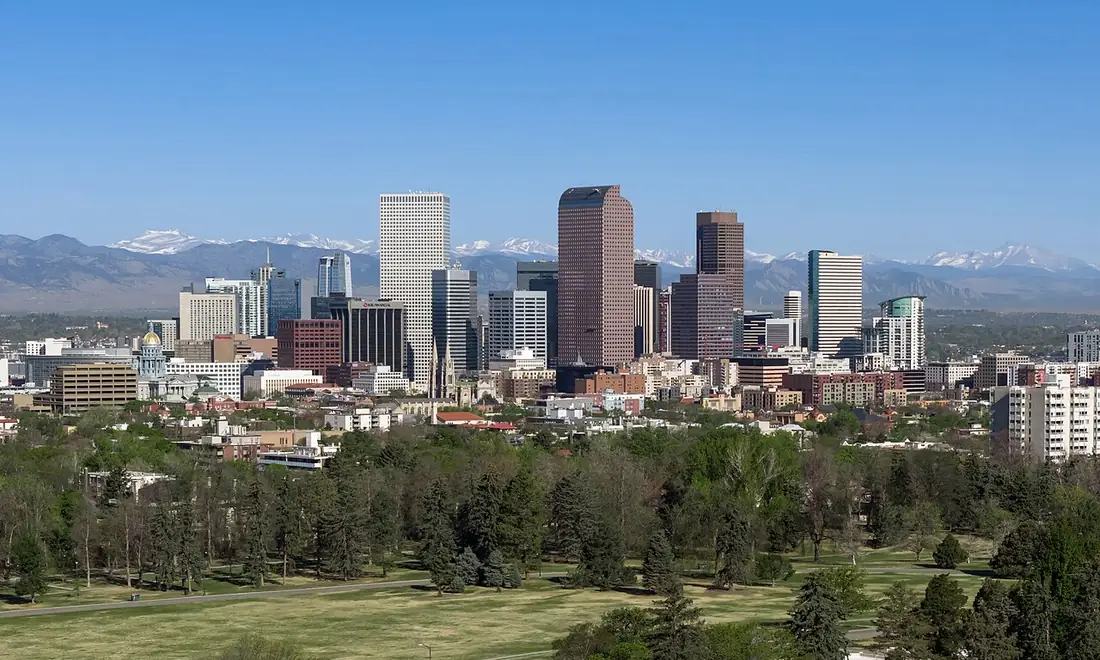
Drain cleaning in Denver, CO - Denver County - 110 ZIP codes covered
Drain Cleaning in Denver, CO
Denver does drain stress at altitude. The City and County of Denver sits at about 1,609 meters, averages 153 freeze days a year, more than anywhere else in this set, and takes 44.3 inches of snow against only 19.1 inches of total precipitation. Its housing mixes eras sharply: 34.3 percent of homes predate 1960, 30.9 percent were built after 2000, and the median home dates to 1975. Old pipe, deep cold, and dry thin air give Denver drains a signature that wetter, lower cities never meet. DrainFlowed will put you in touch with an independent local contractor. Call (866) 555-0134 and describe the fixtures, the build year, and whether the trouble tracks the cold.
One hundred fifty three freeze days at a mile high
Denver's climate numbers are the most extreme in this set in the cold direction. A ten year record shows 153 freeze days a year, 44.3 inches of snowfall, and only about 1.0 heavy rain day annually. At roughly 1,609 meters of elevation, winter air is not only cold but thin and dry, and that combination writes the local drain calendar. The buried lateral sits below the frost line and minds its business. Everything shallower, vents at the roof, traps in garages and crawl spaces, branch lines in exterior walls of older homes, lives inside the freeze envelope for months at a stretch.
The classic Denver winter symptom is gurgling that arrives with a cold snap. Frost builds at the roof vent terminal and narrows the air path the drainage system breathes through, so fixtures pull air through traps instead, with noise, odors and weak flow that imitate a blockage convincingly. The tell is the thaw: a vent problem melts and the house drains normally again, while a real restriction ignores the thermometer entirely. Owners who learn to ask what changed, the weather or the water use, save themselves the cost of cabling a healthy line in January.
The dry air writes the second winter symptom. Heated indoor air at altitude pulls moisture from every exposed surface, and the water seals in little used floor drains and guest fixtures evaporate weeks sooner than they would at sea level. The result is the midwinter sewer smell in the room nobody enters, which is almost never a broken pipe and almost always an empty trap. A monthly pour of water through idle fixtures is the whole maintenance program, and it costs less than the service call it prevents.
Drain problems we handle in Denver
The problems Denver's own housing, ground and weather produce most. The full symptom list is on the problems hub; these are the ones that earn their place here.
Gurgling Drains in Denver
Gurgling is air moving where it should not - displaced by a partial blockage or a vent problem. It is one of the earliest main-line warnings..
Slow Drain in Denver
One slow fixture is a narrowing pipe. Several slow fixtures are a main-line warning. How to tell the difference and what fixes each..
Recurring Clogs in Denver
A clog that returns is not bad luck. It is an undiagnosed cause - roots, scale, a belly, or a cleaning that never removed the material..
Drain Odors in Denver
Sewer smell, rotten-egg smell, sour buildup smell.
A stock split between 1940s pipe and 2000s plastic
Denver's 359,581 housing units divide into generations with different undergrounds. The 34.3 percent built before 1960 drain through clay laterals and cast iron, installed when the city was a fraction of its current size. The 21.2 percent from 1960 to 1979 mixes late metal with early plastic. The 30.9 percent built after 2000 is plastic throughout, on shorter runs with modern cleanouts. The median home, built in 1975, stands in the transition band. Single family homes make up 49.3 percent of the stock, with the rest in multifamily buildings whose stacks are shared infrastructure in miniature.
For the older third of the city, the drain story is material age compounded by ground movement. Freeze and thaw across 153 annual freeze days heaves and settles soil in an annual rhythm, and across seventy years that rhythm worries clay joints open a fraction at a time, exactly the fractions roots exploit each spring when snowmelt raises the water in the ground. A recurring spring clog in a pre 1960 Denver home is a joint story until a camera proves it a habits story, and the camera, at $125-$500, is how the two are told apart.
For the newer third, the pipe is rarely the problem and the inputs usually are. Grease, wipes and overload close sound lines. The practical effect is that two Denver homes on the same street can need opposite responses to the same slow drain, and the cheapest diagnostic fact in the city costs nothing to provide: the year the house was built. Contractors reason from it instantly. Homeowners who offer it on the first call get the right first hypothesis instead of a generic one.
About Denver: the local snapshot
Denver, officially the City and County of Denver, is the capital and most populous city of the U.S. state of Colorado.
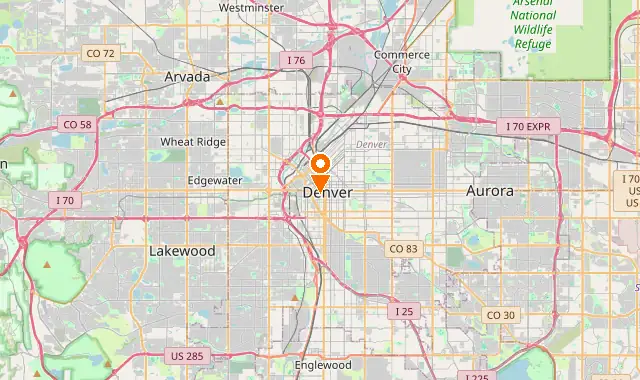
Local facts from Wikipedia and Wikidata, retrieved 2026-10-25. Population and area describe the city itself; the drain coverage counted on this page spans the wider area around it.
Three names on one system: who actually does what in Denver
Denver confuses its own residents about sewer responsibility more than most cities, because three organisations touch the pipe and only one name appears on the bill. Denver Water supplies the drinking water and sends a combined monthly bill in which sanitary sewer charges ride along with water charges. The City and County of Denver's Wastewater Management owns and runs the sanitary sewer collection system and sets the sewer side of that bill. Treatment itself happens at Metro Water Recovery, the regional plant. A homeowner can pay Denver Water for years and reasonably assume Denver Water runs the sewers. It does not.
The city's wastewater guidance also settles a second common assumption: Denver's stormwater system is separate from the sanitary sewer. Rain and snowmelt runoff travel their own network to waterways without passing through treatment, while household wastewater travels the sanitary system to Metro Water Recovery. That separation matters for diagnosis. In combined sewer cities, a hard storm is a leading suspect for a backup. In Denver, with about 1.0 heavy rain day a year and separated systems, a sewage backup points at the house's own line, its roots, its grease, its condition, in nearly every case.
For the homeowner the operational translation is simple. City crews handle the public mains. Your drains and your lateral are a private maintenance matter handled by a contractor you hire. And because the bill structure hides the boundary, the questions worth asking any contractor are the concrete ones: what did you find, where along the line, and what condition is the pipe in. Those answers, not the bill, are where your responsibility and your money actually live.
Snowmelt water with a seasonal hardness swing
Denver Water draws the city's supply from mountain snowmelt and surface water, and its own hardness guidance describes a system with two temperaments. Water from the southern collection system, the South Platte side, runs moderately hard. Water from the northern system runs somewhat soft. The blend a given home receives varies, and hardness itself swings with the seasons, running harder in winter and softer from late spring through autumn as snowmelt dominates the supply.
That puts Denver in a middle position among these cities. Scale is a real but slow contributor, laying down mineral roughness across years rather than seasons, and it teams up with the usual partners: grease filming over roughness in kitchen lines, hair and soap in bathroom branches, roots at the joints of the older stock. A contractor who blames Denver water alone for a fast clog is overselling, and one who ignores it entirely on a 1960s kitchen line is underselling. The honest model is accumulation from several small sources on a pipe that may also be ageing.
The seasonal swing hands owners a maintenance hint. Lines here tend to foul gradually through the hard winter water months and the heavy indoor use of the cold season, which is one reason spring is a sensible annual moment for the older housing stock to have a main line looked at, at standard $99-$450 cleaning rates, rather than during the first cold snap emergency of the next winter at $150-$700. Denver rewards the owners who schedule around its climate instead of being scheduled by it.
Reading Denver symptoms: fixtures, floors and frost lines
The symptom count still governs the first decision. One slow fixture is a branch restriction and a standard cleaning. Several fixtures slowing together, gurgling that crosses rooms, or water appearing in a basement shower when an upper floor drains all point at the main line, a $200-$650 conversation in which a camera earns its place quickly in the older stock. Standing water in a single fixture means that branch has fully closed; stop using it, because a full fixture above a closed branch has nowhere to send anything you add.
Basements deserve a Denver specific note. Much of the city's older housing drains its lowest level by gravity, and the lowest fixture is the house's pressure gauge: it reports main line trouble first and worst. Water or sewage at a basement floor drain during heavy use elsewhere in the house is the main line describing itself, and it should be treated as urgent rather than watched. Stop adding water to the system, because every upstairs flush is volume the line has already told you it cannot move.
Odors, as covered above, belong first to the trap check in this dry altitude climate. One more pattern belongs to the cold: a whole house gurgle that begins on the coldest night of the year and ends with the thaw is the roof vent, and the correct response is patience and a note on the calendar, not a cable. Denver's climate is extreme enough that weather is a legitimate diagnostic category here, and ruling it in or out is real plumbing reasoning, not superstition.
Spring in Denver: meltwater, roots and the annual look
Denver's drain year turns in spring. A winter that delivered a share of the city's 44.3 inches of snow lets go of it in melt cycles, the ground along the lateral wets and moves after months of freeze, and root systems wake up and grow toward the moisture and nutrients a sewer line represents. For the pre 1960 third of the housing stock, whose clay joints have been opening a fraction at a time across decades of exactly this season, spring is when a marginal joint becomes an active root entry and a slow line begins its year.
That timing makes spring the natural moment for the older home's annual look: a main line cleaning while access is easy and contractors are not yet in the summer rush, and a camera every few years so the household's picture of its own pipe stays current. The work prices at the friendly end of the published ranges when it is scheduled, a standard cleaning at $99-$450, against the same work bought as a July emergency or a January freeze call at $150-$700. Denver's climate is the scheduling argument, and it repeats every year on schedule.
Spring is also when the winter's quieter lessons can be read. A trap that dried out and let odor in marks a fixture for the monthly water routine. A gurgle that arrived with the coldest week and left with the thaw was the roof vent introducing itself, and it needs no work, only recognition next year. A slowdown that ignored the weather entirely is the line itself, and it should not be carried into another winter unexamined, because the season that tests Denver plumbing hardest is always the one coming, not the one just survived.
None of this requires anxiety, only rhythm. Denver rewards owners who put the drain system on the same seasonal calendar as the gutters and the sprinkler blowout: eyes on it in spring, traps wet through winter, and symptoms read against the weather before they are read as failures. At a mile high, with 153 freeze days a year working on a third of the housing stock that predates 1960, that rhythm is simply what owning the pipe looks like here.
What drain work costs in Denver, and how the call works
Denver work is quoted against the national ranges published across DrainFlowed. Against those ranges a standard drain cleaning runs $99-$450, main line cleaning $200-$650, sewer line cleaning $250-$900, hydro jetting $300-$900, a camera inspection $125-$500 and an emergency visit $150-$700. A single branch in a newer home sits low in its range. A pre 1960 main line with root cutting and a camera sits mid range in two categories at once, and any excavation sits beyond these ranges and should follow footage, never precede it.
DrainFlowed is a connection service. The contractor who arrives is an independent local business, sets their own final price within the range you discuss, and carries their own licence and insurance, which you should verify before work begins. When you call (866) 555-0134, the three facts that steer a Denver visit are the build year, whether the symptoms track the cold, and whether more than one fixture is involved. Those answers separate the vent frost call from the root call from the grease call before the truck rolls.
Keep the invoice and any camera notes with your house records, dated. In a city with the deepest freeze in this set acting on a housing stock a third of which predates 1960, a drain history is the difference between a pipe with a maintenance rhythm and a pipe that introduces itself once a decade, at altitude, in January, on its own terms.
Drain services available in Denver
The services that answer Denver's lead problems, from the independent contractors who cover the city. Ranges are the national typical ranges used across this site.
| Service | Typical range | What it is |
|---|---|---|
| Drain Cleaning | $99-$450 | The core service: mechanical cleaning that clears the clog and scrapes the pipe walls, not just a hole poked through the blockage.. |
| Clogged Drain Repair | $120-$550 | For the drain that is already blocked: diagnosis first, then the right fix, so the same clog does not come back next month.. |
| Main Line Cleaning | $200-$650 | When every drain in the house slows at once, the problem is the main line. |
| Hydro Jetting | $300-$900 | High-pressure water that scours pipe walls clean - the answer for grease, scale and lines that keep re-clogging after cabling.. |
| Drain Camera Inspection | $125-$500 | See inside the pipe before you spend on the fix: roots, cracks, bellies and blockages located precisely, with footage to decide on.. |
| Bathroom Drain Cleaning | $99-$400 | Hair, soap scum and toothpaste: tubs, showers and bathroom sinks cleared at the trap and the branch, not just at the surface.. |
Full detail on every service, with signs and causes, is on the services hub, and every range on the site is collected in the cost guide.
Denver coverage snapshot
Nearby covered cities: Colorado Springs, Aurora, Fort Collins, Lakewood.
Denver sewer and water resources
The city and utility pages this page's local facts rest on, worth bookmarking if you own a home in Denver:
Sources for this page
- housing age and mix: Median year built 1975, 34.3 percent pre 1960, 21.2 percent built 1960 to 1979, 30.9 percent post 2000, 359,581 units, 49.3 percent single family (source)
- climate and elevation: 19.1 in annual precipitation, 44.3 in snow, 153 freeze days, 1.0 heavy rain days per year (2014 to 2023 average); elevation about 1,609 m (source)
- system structure: Sanitary sewer billed in combination with Denver Water on one bill; sewage is treated at Metro Water Recovery; the stormwater system is separate from the sanitary sewer system (source)
- water hardness: Denver Water snowmelt surface supply: southern collection system moderately hard, northern somewhat soft; harder in winter, softer late spring through fall (source)
- Housing age: median year built and build-era shares (US Census Bureau ACS)
- Weather averages: 2014-2023 daily record (Open-Meteo archive, ERA5)
Coverage around Denver
Nearby cities we cover in Colorado
- Drain cleaning in Colorado Springs, CO
- Drain cleaning in Aurora, CO
- Drain cleaning in Fort Collins, CO
- Drain cleaning in Lakewood, CO
- Drain cleaning in Thornton, CO
- Drain cleaning in Grand Junction, CO
The full list for the state is on the Colorado locations page.
Beyond Denver
Coverage at this depth continues nearby: see drain cleaning in Colorado Springs, CO and drain cleaning in Aurora, CO, each written from its own city's data the same way this page is.
Questions, answered
Can Denver winters freeze my drains?
Denver averages 153 freeze days a year, the most in this set, so shallow branches, traps in unheated spaces and lines in exterior walls live near freezing for long stretches. Deep buried laterals sit below the frost line. A drain that slows only in the coldest weeks and recovers in a thaw is showing you a temperature pattern, and that timing is worth stating on the call, because the remedy differs from clearing a blockage.
Who handles Denver's sewers? My bill says Denver Water.
Denver Water handles drinking water, billing and the combined bill. The City and County of Denver Wastewater Management runs the sanitary sewer system, and treatment happens at Metro Water Recovery. Your sanitary sewer charges appear on the Denver Water bill, which is why the names blur. For a drain problem inside the house or in your lateral, you call a contractor, not any of the three.
Is Denver water hard?
Seasonally. Denver Water describes its snowmelt fed supply as moderately hard from the southern collection system and somewhat soft from the northern, running harder in winter and softer from late spring through fall. Scale forms here, but at a slower, seasonal pace than in desert hard water cities, so grease and root and pipe age share the blame for narrowed lines.
How much does drain cleaning cost in Denver?
Prices run $99-$450 for a standard cleaning, $200-$650 for main line work and $125-$500 for a camera inspection. In the pre 1960 stock, which is 34.3 percent of Denver homes, a camera alongside the cleaning is the spend that separates a maintenance visit from a pipe condition discovery. The range is agreed with the independent contractor before work begins.
Why did my drain back up during a holiday gathering?
Most often because the line was already narrowed and the gathering found it. A house at full use pushes water at a rate a restricted line cannot match, so the backup picks the busiest day. The fix is still mechanical: clean the line, and if it has happened before, add the camera so the next gathering is not the test.
Does rain cause Denver sewer backups?
Denver's stormwater system is separate from the sanitary sewer, confirmed in the city's own wastewater guidance, so storm drains and sanitary drains are different networks. Rain alone rarely explains a sewage backup here, which is why a Denver backup points first at the house line itself: roots, grease, or a main line restriction.
There is a sewer smell in a little used room this winter. Why?
Likely a dry trap. At a mile high, heated winter air is very dry, and little used floor drains and guest fixtures lose their water seal to evaporation, letting sewer gas in. Run water into every fixture in the room, repeat monthly through winter, and escalate only if the smell survives full traps.
Drain problem in Denver? Make the call
A live person answers around the clock. Describe the problem, hear the likely range, and get an independent local contractor on the way.
(866) 555-0134 Tap to call nowA live person answers, day or night. Describe the problem, hear the likely range, then decide.