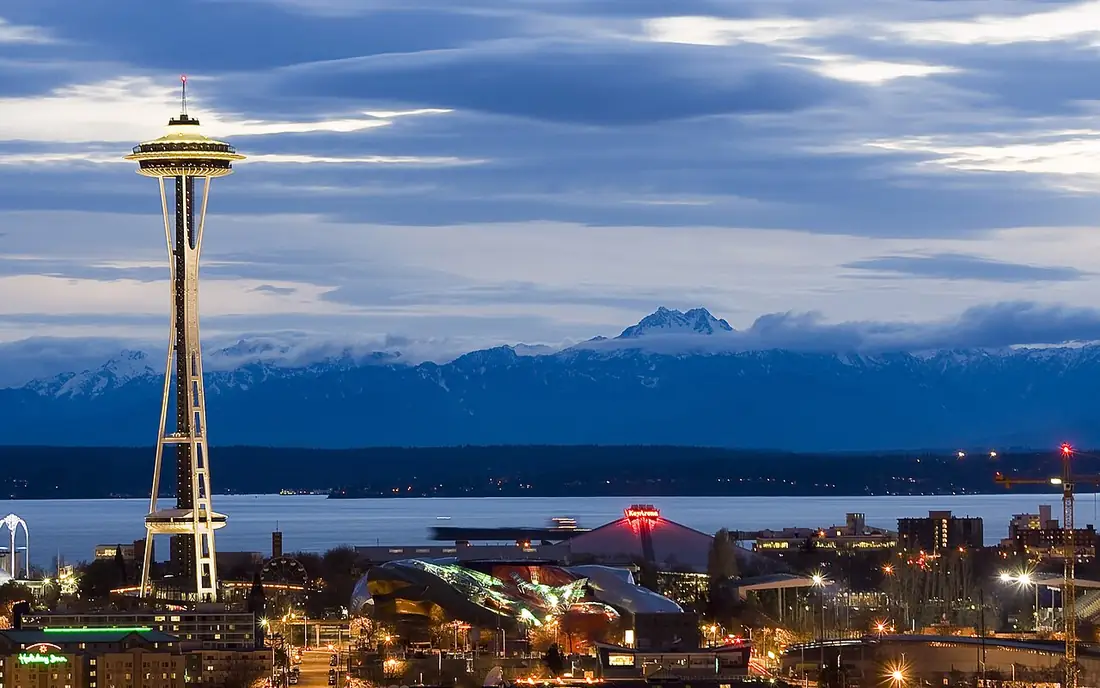
Drain cleaning in Seattle, WA - King County - 115 ZIP codes covered
Drain Cleaning in Seattle, WA
Seattle has a name for the pipe other cities call a lateral, and the name comes with a rule. Your side sewer is yours for its entire run, from the house all the way to the public main in the street, including the part that leaves your property. Combine that ownership with a median home built in 1976, 38.4 percent of housing predating 1960, and 48.7 inches of rain a year falling on a partly combined sewer system, and Seattle drain problems tend to be ownership problems wearing a plumbing costume. Through DrainFlowed you are connected with an independent local contractor. Call (866) 555-0134 and describe the fixtures involved and whether rain is part of the pattern.
The side sewer rule: your pipe runs to the main
Seattle Public Utilities states the rule without decoration: property owners are responsible for maintaining and repairing their side sewers and for keeping them in good condition, and the side sewer is defined as the pipe running from the building all the way to the public sewer main. The segment beyond your property line, under the sidewalk or planting strip, is included. SPU's responsibility begins at the main itself. The ownership sits in Seattle Municipal Code Chapter 21.16, so this is code, not custom.
Two consequences follow. First, a failure out near the street is not the city's repair bill, which surprises owners who assumed the public portion was public. Second, when a side sewer serves more than one property, both owners share responsibility for the combined section from the point where their pipes join. If you share a side sewer with a neighbour, a blockage in the shared run is a shared conversation, and it helps to have that talk before the sewage is in someone's basement rather than during.
The practical Seattle sequence therefore starts with location. Cleaning first, because most side sewer trouble is still just material in the pipe. Then, if the problem recurs or the cable meets something that feels structural, a camera run that maps exactly where the fault sits along the line. In a city where you own every foot of the run, the map is the budget document. SPU also notes interest free loans for low and fixed income customers needing side sewer repair, which is worth knowing before a failure becomes an emergency loan of a worse kind.
Drain problems we handle in Seattle
The problems Seattle's own housing, ground and weather produce most. The full symptom list is on the problems hub; these are the ones that earn their place here.
Multiple Drains Backing Up in Seattle
Several drains failing together is the main line or sewer until proven otherwise. Stop the water, protect the floor, make the call..
Recurring Clogs in Seattle
A clog that returns is not bad luck. It is an undiagnosed cause - roots, scale, a belly, or a cleaning that never removed the material..
Gurgling Drains in Seattle
Gurgling is air moving where it should not - displaced by a partial blockage or a vent problem. It is one of the earliest main-line warnings..
Rain on a combined system: the Seattle backup pattern
Seattle's 48.7 inches of annual precipitation falls across many months rather than in a single season, with about 6.2 heavy rain days a year on the ten year record. Parts of the city are served by combined sewers, where one pipe carries both sewage and stormwater, and SPU runs an active combined sewer overflow program complete with storage projects designed to hold storm volume back from the system. When a combined pipe surcharges in a hard rain, homes connected to it through low side sewers can see the pressure arrive indoors, at basement fixtures first.
The city's own remedy tells you how it thinks about the problem. RainWise, a partnership between King County and SPU, rebates rain gardens and cisterns on eligible properties inside combined sewer basins. The logic is direct: every roof gallon held on the lot is a gallon the combined pipe does not have to carry at the storm's peak, which lowers the surcharge risk for every house on that pipe. It is a drain program disguised as a landscaping rebate, and owners in combined basins should read it that way.
For the individual home, the wet weather checklist is short. Know whether your area is combined or separated, because the backup profile differs. Watch whether slow drainage at home correlates with heavy rain, and say so when you call, because that correlation points at the system beyond your line as well as at your line itself. And keep the side sewer in genuinely good condition: a pipe already narrowed by roots or grease has no spare capacity on the one day a year it needs all of it.
About Seattle: the local snapshot
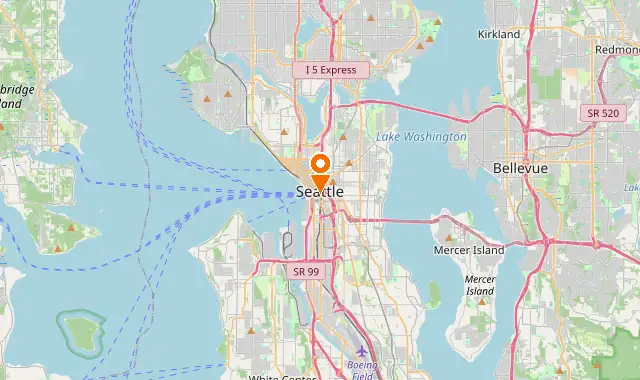
Local facts from Wikipedia and Wikidata, retrieved 2026-10-25. Population and area describe the city itself; the drain coverage counted on this page spans the wider area around it.
A 1976 housing stock split between iron and plastic eras
Seattle's 393,918 housing units split into distinct drain generations. The 38.4 percent built before 1960 drain through older materials, clay side sewers and cast iron in the house. The large post 2000 share, 32.8 percent, drains through modern plastics. The median home, built in 1976, sits in the transition years between those worlds. Only 42.9 percent of homes are single family, so a large share of Seattle drainage runs through shared systems in multifamily buildings where a stack problem belongs to no single kitchen.
That spread is why blanket advice fails here. A 1920s home with a clay side sewer and a mature street tree is a root management property, and its owner should think in annual or biennial cleaning intervals with a camera every few years. A 2005 townhouse with plastic throughout is a habits property: grease and wipes, not geology. The symptom can look identical from the kitchen sink. The underlying line, and therefore the right remedy and interval, is completely different.
Hillside and shoreline lots add one more Seattle variable: side sewers here often run long and downhill, sometimes across slopes where soil moves a little in the wet season. A line that shifts can develop a belly, a low section where water and solids settle instead of flowing. A belly feels like a recurring clog that cleaning fixes for a few months, because the material re-settles in the same low spot. Only a camera shows the sag. If you have cleaned the same line twice in two years, the third call should be a camera call.
Access deserves a mention in this housing mix, because a side sewer is only maintainable where a contractor can reach it. Older Seattle homes may offer nothing better than a crawl space cleanout or a vent on the roof, while newer construction usually provides a proper outside cleanout near the foundation. That difference quietly prices every future visit. If a camera crew cannot get in cleanly, they cannot show you the line, and in a city where the owner carries the whole run to the main, an added cleanout is one of the few plumbing purchases that pays for itself at the very next problem.
Soft mountain water, and what narrows Seattle drains instead
One suspect can be dismissed quickly in Seattle. SPU water analysis for the Cedar River and Tolt River supplies puts hardness at roughly 1.3 to 1.4 grains per gallon, soft water by any national standard, because the supply is mountain surface water rather than mineral heavy groundwater. Soft water does not lay down the thick mineral scale that narrows pipes in desert and limestone cities. If a Seattle drain is narrow, the water did not do it.
The real agents here are corrosion, grease and roots. Cast iron from the older housing generations corrodes internally, and the rust surface grips debris the way a rough road grips mud. Kitchen grease then layers over that roughness. Outside the house, roots enter side sewer joints and grow into hanging curtains that catch everything solid. Each of these cleans differently: corrosion roughness and grease respond to thorough mechanical cleaning and to hydro jetting in the $300-$900 range, root curtains need cutting and then a joint conversation, and none of them respond at all to the chemical openers that promise to dissolve what is, mechanically, a physical mat.
The softness of the water has one more implication owners misread. Because scale is absent, a Seattle drain that keeps narrowing year over year is telling you the pipe wall itself is changing, either rusting inward or admitting roots at a growing rate. That is a pipe condition story, and pipes with condition stories deserve cameras, records and intervals, not repeated blind cleanings bought one emergency at a time.
Permits: what needs one in Seattle and what does not
Owners are often unsure whether drain work at home triggers city process, and SPU draws that line clearly enough to plan around. Cleaning work, the cabling, jetting and camera inspection that makes up the large majority of drain calls, is maintenance on your own pipe and proceeds without a side sewer permit. Repair and replacement of the side sewer is construction, and it does require a permit through SPU's side sewer permit process, with the work done to code because the pipe connects your property to a public main.
This split is actually useful for pacing a problem. Nothing about a permit should delay getting a blocked line cleaned and televised today, and the footage from that visit is precisely what a permit application and a repair quote are built on. The expensive mistake is the reverse order: committing to a replacement on the strength of a symptom, then discovering during excavation that the line needed a cleaning and one joint repair.
Shared side sewers add a coordination step rather than a permit step. If the fault sits in the combined section, both owners are responsible for it, and a contractor's camera footage with distances marked gives both households the same facts to split a bill over. Get the footage in writing. In shared pipe situations, the document is what keeps a plumbing problem from becoming a neighbourhood problem.
Buying or selling in Seattle: put the side sewer in the paperwork
Nowhere does Seattle's side sewer ownership rule bite harder than at a property transaction. The buyer of a Seattle home does not merely purchase a house; they purchase a pipe that runs from that house all the way to the public main, including under the sidewalk, with the repair liability attached. A side sewer that fails the winter after a sale is not a surprise defect in any moral sense. It is an uninspected asset transferring exactly as it was, and the city's ownership rule makes its condition the buyer's inheritance.
The practical response is a sewer scope as a standard part of buying an older Seattle home, arranged the way a roof inspection is arranged. A camera run through the side sewer, priced in the familiar $125-$500 range, reports the material, the joints, any root entry, offsets or bellies, and the distance to any fault. In a city where 38.4 percent of homes predate 1960, that footage is not pessimism. It is the only honest way to price a known liability into a negotiation, and sellers with clean footage hold a document that answers the question every informed buyer is now asking.
Shared side sewers deserve a specific question during a purchase, because SPU's rule shares responsibility for the combined section between the properties it serves. A buyer should learn whether the home's side sewer is shared, where it joins the neighbour's line, and what condition the shared run is in. None of that appears on a listing sheet. All of it appears on a camera, and on the city records a thorough buyer's agent can request.
Owners on the selling side can use the same logic in reverse. A side sewer cleaned and televised before listing, with the footage and any repair permits kept with the house records, converts the largest unknown in a Seattle transaction into a demonstrated fact. In a market of 1976 median housing, that is not decoration. That is diligence made visible, priced in the same currency as every other system in the house.
What drain work costs in Seattle, and how the call works
Prices follow the national ranges DrainFlowed publishes in every city. For Seattle the figures are a standard cleaning at $99-$450, main line cleaning at $200-$650, sewer line cleaning at $250-$900, hydro jetting at $300-$900, a camera inspection at $125-$500 and emergency visits at $150-$700. A single bathroom branch in a newer home sits low in its range. A full side sewer cleaning with a camera, the classic older Seattle house call, combines two ranges in the middle. Excavation and replacement sit outside these ranges entirely and should only ever follow footage.
DrainFlowed is a connection service. The contractor who arrives is an independent local business, sets their own final price inside the range you discuss, and carries their own licence and insurance, which you should verify before work begins. When you call (866) 555-0134, the details that save time in this city are the age of the house, whether the problem tracks with heavy rain, and whether your side sewer is shared. Each answer changes the equipment that comes out of the truck.
After the visit, keep the receipt and any camera notes with your house records. A side sewer in Seattle is a long lived asset you fully own, and its service history appreciates like any other documentation: the next contractor starts from evidence instead of zero, and a future buyer inherits a pipe with a paper trail instead of a rumour.
Drain services available in Seattle
The services that answer Seattle's lead problems, from the independent contractors who cover the city. Ranges are the national typical ranges used across this site.
| Service | Typical range | What it is |
|---|---|---|
| Main Line Cleaning | $200-$650 | When every drain in the house slows at once, the problem is the main line. |
| Sewer Line Cleaning | $250-$900 | The buried line from your house to the street: root cutting, scale removal and jetting, with camera proof of the pipe's condition.. |
| Hydro Jetting | $300-$900 | High-pressure water that scours pipe walls clean - the answer for grease, scale and lines that keep re-clogging after cabling.. |
| Drain Camera Inspection | $125-$500 | See inside the pipe before you spend on the fix: roots, cracks, bellies and blockages located precisely, with footage to decide on.. |
| Emergency Drain Cleaning | $150-$700 | Sewage backing up, water rising, guests arriving: what counts as a drain emergency, what to do in the first ten minutes, and how the visit works.. |
Full detail on every service, with signs and causes, is on the services hub, and every range on the site is collected in the cost guide.
Seattle coverage snapshot
Nearby covered cities: Bothell, Burien, Shoreline, Sammamish.
Seattle sewer and water resources
The city and utility pages this page's local facts rest on, worth bookmarking if you own a home in Seattle:
Sources for this page
- housing age and mix: Median year built 1976, 38.4 percent pre 1960, 14.4 percent built 1960 to 1979, 32.8 percent post 2000, 393,918 units, 42.9 percent single family (source)
- climate: 48.7 in annual precipitation, 9.8 in snow, 25 freeze days, 6.2 heavy rain days per year (2014 to 2023 average) (source)
- sewer lateral responsibility: Owner owns and must maintain the side sewer all the way to the public main including beyond the property line, under Seattle Municipal Code Chapter 21.16; SPU covers the main; shared side sewers share responsibility; interest free loans exist for low and fixed income side sewer repair (source)
- combined sewer: Seattle operates a combined sewer system in parts of the city with a CSO control program and annual reporting; RainWise rebates serve combined sewer basins (source)
- water hardness: Hardness about 1.3 to 1.4 grains per gallon for the Cedar and Tolt supplies per SPU water analysis; soft water (source)
- Housing age: median year built and build-era shares (US Census Bureau ACS)
- Weather averages: 2014-2023 daily record (Open-Meteo archive, ERA5)
Coverage around Seattle
Nearby cities we cover in Washington
- Drain cleaning in Bothell, WA
- Drain cleaning in Burien, WA
- Drain cleaning in Shoreline, WA
- Drain cleaning in Sammamish, WA
- Drain cleaning in Redmond, WA
- Drain cleaning in Auburn, WA
- Drain cleaning in Kirkland, WA
- Drain cleaning in Federal Way, WA
The full list for the state is on the Washington locations page.
Beyond Seattle
Coverage at this depth continues nearby: see drain cleaning in Spokane, WA and drain cleaning in Kennewick, WA, each written from its own city's data the same way this page is.
Questions, answered
Do I really own the sewer pipe all the way to the street main in Seattle?
Yes, and further than most owners expect. In Seattle you own the side sewer all the way to the public main, including the stretch beyond your property line, and Seattle Municipal Code Chapter 21.16 covers that ownership. SPU maintains the main itself. If a side sewer is shared with a neighbour, responsibility for the shared section is shared from the point where the pipes combine.
Is my basement backup connected to Seattle's combined sewers?
It can be. Parts of Seattle drain through a combined system where stormwater and sewage share pipes, and during the city's roughly 6.2 heavy rain days a year those pipes can surcharge. RainWise, run in combined sewer basins, rebates rain gardens and cisterns that keep roof water out of the system, which tells you how seriously the city treats storm volume. A backup that arrives with a storm deserves both a contractor visit and a look at your roof drainage.
Is Seattle water hard enough to scale my drains?
No. Seattle's water is soft, testing at roughly 1.3 to 1.4 grains per gallon for the Cedar and Tolt supplies in SPU analysis, far below hard water cities. Scale is rarely the culprit here. Narrowed Seattle drains are usually grease, corrosion in older metal pipe, or roots at a side sewer joint, which clean differently and recur differently.
How much does drain cleaning cost in Seattle?
A standard cleaning runs $99-$450, main and side sewer work $200-$650, and a camera inspection $125-$500. A cleaning needs no permit. Repairs and replacements to the side sewer do require a side sewer permit from SPU, so if footage shows damage, expect the repair conversation to include permitting. You agree the range with the independent contractor before work starts.
Does Seattle help pay for side sewer repairs?
Possibly. SPU offers interest free loans to low and fixed income customers specifically for side sewer repair, because the city knows that pipe is the owner's. A contractor cannot apply for you. If a camera shows a failed side sewer and cost is the obstacle, that loan program is the first place to look.
My drains gurgle only during cold snaps. Is it a blockage?
It may be a venting or trap issue rather than the line itself. Seattle averages 25 freeze days a year, enough for frost to narrow a roof vent terminal during a cold snap and make fixtures gurgle until the thaw. If the pattern tracks the temperature exactly, mention it on the call before anyone cables the line.
What does a rain garden have to do with my drains?
Connection. Roof runoff is volume the combined system must carry during a storm, and every gallon kept on your lot in a rain garden or cistern is a gallon not competing with your side sewer's outflow. RainWise rebates exist for eligible properties in combined sewer basins for exactly that mechanical reason.
Drain problem in Seattle? Make the call
A live person answers around the clock. Describe the problem, hear the likely range, and get an independent local contractor on the way.
(866) 555-0134 Tap to call nowA live person answers, day or night. Describe the problem, hear the likely range, then decide.