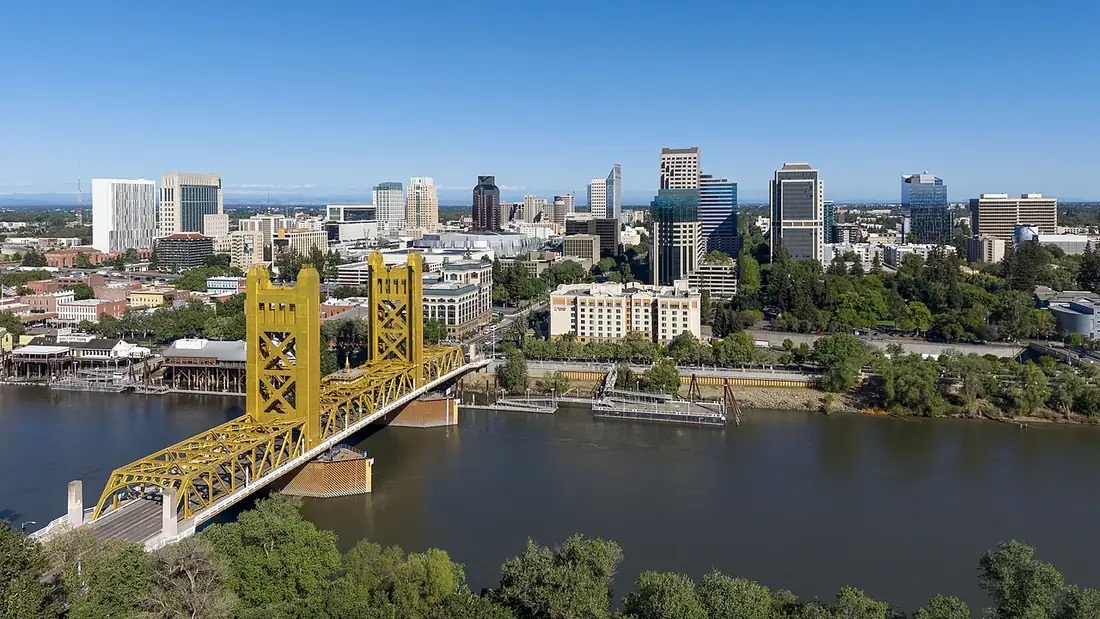
Drain cleaning in Sacramento, CA - Sacramento County - 100 ZIP codes covered
Drain Cleaning in Sacramento, CA
Sacramento draws its sewer line down the middle of your lateral, and the drawing explains years of homeowner confusion. In the Sacramento Area Sewer District service area, the lateral comes in two named parts. The upper lateral, from your building plumbing to the cleanout at the property line or easement, is maintained by the property owner. The lower lateral, from that cleanout to the sewer main, along with the main itself, is maintained by the district, known locally as SacSewer. A blockage a few feet on one side of that cleanout is a private plumbing bill. The same blockage a few feet past it is a district call, answered around the clock. Around that split sits a river city of median 1977 housing, famous valley oaks with root systems to match, hot dry summers, and winter rain that arrives in atmospheric bursts.
Upper lateral, lower lateral and the cleanout that decides
Most cities hide their responsibility split in code language. Sacramento draws it in a diagram the district publishes for homeowners, showing a typical front yard and back yard configuration. Building plumbing and the upper lateral sit on the owner side, ending at a private cleanout near the property line or the edge of a utility easement. From that cleanout, the lower lateral runs to the manhole and main, and that stretch is maintained by the Sacramento Area Sewer District. The cleanout is therefore not just an access point. It is the border crossing of the whole system.
The practical consequence is a diagnostic order of operations. When drains fail, the first useful question is where the problem sits relative to that cleanout. A contractor can open the cleanout and read the answer: standing water on the house side points one way, a clear house side with problems beyond points toward the district side. SacSewer crews respond 24 hours a day, seven days a week, and the district invites calls when a problem may be theirs. Making that call with cleanout evidence in hand gets a faster, better answer than making it with a guess.
Owners who do not know where their cleanout is should treat finding it as this year maintenance priority. In Sacramento it is commonly at the property line, sometimes at the back fence line where the easement runs behind the lot, and it is easily buried by landscaping, bark or a decade of garden redesign. A cleanout nobody can find converts every future job into archaeology. Locate it, mark it, keep it reachable, and write its position into the house records for the next owner.
Renters should know the split exists too, because the first call differs by side. A slow single fixture is a landlord and contractor matter on the private plumbing. A whole house backup with sewage at the cleanout deserves the district call as well as the landlord call, promptly, so both owners of the problem, and there genuinely are two here, are working on it at once.
Drain problems we handle in Sacramento
The problems Sacramento's own housing, ground and weather produce most. The full symptom list is on the problems hub; these are the ones that earn their place here.
Recurring Clogs in Sacramento
A clog that returns is not bad luck. It is an undiagnosed cause - roots, scale, a belly, or a cleaning that never removed the material..
Slow Drain in Sacramento
One slow fixture is a narrowing pipe. Several slow fixtures are a main-line warning. How to tell the difference and what fixes each..
Standing Water in Sacramento
Water that will not go down has a blockage at a specific level. Which level decides whether it is a quick clean or a main-line job..
Valley oaks and the roots that run this market
Sacramento identity is written in oak canopy, and its drain market is written underneath it. Mature valley oaks and other large street and garden trees send roots toward any consistent moisture source, and a sewer lateral joint that weeps even slightly is exactly that. Roots enter as fine threads at joints and cracks, thicken inside the pipe where water and nutrients reward them, and build the fibrous mats that catch solids until flow stops. In this city, a recurring clog with no other explanation is a root story until a camera proves it is not.
The housing data sets the stage. The median Sacramento home was built in 1977, with about 29.8 percent predating 1960 and 23.7 percent from 1960 to 1979. More than half the stock is therefore carrying laterals old enough to have opened at the joints, across roughly 212,485 housing units, about 65.9 percent of them single family. The trees and the pipes grew up together, and they are now, jointly, the main characters in Sacramento drain work.
Root management here is a rhythm, not an event. Cutting roots restores flow, and they return on a growing season schedule unless the entry point is sealed, lined or repaired. Hydro jetting in the $300-$900 range clears mats thoroughly and scours the wall; mechanical cutting handles dense growth; a camera inspection in the $125-$500 range maps the entry joints so the conversation can move from repeated clearing to permanent repair where it counts. Owners who budget an annual or biennial rhythm for a known root line spend less, with fewer emergencies, than owners who wait for each backup.
A word of restraint belongs here. Chemical root treatments and foams have their place in a managed plan a contractor designs, but indiscriminate use can damage the very trees that make these streets valuable, and mature oaks are protected and prized in this city. The mechanical route, cut, film, seal the entry, keeps both assets alive: the canopy above ground and the pipe below it. Sacramento is one of the few cities where a drain decision is also an arboriculture decision, and good local contractors think that way automatically.
About Sacramento: the local snapshot
Sacramento is the capital city of the U.S. state of California.
Sacramento is the county seat of Sacramento County, and the snapshot below keeps the city itself separate from the wider coverage area around it.
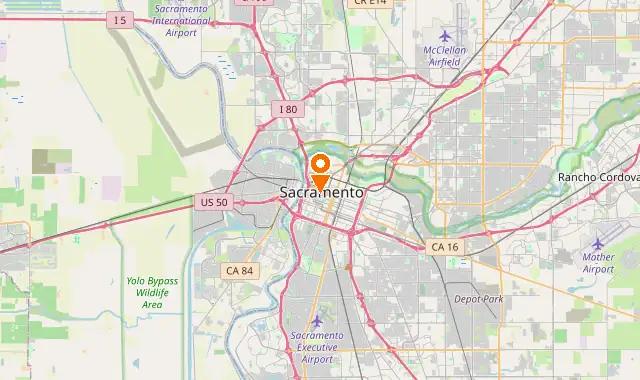
Local facts from Wikipedia and Wikidata, retrieved 2026-10-25. Population and area describe the city itself; the drain coverage counted on this page spans the wider area around it.
Hot summers, river winters and a mostly freeze free system
Sacramento climate in the record is Mediterranean and decisive: about 24.3 inches of precipitation a year, almost all of it in the wet season, only about 8 freeze days and effectively no snow. Heavy rain days average roughly 5.5 a year, but they tend to arrive as genuine storms off the Pacific, dropping serious water on ground and systems that have been dry for months. Drains here are therefore tested in pulses, like San Antonio but with a longer, more predictable wet season to prepare for.
Summer shapes pipes too, in the opposite direction. Long hot, dry months dry the soil out, and roots range further and push harder toward the moisture a lateral offers in a parched yard. The first autumn storm then loads lines that have spent the summer quietly accumulating root growth. The classic Sacramento sequence, fine all summer, blocked in the first big rain, is not bad luck. It is the local calendar expressing itself through your plumbing.
Freeze damage, by contrast, is a bit player. With so few freeze days, buried lines are safe and even exposed plumbing rarely suffers. Budget and attention in this city belong to roots, age and storm readiness rather than cold. Autumn is the working season: clear the line, film it if it has a history, confirm the cleanout is reachable, and meet winter with a known system. Contractors calendars fill when the first atmospheric river is forecast, and the owners who called in October are not in that queue.
Elevation adds a footnote for low lying areas near the rivers that define this city. Sacramento sits at about 14 meters elevation in a valley built by the Sacramento and American rivers, and drainage in the lowest neighborhoods works against high water tables in wet winters. This page makes no flood claims for any specific street, because that requires address level data, but owners in low areas should treat slow drainage during prolonged rain as a system wide condition to monitor, and keep the district number handy alongside their contractor number.
What a 1977 median really means for your pipes
A median build year of 1977 splits Sacramento into pipe generations. The pre 1960 third of the city, much of it in the established central neighborhoods, runs the oldest materials and the most jointed lines, under the oldest trees. The 1960 to 1979 band, about 23.7 percent, is now 45 to 65 years old, squarely in the window where original laterals begin failing in earnest. The post 2000 quarter of the stock, about 23.4 percent, mostly deals with use related clogs and construction era quirks rather than age.
For buyers, that arithmetic makes the sewer scope one of the highest value inspections in a Sacramento purchase. The camera shows material, joint condition, root load and, uniquely here, the state of the upper lateral you are about to own, while confirming the cleanout position that defines your border with the district. A seller who can produce recent footage holds a real advantage in the older neighborhoods, where every informed buyer is quietly pricing underground risk into the offer.
For long term owners, the same data argues for a midlife plan rather than emergency living. A line filmed at 45 years old and found sound is an asset with a monitoring rhythm. A line found jointed and rooted is a repair to schedule in dry weather at dry weather prices. Either finding is better than the alternative, which is meeting your lateral for the first time through a backup in January, with a crew, a queue and a storm all competing for the same hours.
Multi unit and duplex owners should note the shared version of the same logic. Where one lateral serves more than one unit, every household inherits the weakest joint on the run, and the cleanout border with the district still applies to the shared line. Coordinating a camera pass and splitting a $125-$500 inspection across units is the cheapest governance upgrade a small Sacramento landlord can make.
Costs on your side of the cleanout
Private side work in Sacramento follows the standard ranges: drain cleaning $99-$450, main line cleaning $200-$650, sewer line work $250-$900, hydro jetting $300-$900, camera inspection $125-$500 and emergency service $150-$700. The camera spend carries the usual Sacramento bonus: it can move a problem across the cleanout border into district responsibility, which no amount of private cleaning money can do. Sequence matters here more than in most cities. Diagnose first, establish the side, then spend.
DrainFlowed is a connection service, not a plumbing company and not part of the district. It connects Sacramento homeowners with independent local contractors for the private side of the line. SacSewer remains the call for problems on the district side, and an honest contractor will tell you when the evidence points that way, even though it ends their job, because that honesty is what a referral based local business runs on. Verify license and insurance, agree your range in writing and keep the footage with the house papers.
Call (866) 555-0134 to connect with an independent contractor, and say where your cleanout is and what it shows if you have looked: water standing on the house side, water standing beyond it, or a cleanout you cannot find at all. Each answer shortens the visit. If sewage is surfacing in the street or the manhole, that is district territory, call SacSewer as well. Sacramento system is genuinely shared, and using both halves of it correctly is the whole skill this page exists to teach.
Emergencies, evidence and the two phone numbers rule
Sacramento is a two phone number city for drain trouble, and keeping both numbers ready is the practical heart of this page. The district number belongs on the refrigerator for anything that may sit beyond the cleanout: sewage at the manhole, a street surcharge, a lower lateral problem the district owns. The contractor route, through DrainFlowed at (866) 555-0134, belongs next to it for everything on your side: the upper lateral, the house plumbing, the root mat in your own run. Emergencies punish hesitation, and hesitation usually comes from not knowing which system you are calling into. Here, you can know, in advance, for the price of reading a diagram.
When you do call either side, lead with evidence. State the address, the fixtures affected, whether the cleanout shows standing water and which side of it the water stands on, and whether neighbors are affected. That thirty second report routes a district crew or a contractor crew correctly the first time, and it marks you as the kind of caller whose information can be trusted when the next decision, whose budget, whose repair, is made from it. In a shared system, good information is a form of currency, and Sacramento homeowners who deal in it get served measurably better by both halves of their sewer.
Finally, file what the visit produces. Camera footage, the contractor findings and any district response belong together in the house record, because the next event will be diagnosed against them. A line with a documented history gets precise help. A line with a folk history gets guesses. Sacramento unusual split makes that documentation doubly valuable: it is the proof of where your responsibility has been maintained and where the district begins, kept in a form either side will accept.
Drain services available in Sacramento
The services that answer Sacramento's lead problems, from the independent contractors who cover the city. Ranges are the national typical ranges used across this site.
| Service | Typical range | What it is |
|---|---|---|
| Drain Cleaning | $99-$450 | The core service: mechanical cleaning that clears the clog and scrapes the pipe walls, not just a hole poked through the blockage.. |
| Clogged Drain Repair | $120-$550 | For the drain that is already blocked: diagnosis first, then the right fix, so the same clog does not come back next month.. |
| Hydro Jetting | $300-$900 | High-pressure water that scours pipe walls clean - the answer for grease, scale and lines that keep re-clogging after cabling.. |
| Drain Camera Inspection | $125-$500 | See inside the pipe before you spend on the fix: roots, cracks, bellies and blockages located precisely, with footage to decide on.. |
| Floor Drain Cleaning | $110-$450 | Basement, laundry and garage floor drains: the house's safety valve, cleaned and trap-checked before it is needed in a flood.. |
Full detail on every service, with signs and causes, is on the services hub, and every range on the site is collected in the cost guide.
Sacramento coverage snapshot
Nearby covered cities: North Highlands, Antelope, Carmichael, Rancho Cordova.
Sacramento sewer and water resources
The city and utility pages this page's local facts rest on, worth bookmarking if you own a home in Sacramento:
Sources for this page
- sewer lateral responsibility: Owner maintains upper lateral to the cleanout at property line or easement; Sacramento Area Sewer District maintains lower lateral and main (SacSewer maintenance diagram) (source)
- housing age: Median year built 1977, 29.8 percent pre 1960, 23.7 percent built 1960 to 1979, 23.4 percent post 2000, 212485 units, 65.9 percent single family (ACS 2024 5-year) (source)
- climate: 24.3 in annual precipitation, 5.5 heavy rain days, 8 freeze days, 0.1 in snow (Open-Meteo ERA5 2014 to 2023) (source)
- combined sewer and water hardness: Neither claimed. No combined sewer status or utility hardness figure was verified for Sacramento in this pass, so the copy asserts neither. (source)
- Housing age: median year built and build-era shares (US Census Bureau ACS)
- Weather averages: 2014-2023 daily record (Open-Meteo archive, ERA5)
Coverage around Sacramento
Nearby cities we cover in California
- Drain cleaning in North Highlands, CA
- Drain cleaning in Antelope, CA
- Drain cleaning in Carmichael, CA
- Drain cleaning in Rancho Cordova, CA
- Drain cleaning in Folsom, CA
- Drain cleaning in Citrus Heights, CA
- Drain cleaning in Elk Grove, CA
- Drain cleaning in San Jose, CA
The full list for the state is on the California locations page.
Beyond Sacramento
Coverage at this depth continues nearby: see drain cleaning in San Jose, CA and drain cleaning in Riverside, CA, each written from its own city's data the same way this page is.
Questions, answered
Who is responsible for my sewer lateral in Sacramento?
Both you and the district, in named parts. The property owner maintains the upper lateral from the building to the cleanout at the property line or easement. The Sacramento Area Sewer District maintains the lower lateral from that cleanout to the main, and the main itself. The cleanout location decides whose problem a blockage is.
How much does drain cleaning cost in Sacramento?
Standard cleaning typically runs $99-$450. Main line work runs $200-$650, hydro jetting $300-$900, camera inspection $125-$500 and emergency service $150-$700, for private side work, confirmed by the contractor after inspection.
Why do roots keep blocking my Sacramento sewer line?
Mature oaks and other large trees send roots into ageing joints, where they thicken into mats. Cutting or jetting restores flow, but roots return unless the entry joint is sealed, lined or repaired. A camera inspection maps the entry points so the fix can be permanent where it matters.
What should I do first when all my drains back up?
Check the cleanout if you can do so safely. Its state helps show which side of the line the problem sits on. Then call (866) 555-0134 for an independent contractor for private side problems, and contact SacSewer as well if the issue may sit beyond the cleanout, since district crews respond around the clock.
When is the best time of year to service my Sacramento drains?
Autumn, before the wet season. Sacramento rain concentrates into about 5.5 heavy rain days a year after long dry summers that push root growth. A fall clearing and, for lines with a history, a camera pass, meets winter with known capacity.
Does DrainFlowed work for the sewer district?
No. DrainFlowed is an independent connection service linking homeowners with independent local contractors for private side work. District side problems belong to the Sacramento Area Sewer District, and a good contractor will say so when the evidence points there.
Drain problem in Sacramento? Make the call
A live person answers around the clock. Describe the problem, hear the likely range, and get an independent local contractor on the way.
(866) 555-0134 Tap to call nowA live person answers, day or night. Describe the problem, hear the likely range, then decide.