
Drain cleaning in Kansas City, MO - Jackson County - 52 ZIP codes covered
Drain Cleaning in Kansas City, MO
Kansas City homeowners got a rule change in 2022 that many still have not heard about, and it decides who pays when a sewer lateral fails under the street. Under Ordinance No. 220198, repair and maintenance of service laterals became the property owner's responsibility, full stop, where the earlier code had the city repairing the section inside street and alley rights of way. Layer that on a housing stock with a median build year of 1969, a combined sewer legacy being rebuilt under KC Water's Smart Sewer program, and the heaviest rain pattern in this group at 10.2 heavy rain days a year, and lateral condition stops being background knowledge. It becomes the central fact of owning a house here. DrainFlowed connects Kansas City, Missouri homeowners with independent local contractors. Standard drain cleaning runs $99-$450.
The 2022 ordinance change is the story of this page
For years, Kansas City's code said the director of water services was authorised to replace and repair the part of a broken or collapsed private house service line lying within street or alley rights of way, or within city controlled sewer and utility easements. A committee substitute, Ordinance No. 220198, repealed that language effective May 1, 2022. The replacement text says the director is authorised but not required to repair a sewer lateral or its connection in the right of way or easements, and states plainly that repair and maintenance of service laterals and their connections remains the responsibility of the property owner. Two words, not required, moved a potentially large bill from the city to the household.
Reporting since then shows enforcement and awareness lagged the legal change, with owners discovering the new position only when a lateral failed and street restoration entered the conversation. That gap between the rule people remember and the rule now in force is exactly why this page leads with it. If your Kansas City lateral collapses under the pavement in 2026, budget and plan as the owner of the whole run from house to main, including the connection. Anyone who tells you the city will handle the street section as a matter of course is describing the pre 2022 world.
What has not changed is the diagnostic sequence. KC Water will investigate a backup to establish whether the problem sits in the public main or the private lateral. If it is the main, that is the city's system to clear. If it is your lateral, you hire the contractor. A camera inspection, at $125-$500, with a located position for any defect, is the evidence that settles which conversation you are in, and it should happen before excavation is priced, not after.
Drain problems we handle in Kansas City
The problems Kansas City's own housing, ground and weather produce most. The full symptom list is on the problems hub; these are the ones that earn their place here.
Multiple Drains Backing Up in Kansas City
Several drains failing together is the main line or sewer until proven otherwise. Stop the water, protect the floor, make the call..
Recurring Clogs in Kansas City
A clog that returns is not bad luck. It is an undiagnosed cause - roots, scale, a belly, or a cleaning that never removed the material..
Slow Drain in Kansas City
One slow fixture is a narrowing pipe. Several slow fixtures are a main-line warning. How to tell the difference and what fixes each..
Standing Water in Kansas City
Water that will not go down has a blockage at a specific level. Which level decides whether it is a quick clean or a main-line job..
Smart Sewer: the public system is being rebuilt around you
Kansas City entered a federal consent decree in 2010 to reduce overflows from its sewer system, and KC Water's Smart Sewer program is the multi decade response, described by the utility as the largest infrastructure investment in the city's history. Parts of the older city run on combined sewers, where stormwater and sewage share a pipe. During heavy rain that shared pipe can exceed capacity, and the program's job is to capture, store and treat flows that used to overflow into local waterways. Projects such as the Trolley Trail Basin at South Oak Park were built to capture combined sewer overflows during a storm and release the stored flow back into the system about a day later, once downstream levels clear.
For a homeowner, Smart Sewer matters in two practical ways. First, it explains why storm timing belongs in every backup report. A system under an overflow control program is being managed storm by storm, and a house backup during a major rain event is information the utility's picture needs. Second, it sets expectations. The public rebuild does not repair private laterals, and it does not change the 2022 responsibility rule. Your line can be in poor condition in front of a brand new city basin, and it will still be your line.
Kansas City's own system description adds useful scale. KC Water maintains nearly 2,800 miles of sewer pipe, some of it 50, 100, even 150 years old and still in service. Your lateral connects a single house to that network, and its condition is the part of the system nobody inspects unless you arrange it. A periodic camera look is the homeowner scale equivalent of what Smart Sewer does at city scale: find the weak sections before the storm finds them for you.
About Kansas City: the local snapshot
Kansas City, abbreviated KC or KCMO, is the largest city in the U.S. state of Missouri by both population and area.
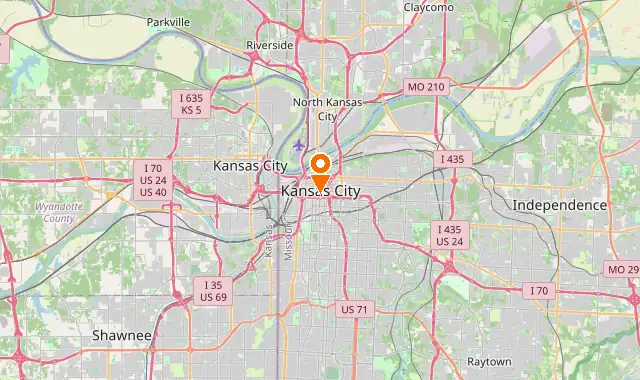
Local facts from Wikipedia and Wikidata, retrieved 2026-10-25. Population and area describe the city itself; the drain coverage counted on this page spans the wider area around it.
A 1969 housing stock splits into two drain populations
Kansas City's median home was built in 1969, and the mix behind that number is wide. About 39.5 percent of homes predate 1960, 23.5 percent date from 1960 to 1979, and 20.4 percent were built after 2000, across 245,346 housing units. In drain terms that is two populations sharing one city. The older population runs clay laterals with joint by joint root exposure and cast iron interior drains that scale and channel with age. The newer population runs PVC laterals that resist roots at the joints but still collect grease, wipes and construction era debris, and still sag if the trench bedding settles.
Single family homes are 65.5 percent of the stock, a higher share than in the denser eastern cities in this group, which means long private laterals across planted yards are the norm. Long runs mean more joints on an older line, more trees within reach of those joints, and more distance for a belly to hide in. If your drains slow every autumn, that pattern fits root growth cycles in a clay line, and a cleaning timed after a camera inspection will tell you whether you are managing roots at two joints or ten.
The practical booking detail is jurisdiction. This page covers Kansas City, Missouri. The metro crosses a state line, and the neighbouring Kansas city and suburbs run their own rules, permits and utilities. When you call (866) 555-0134, give the exact address. A contractor working the Missouri side needs to know the job is in KC Water territory, because a five minute address check at booking prevents a permit pulled in the wrong city later.
The two populations also fail on different schedules, which is worth knowing before you compare notes with a neighbour. A clay lateral street tends to produce a rolling pattern: one house this year, the next house two years later, as joints of the same age reach the same condition. A newer PVC street produces isolated events instead, tied to one household's habits or one settled trench. If your street's older homes are taking turns with sewer work, do not wait for your turn to arrive as an emergency. That pattern is the cheapest warning a homeowner ever gets, and a planned camera inspection is how you cash it in.
Heavy rain is not an edge case here
Kansas City averaged 44.5 inches of precipitation a year across 2014 to 2023, which sounds unremarkable until you look at the distribution. The data pack records 10.2 heavy rain days a year, the highest count among the ten cities in this flagship group, along with 92 freeze days and 15.3 inches of snow. Heavy rain days are the stress test for both the combined sections of the public system and for private laterals with cracked joints, because groundwater rises, infiltration pushes into every opening, and a line that drains adequately on a dry week can surcharge when the soil around it is saturated.
That pattern shapes sensible maintenance. If your basement has a floor drain, know what it connects to and keep the area around it clear, because it is the first place a surcharging line announces itself. If backups have only ever happened during or just after major rain, say so prominently when you book, and ask the contractor to look specifically for joint openings and infiltration on the camera run, not just for a blockage to clear. Main line cleaning runs $200-$650, and cleaning without that infiltration check treats the symptom of a wet weather problem while missing its cause.
Freeze deserves a sentence of its own. With 92 freeze days, exposed or shallow drain sections and lines under unheated spaces see the same winter narrowing described in colder cities, and grease congeals faster in cold pipe. A kitchen line that slows every January is giving you data. Log the dates of stoppages for a year. Patterns that look random in the moment usually resolve into rain, freeze, or guest load explanations on paper, and each explanation points at a different fix.
Hard water at 100 mg/L, and what it does and does not do
KC Water publishes its hardness directly: the average hardness of KC Water is 100 mg/L, or 5 to 6 grains per gallon, placing it in the moderately hard band the utility defines as 61 to 120 mg/L. KC Water is clear that hardness minerals, calcium and magnesium, cause no health problems, while noting the everyday effects people actually see, water spots on dishes, stainless steel sinks and faucets. That is a supply side description, and it is the right frame. Hard water shows up first at fixtures, in water heaters, and on glassware.
The drain side connection is secondary but real. Mineral scale roughens the inside of pipes over years, and a rougher wall gives grease and fine debris more to hold onto, so a line can return to slow drainage faster after a superficial cleaning than it should. If you see white deposits at faucet aerators and showerheads and you also fight recurring slow drains, mention both facts at the visit. Together they suggest checking branch lines for scale assisted buildup rather than assuming a single clog event. Hydro jetting, at $300-$900, is the tool that scours that kind of adhered buildup off the wall instead of punching a hole through it.
Do not let hardness become the whole explanation, though. In a city where two fifths of homes predate 1960, roots, joints and slope explain more backups than minerals do. The camera decides. A contractor who blames water chemistry without footage of your line is guessing, and Kansas City laterals are now expensive enough that guesses are a poor basis for decisions.
A final Kansas City nuance concerns what happens after cleaning in a moderately hard water area with older iron inside the house. Where the camera shows interior cast iron with heavy scale, ask the contractor to distinguish the scale that cleaning removed from the roughness that remains part of the pipe. A line can be fully clean and still be a high friction line that collects new buildup faster than a smooth one. That distinction sets an honest maintenance interval and prevents the unfair conclusion, next time it slows, that the last cleaning was done badly. Sometimes the pipe, not the work, is the recurring character in the story.
What to arrange before you ever need an emergency visit
The 2022 rule makes preparation a financial act in Kansas City. Start with knowledge: find your cleanout, and if your line has never been camera inspected and the house predates 1980, consider a planned inspection, at $125-$500, while nothing is wrong. Planned information is cheap. The same information during a backup, with emergency service at $150-$700 and a possible street section failure in view, arrives under pressure and at the worst negotiating moment of home ownership.
Second, keep records the way the city keeps its own. Camera footage with dates, the contractor's notes on joint locations and root severity, and any KC Water correspondence about main investigations belong in a house file that transfers at sale. A documented lateral is also your protection in any discussion about where a defect sits. Third, verify license and insurance with the independent contractor you hire, and confirm who pulls the sewer permit, since Kansas City requires permitted, inspected lateral work. DrainFlowed connects you with independent local businesses; it does not perform the work and does not warrant it.
Finally, know the order of calls in a live backup. Stop adding water to the system, protect the basement floor drain area, and if several homes are affected or the timing tracks a major storm, report it so KC Water can check the main. Then call (866) 555-0134 for a contractor who can clear and camera your lateral. That sequence, dull as it sounds, is the difference between a managed problem and an expensive misunderstanding in a city that rewrote its rules four years ago.
Drain services available in Kansas City
The services that answer Kansas City's lead problems, from the independent contractors who cover the city. Ranges are the national typical ranges used across this site.
| Service | Typical range | What it is |
|---|---|---|
| Drain Cleaning | $99-$450 | The core service: mechanical cleaning that clears the clog and scrapes the pipe walls, not just a hole poked through the blockage.. |
| Main Drain Cleaning | $200-$650 | When every drain in the house slows at once, the problem is the main line. |
| Sewer Line Cleaning | $250-$900 | The buried line from your house to the street: root cutting, scale removal and jetting, with camera proof of the pipe's condition.. |
| Hydro Jetting | $300-$900 | High-pressure water that scours pipe walls clean - the answer for grease, scale and lines that keep re-clogging after cabling.. |
| Sewer Camera Inspection | $125-$500 | See inside the pipe before you spend on the fix: roots, cracks, bellies and blockages located precisely, with footage to decide on.. |
| Emergency Drain Cleaning Service | $150-$700 | Sewage backing up, water rising, guests arriving: what counts as a drain emergency, what to do in the first ten minutes, and how the visit works.. |
Full detail on every service, with signs and causes, is on the services hub, and every range on the site is collected in the cost guide.
Kansas City coverage snapshot
Nearby covered cities: Blue Springs, Springfield, Columbia, Independence.
Kansas City sewer and water resources
The city and utility pages this page's local facts rest on, worth bookmarking if you own a home in Kansas City:
Sources for this page
- sewer lateral responsibility: Ordinance 220198 effective May 1 2022 made lateral repair and maintenance the property owner responsibility, city authorised but not required to repair in rights of way (source)
- combined sewer: Combined sewer sections under federal consent decree, KC Water Smart Sewer program to reduce and prevent overflows (source)
- water hardness: KC Water average hardness 100 mg/L, 5 to 6 grains per gallon, moderately hard (source)
- local fact: Trolley Trail Basin captures combined sewer overflows and releases stored flow about 24 hours after a storm (source)
- housing age: Median year built 1969, 39.5 percent pre 1960, ACS 2024 5 year via Census Reporter (source)
- Housing age: median year built and build-era shares (US Census Bureau ACS)
- Weather averages: 2014-2023 daily record (Open-Meteo archive, ERA5)
Coverage around Kansas City
Nearby cities we cover in Missouri
- Drain cleaning in Blue Springs, MO
- Drain cleaning in Springfield, MO
- Drain cleaning in Columbia, MO
- Drain cleaning in Independence, MO
- Drain cleaning in Lees Summit, MO
- Drain cleaning in O Fallon, MO
- Drain cleaning in Joplin, MO
- Drain cleaning in Saint Louis, MO
The full list for the state is on the Missouri locations page.
Beyond Kansas City
Coverage at this depth continues nearby: see drain cleaning in Saint Louis, MO and drain cleaning in Springfield, MO, each written from its own city's data the same way this page is.
Questions, answered
Who pays for a broken sewer lateral in Kansas City now?
You do. Following Ordinance No. 220198, effective May 1, 2022, repair and maintenance of service laterals and their connections is the responsibility of the property owner, and the city is authorised but not required to repair laterals in rights of way or easements. KC Water investigates whether a backup involves the public main, and if the problem is on your lateral, the repair is yours.
Did the city used to help with laterals in the right of way?
Yes, in effect. Reporting on the change explains that Kansas City previously repaired the part of a broken or collapsed private house service line within street or alley rights of way under the earlier code. The 2022 substitute ordinance removed that commitment. Owners who assumed the old arrangement still applied have been caught out, which is why confirming the current rule before digging matters.
What is the Smart Sewer program and does it affect my drains?
Parts of Kansas City use combined sewers, and KC Water's Smart Sewer program exists to reduce and prevent overflows from that system, including storage projects such as the Trolley Trail Basin that capture combined flow during storms and release it afterward. A private line that is already narrowed will show storm stress first, so tell your contractor if backups track rainfall.
How hard is Kansas City water?
KC Water publishes an average hardness of 100 mg/L, about 5 to 6 grains per gallon, which it classifies as moderately hard. KC Water notes hardness can leave spots on dishes, sinks and faucets. In drains, mineral scale on pipe walls can give grease and debris more surface to cling to, which is one contributor to slow drainage that returns quickly after a light cleaning.
What does drain cleaning cost in Kansas City?
Standard drain cleaning runs $99-$450, main line cleaning $200-$650, hydro jetting $300-$900, sewer line services $250-$900, camera inspection $125-$500, and emergency service $150-$700. The independent contractor confirms the price for your specific line and access before work begins. DrainFlowed is a connection service and does not set the final price.
Does it matter whether I am on the Missouri or Kansas side?
Yes, and confirm which Kansas City you mean when you book. Permits, licensing and the responsible utility differ across the state line. The content on this page covers Kansas City, Missouri, and KC Water. Giving the contractor your exact address and which side of the line the house sits on avoids permit and jurisdiction mistakes.
Drain problem in Kansas City? Make the call
A live person answers around the clock. Describe the problem, hear the likely range, and get an independent local contractor on the way.
(866) 555-0134 Tap to call nowA live person answers, day or night. Describe the problem, hear the likely range, then decide.