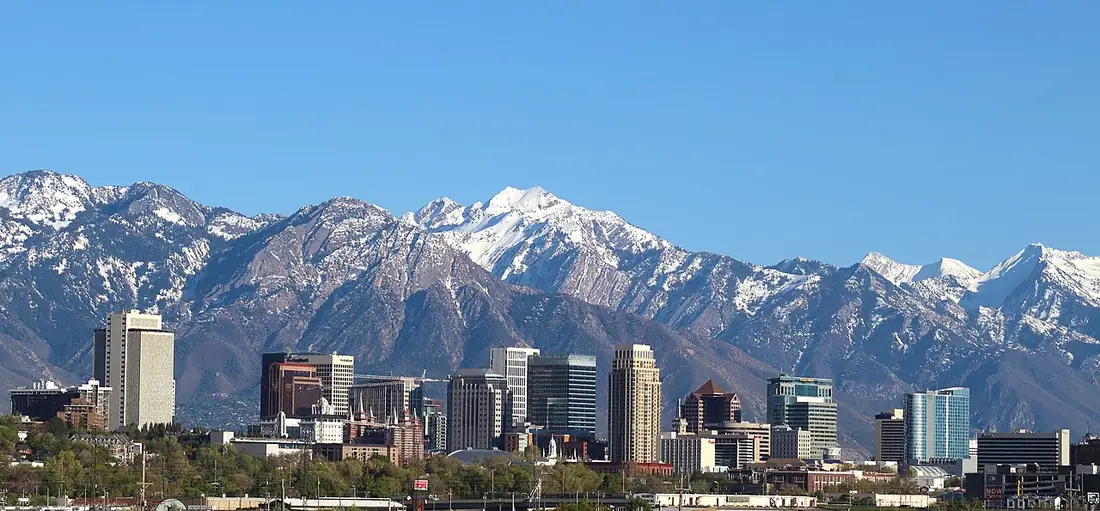
Drain cleaning in Salt Lake City, UT - Salt Lake County - 90 ZIP codes covered
Drain Cleaning in Salt Lake City, UT
Salt Lake City sits at 1,288 meters, and its drains live a high desert life: 42.8 inches of snow a year, 120 freeze days, only 20.7 inches of total precipitation, and some of the hardest municipal water in this series. The housing stock splits the difference between eras, with a median build year of 1965, 45.0 percent of homes before 1960, and a notable 22.2 percent built after 2000. Under the streets, the city is rehabilitating a sewer trunkline first installed in the 1890s. This page works through what altitude, hardness, and freeze cycles do to drains here, and where the line between city pipe and your pipe leaves the cost.
Hard water first: the mineral story of a Salt Lake City drain
Begin with the water itself, because in Salt Lake City it shapes drain behavior more than in most cities. The published water quality reporting for the system shows total hardness ranging widely by source, from about 136 mg/L at the surface water plants up to 571 mg/L in well water, with grains per gallon figures running from 8.0 into the low thirties at the extreme. The utility context behind the spread is simple: more than 60 percent of the supply starts in Wasatch mountain streams, while deeper wells supplement the system in summer and bring higher mineral content with them. Your hardness depends on which source is feeding your street, and it can shift with the season.
Inside a drain, hardness shows up as scale: a rough mineral crust on pipe walls and fixture outlets that narrows the opening year by year and gives soap, hair, and grease a textured surface to anchor to. In a home with a 1960s drainage system, that crust layers over pipe that was already aging, and the combined narrowing is why a shower here can go from fine to standing water across a couple of winters without any single dramatic event. Scale alone rarely closes a pipe outright. It loads the dice, so that an ordinary hair mat or grease slug finishes the job sooner than it would in softer water territory.
The proportionate response is mechanical. Standard drain cleaning at $99-$450 removes the combined buildup, mat plus crust, from the section that is actually narrowing. Hydro jetting at $300-$900 has a real role where scale and grease coat a long run of main line, because high pressure water scours the wall rather than punching a hole through the middle of the problem. What hardness does not explain is a sudden multi fixture backup. Scale is slow and symmetrical. A fast, whole house symptom is a blockage or a lateral issue, and it should be diagnosed as one, with a camera at $125-$500 if the pattern is new.
The altitude deserves one more consequence spelled out. At 1,288 meters, Salt Lake City water systems work against thinner air and stronger sun, and its homes cycle through temperature swings that valley floor cities never feel: a Wasatch day can thaw a south facing roof vent by noon and freeze it again by dark. Repeated daily cycling is harder on seals, vents, and exposed pipe than a stable deep freeze, because materials expand and contract through the whole season instead of settling into it. If your gurgling and slowness oscillate with the weather rather than progressing steadily, that oscillation is itself the clue, and it points up, to the vent terminal, before it points down, to the drain.
Drain problems we handle in Salt Lake City
The problems Salt Lake City's own housing, ground and weather produce most. The full symptom list is on the problems hub; these are the ones that earn their place here.
Slow Drain in Salt Lake City
One slow fixture is a narrowing pipe. Several slow fixtures are a main-line warning. How to tell the difference and what fixes each..
Recurring Clogs in Salt Lake City
A clog that returns is not bad luck. It is an undiagnosed cause - roots, scale, a belly, or a cleaning that never removed the material..
Standing Water in Salt Lake City
Water that will not go down has a blockage at a specific level. Which level decides whether it is a quick clean or a main-line job..
An 1890s trunkline under Beck Street, and the age of everything above it
Salt Lake City Public Utilities operates three major sewer trunklines that carry all of the city wastewater to treatment, and it is now rehabilitating the oldest of them, a line originally installed in the 1890s along Beck Street between 800 North and 1800 North. Most of the rehabilitation uses trenchless cured in place lining through existing manholes, with about 1,500 feet requiring open trench replacement. During the work, a bypass pumping system keeps sewage moving around the section under repair so service continues and backups are prevented.
A Victorian era trunkline is not your repair bill. The city maintains its mains and trunklines. It is context, though, for the private side of the system. The city housing data show 101,188 units with a median build year of 1965: 45.0 percent predate 1960, 20.4 percent come from 1960 to 1979, and 22.2 percent are post 2000 construction. A pre 1960 Salt Lake City home has a private drainage system that has survived roughly 65 plus Wasatch winters. As an implication of that age, not a survey finding, original materials in that era of housing deserve suspicion first when clogs repeat in the same line: joints shift, bores roughen, and roots find the openings that freeze and thaw cycles widen.
The newer fifth of the city tells a different story, and it is why diagnosis should start with your build year, not your ZIP code. A post 2000 home with slow drains is usually looking at use patterns: grease habits, hair, or an object where it should not be. A 1955 home with the same symptom is looking at those plus the pipe itself. Tell the contractor the age of the house when you book. In Salt Lake City that one fact reorders the whole diagnostic tree.
About Salt Lake City: the local snapshot
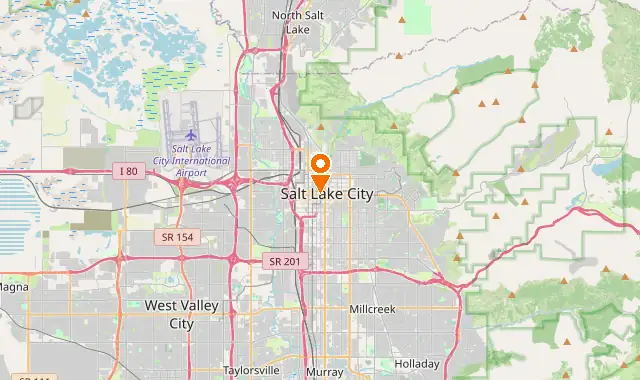
Local facts from Wikipedia and Wikidata, retrieved 2026-10-25. Population and area describe the city itself; the drain coverage counted on this page spans the wider area around it.
120 freeze days, 42.8 inches of snow, and the spring thaw pattern
The climate record for Salt Lake City is a study in stored water. Only 20.7 inches of precipitation falls in an average year and heavy rain days are rare, just 0.7 annually. But 42.8 inches of snow arrives, and temperatures sit at or below freezing on 120 days. Water here does not mostly arrive in violent summer storms. It accumulates all winter and then moves, as melt, through soil that is itself thawing unevenly. Buried pipes feel that as weeks of saturated, shifting ground rather than a single flood event.
Two drain patterns follow. The first is the late winter slowdown: meltwater raising the water table around an older lateral, seeping in at joints, and crowding the line at exactly the season when households also run more laundry and hot showers. The second is freeze related venting trouble. In sustained cold, frost can narrow a roof vent terminal, and the system answers with gurgling and slow drainage that mysteriously resolves in a thaw. Neither pattern is fixed by pouring anything down a drain. The first calls for inspection of the lateral. The second calls for patience plus a vent check if it repeats every cold snap.
Standing water is the symptom to respect most in this climate. A tub or floor drain that holds water in thaw season, in a pre 1960 home, is describing a line that cannot move its load against a high water table or through a sagging section. Main line cleaning runs $200-$650 and is the correct first step. If the standing water returns the next thaw with the line freshly cleaned, the problem is geometry, not debris, and the camera footage from the first visit becomes the evidence that gets the repair scoped honestly.
Snowmelt also rewrites the Salt Lake City calendar for planned work. The calm, rational window for a camera survey or a non urgent main line cleaning is late summer and fall, when the ground is dry, access is easy, and contractors schedules breathe. The irrational window, which is when most people meet their lateral for the first time, is the March thaw, when every marginal line in the valley is being tested simultaneously. Nothing about the work changes between those windows except its price category and your stress level. A household that moves one inspection from the second window to the first has performed the single highest value drain maneuver available in this climate.
Slab, basement, and bench: how house form changes the call
Salt Lake City housing is nearly half single family, 47.3 percent, which still leaves a majority in duplexes, apartments, and other attached forms. Drain responsibility follows that split. In a single family home, the interior drains and the lateral are one owner problem from fixture to main. In attached housing, the fixture and branch are usually yours or your landlord unit concern, while the shared main belongs to the building. The diagnostic value of the symptom map doubles in attached housing: if your unit alone is slow, look local. If the lowest units share the slowness, the building main is the story, and cleaning your branch will not change it.
Basements matter here in a specific, cold climate way. A basement floor drain in a Salt Lake City home sits at the bottom of the system, which makes it the first place a main line restriction announces itself and the last place melt season groundwater pressure shows. Keep that drain visible and its trap wet. A dry floor drain trap in a heated basement evaporates across a long winter and lets sewer odor into the house, a problem that reads as a major failure and fixes with a bucket of water and a conversation about trap primers.
Elevation plays a quieter role. At 1,288 meters the city spans bench neighborhoods well above the valley floor and older districts near it. Long laterals on sloped lots behave differently from short flat runs: slope problems show as solids settling where the grade flattens, and root pressure follows the mature street trees of the older, lower districts. None of this changes the price ranges. It changes what a good contractor asks about before quoting, and a contractor who asks about your lot, your basement, and your build year is doing the Salt Lake City version of due diligence.
What cleaning, jetting, and camera work each buy you here
Think of the three core services as answers to three different questions. Cleaning, $99-$450 for standard work and $200-$650 at the main line, answers: can this line be returned to full flow today? Jetting, $300-$900, answers: can scouring the wall remove the scale and grease film that keeps re narrowing this line? A camera inspection, $125-$500, answers: what does this pipe actually look like, and will either of the first two fixes hold? In a hard water city full of 1960s pipe, the third question is the one that protects the money spent on the first two.
Sequence matters more than selection. For a single slow fixture, clean it and test it at full volume. For repeated clogs in the same line, clean and camera in the same visit if the contractor offers it, because the open line is the camera easiest run and the footage explains the recurrence while the evidence is fresh. For a whole house pattern, start at the main line and let the camera decide whether jetting, spot repair conversation, or a maintenance interval is the honest next step. Skipping the camera to save its fee is the classic false economy in older housing stock.
Emergency pricing, $150-$700, buys speed at hours when speed is scarce, and it is justified when wastewater is actively threatening floors or a basement. A slow drain that still drains is not that. Salt Lake City freeze season creates one exception to the calm approach: if drainage deteriorates sharply during a hard cold snap in an older home, do not wait for the thaw to arbitrate. Burst and freeze damage announce themselves through drainage first in some layouts, and an early call in January is cheaper than a saturated basement in March.
A final Salt Lake City specific check costs nothing and pays regularly. Walk your cleanout and your lowest drains at the start of thaw season. Confirm the cleanout cap is intact and seated, run water in little used basement fixtures to refill their traps, and note the date your drains last ran perfectly. That ten minute ritual converts the spring from an ambush into a measurement: if performance degrades from a known good baseline during melt, you are watching infiltration or a marginal line declare itself in real time, and the call you make will carry dates and a baseline instead of a feeling. Contractors build better diagnoses on measurements, even homemade ones.
Booking in Salt Lake City: the DrainFlowed connection, explained
DrainFlowed is a connection service. Calling (866) 555-0134 connects you with an independent local contractor who sets the price, schedules the visit, performs the work, and is responsible for it. DrainFlowed does not operate crews in Salt Lake City or anywhere else. That distinction is worth having clearly before money moves: your agreement is with the contractor at your door, and you should verify their license and insurance details with them directly, as you would with any tradesperson you hire.
Make the call carry the local facts. Mention the build year, because 45.0 percent of this city housing predates 1960 and contractors plan differently for it. Mention whether symptoms track the thaw or a cold snap, because 120 freeze days make timing a diagnostic clue here. Mention white scale on fixtures if you see it, because hardness in this system runs from about 136 mg/L to over 500 mg/L depending on source, and a contractor who knows your water is at the hard end will expect the crust to be part of the clog, not a surprise inside it.
Keep the paper. A dated record of cleanings, the camera footage if you commission it, and the contractor stated finding for each visit turns your drain history into an asset: it supports a lining or repair decision, it informs the next contractor, and it documents the system for a future buyer. In a city where the public side is literally rehabilitating an 1890s trunkline, nobody should be embarrassed that a 1965 house needs its private pipes looked at with the same seriousness.
Drain services available in Salt Lake City
The services that answer Salt Lake City's lead problems, from the independent contractors who cover the city. Ranges are the national typical ranges used across this site.
| Service | Typical range | What it is |
|---|---|---|
| Drain Cleaning | $99-$450 | The core service: mechanical cleaning that clears the clog and scrapes the pipe walls, not just a hole poked through the blockage.. |
| Clogged Drain Service | $120-$550 | For the drain that is already blocked: diagnosis first, then the right fix, so the same clog does not come back next month.. |
| Hydro Jetting | $300-$900 | High-pressure water that scours pipe walls clean - the answer for grease, scale and lines that keep re-clogging after cabling.. |
| Sewer Camera Inspection | $125-$500 | See inside the pipe before you spend on the fix: roots, cracks, bellies and blockages located precisely, with footage to decide on.. |
| Floor Drain Cleaning | $110-$450 | Basement, laundry and garage floor drains: the house's safety valve, cleaned and trap-checked before it is needed in a flood.. |
Full detail on every service, with signs and causes, is on the services hub, and every range on the site is collected in the cost guide.
Salt Lake City coverage snapshot
Nearby covered cities: Riverton, Murray, Draper, Taylorsville.
Salt Lake City sewer and water resources
The city and utility pages this page's local facts rest on, worth bookmarking if you own a home in Salt Lake City:
Sources for this page
- housing age and mix: Median year built 1965, 45.0 percent pre 1960, 20.4 percent built 1960 to 1979, 22.2 percent post 2000, 101,188 units, 47.3 percent single family (source)
- climate: 20.7 in annual precipitation, 42.8 in snow, 120 freeze days, 0.7 heavy rain days per year, 2014 to 2023 average (source)
- water hardness: Total hardness in published system reporting ranges from about 136 mg/L at surface plants to 571 mg/L in well water; more than 60 percent of supply from Wasatch mountain streams, wells supplement in summer (source)
- local fact oldest trunkline: SLCDPU operates three major trunklines and is rehabilitating its oldest, installed in the 1890s on Beck Street, mostly by cured in place lining with bypass pumping during work (source)
- Housing age: median year built and build-era shares (US Census Bureau ACS)
- Weather averages: 2014-2023 daily record (Open-Meteo archive, ERA5)
Coverage around Salt Lake City
Nearby cities we cover in Utah
- Drain cleaning in Riverton, UT
- Drain cleaning in Murray, UT
- Drain cleaning in Draper, UT
- Drain cleaning in Taylorsville, UT
- Drain cleaning in Herriman, UT
- Drain cleaning in South Jordan, UT
- Drain cleaning in Sandy, UT
- Drain cleaning in Provo, UT
The full list for the state is on the Utah locations page.
Beyond Salt Lake City
Coverage at this depth continues nearby: see drain cleaning in Provo, UT and drain cleaning in Ogden, UT, each written from its own city's data the same way this page is.
Questions, answered
How hard is Salt Lake City water, really?
It depends on the source feeding your street. Published water quality reporting for the system shows total hardness from about 136 mg/L at surface water plants up to 571 mg/L in well water. More than 60 percent of the supply comes from Wasatch mountain streams, and harder well water supplements the system in summer. Expect scale to be a genuine factor in older drains here, and tell your contractor if fixtures crust visibly.
Why do my drains slow down during the spring thaw?
Salt Lake City gets 42.8 inches of snow and 120 freeze days a year, so meltwater saturates the soil for weeks. In older laterals, that water seeps in at joints and crowds the line, while shifting thawing soil stresses aging pipe. Slowness that tracks the thaw deserves a main line cleaning, $200-$650, and a camera look if it returns after cleaning.
Is the city sewer under my street my responsibility?
No. Salt Lake City Public Utilities operates and maintains its sewer mains and trunklines, including the Beck Street trunkline first installed in the 1890s that the city is now rehabilitating with cured in place lining. Your responsibility is the private side: the drains inside your home and your lateral. If a contractor scopes main work, ask them to show you exactly where the defect sits.
My home was built in the 1950s. What should I expect from its drains?
With 45.0 percent of city homes built before 1960 and a median year of 1965, you are in the majority, not the exception. As an implication of age, original pipe in that era is more likely to have shifted joints, rough bores, and root entry points. A camera inspection at $125-$500 is the fastest way to learn whether your recurring clog is buildup or the pipe itself.
When does hydro jetting make sense in Salt Lake City?
When the problem is a film, not a plug: established grease and mineral scale coating a long run of line, especially where cleaning restores flow but slowness creeps back within months. Jetting runs $300-$900 nationally and scours the wall. It is poor value for a single hair clog at a tub, and a good contractor will say so.
What does drain cleaning cost in Salt Lake City?
National ranges: standard cleaning $99-$450, main line $200-$650, hydro jetting $300-$900, camera inspection $125-$500, emergency service $150-$700. The independent contractor you are connected with through DrainFlowed at (866) 555-0134 sets the actual price after seeing the job.
Can cold weather make my drains gurgle?
Yes. With 120 freeze days a year, frost can narrow the roof vent terminal in a hard cold snap, and the system vents through fixture traps instead, producing gurgling and sluggish drainage that eases in a thaw. If the pattern repeats every winter, mention the seasonality when you book. It points the diagnosis at the vent rather than the drain line.
Drain problem in Salt Lake City? Make the call
A live person answers around the clock. Describe the problem, hear the likely range, and get an independent local contractor on the way.
(866) 555-0134 Tap to call nowA live person answers, day or night. Describe the problem, hear the likely range, then decide.