Drain cleaning in Charleston, SC - Charleston County - 25 ZIP codes covered
Drain Cleaning in Charleston, SC
Start with the place itself: Charleston is where half the homes predate 1995. Its drain problems grow out of that housing and that ground, and this page follows them in that order, problems first, then services and ranges. This part of South Carolina works as one service area in practice, linking Charleston with Mount Pleasant and North Charleston on shared rounds.
The local facts first: Charleston accounts for 25 ZIP codes of coverage, in Charleston County, and ranks number 1 among the 14 South Carolina cities on this site. The cluster matters in practice: a crew finishing in Mount Pleasant can be in Charleston without a depot run, and North Charleston is covered the same way.
The pipe era under Charleston
Read Charleston's housing from its median: 1995. Half the stock predates it, and that older half generates most of the serious drain calls. The pre-1960 share is 19%, a substantial old core. Drain lines of that age were not built from modern PVC, and their joints are the first place a camera looks when a clog repeats.
Against that older base sits real growth: about 45% of homes were built this century, and newer lines mostly meet newer problems, grease, hair and wipes rather than failing joints. In total the Census counts about 77,417 housing units in Charleston, each one a small system of branches feeding a main.
Compared with the 1994 median across covered South Carolina cities, Charleston's 1995 is unremarkable, which is itself useful: its drain work is the state's typical mix. The contractor rounds that serve Charleston also reach Mount Pleasant and North Charleston, so the same crews read the same ground across this cluster.
The climate load on Charleston lines
Rainfall is the second half of the local picture: about 56.6 inches a year reach Charleston's ground on the ten-year average. An inch or more of rain falls on about 12.2 days a year. Saturated ground raises the water around buried pipes, and any joint that has opened becomes a two-way door.
With freezing nights down at about 8 a year, cold is not what ages Charleston pipes. Warmth and moisture are, working twelve months a year.
The state comparison sharpens it: covered South Carolina cities median 49.0 inches of precipitation, and Charleston takes 56.6. Wetter ground, busier joints. The practical reading of all this is timing: known slow lines are cheapest to deal with in the mild, dry part of the local year, before the season that stresses them arrives.
The drain problems that matter in Charleston
The patterns below are Charleston's, chosen from the full symptom list on the strength of its own figures. Homeowners in Mount Pleasant and North Charleston work from the same contractor pool as Charleston, which keeps the local knowledge shared across the cluster.
Slow Drain
Slowness is the symptom with the best manners: it warns before it floods. from the older core out through Johns Island and the neighbourhoods beyond, the warning is about buildup in one branch, and a cable or a jet answers it while the answer is still small. What comes back on the cable tells the story: hair mats, grease ribbons or black scale, each pointing at a different room and a different habit. Here, the contractors who cover the city see this sequence often enough to price it on the call.
Drain Odors
Drain smells trace to traps, biofilm or buildup breaking down in the line. from the older core out through Johns Island and the neighbourhoods beyond, a thorough mechanical cleaning deals with the source; scented products deal with the evidence. Odor from a floor drain often means a dry trap, which is a five-minute fix and a useful diagnosis. Biofilm on a branch wall ferments steadily and smells worst in warm rooms, which is why the complaint tracks bathrooms and kitchens. Here, the contractors who cover the city see this sequence often enough to price it on the call.
Standing Water
A shower tray that fills around your ankles is a measurement, not a mood: the branch is passing less than the fixture delivers. from the older core out through Johns Island and the neighbourhoods beyond, that gap only widens in one direction. Chemical openers sit in standing water and work on the wrong problem slowly; mechanical clearing works on the right one in minutes. In Charleston, that is the pattern the call should start from.
Multiple Drains Backing Up
Backups speak in plural: several fixtures, one cause, downstream. from the older core out through Johns Island and the neighbourhoods beyond, the main or the sewer is full or obstructed, and the visit that matters is the one with the heavy cable and the camera. Floor drains and low tubs are the relief valves of the system, which is why they are where a main line problem becomes visible indoors. That is the shape of it locally, and it is what the first visit tests.
Drain services available in Charleston
Each lead problem above has a service that answers it. These are those services, with the ranges that hold across this site. Calls from Mount Pleasant, North Charleston and Charleston itself land with the same local network, so patterns spotted in one town inform the next.
- Drain Cleaning - $99-$450
- Clogged Drain Service - $120-$550
- Main Drain Cleaning - $200-$650
- Sewer Line Cleaning - $250-$900
- Bathroom Drain Cleaning - $99-$400
- Floor Drain Cleaning - $110-$450
Every service has a full page of its own, with signs, causes and process, on the services hub. Every range on this site is collected in the cost guide.
What drain work costs in Charleston
Ranges in Charleston are the national ranges used across this site, because they describe the work rather than the postcode: standard cleaning $99-$450, main line cleaning $200-$650, hydro jetting $300-$900, camera inspection $125-$500. Where a job lands inside its range turns on access, line length and cause, and the contractor firms that up on the call.
The range is also a planning tool: it lets a homeowner decide in advance what a jetting is worth against a third clearing of the same line. What moves a given job inside its band is knowable in advance: how far the blockage sits from an access point, whether the cleanout opens, and whether the cause is soft buildup or something structural.
Charleston coverage snapshot
Nearby covered cities: Mount Pleasant, North Charleston, Columbia, Greenville.
About Charleston: the local snapshot
Charleston is the most populous city in the U.S. state of South Carolina.
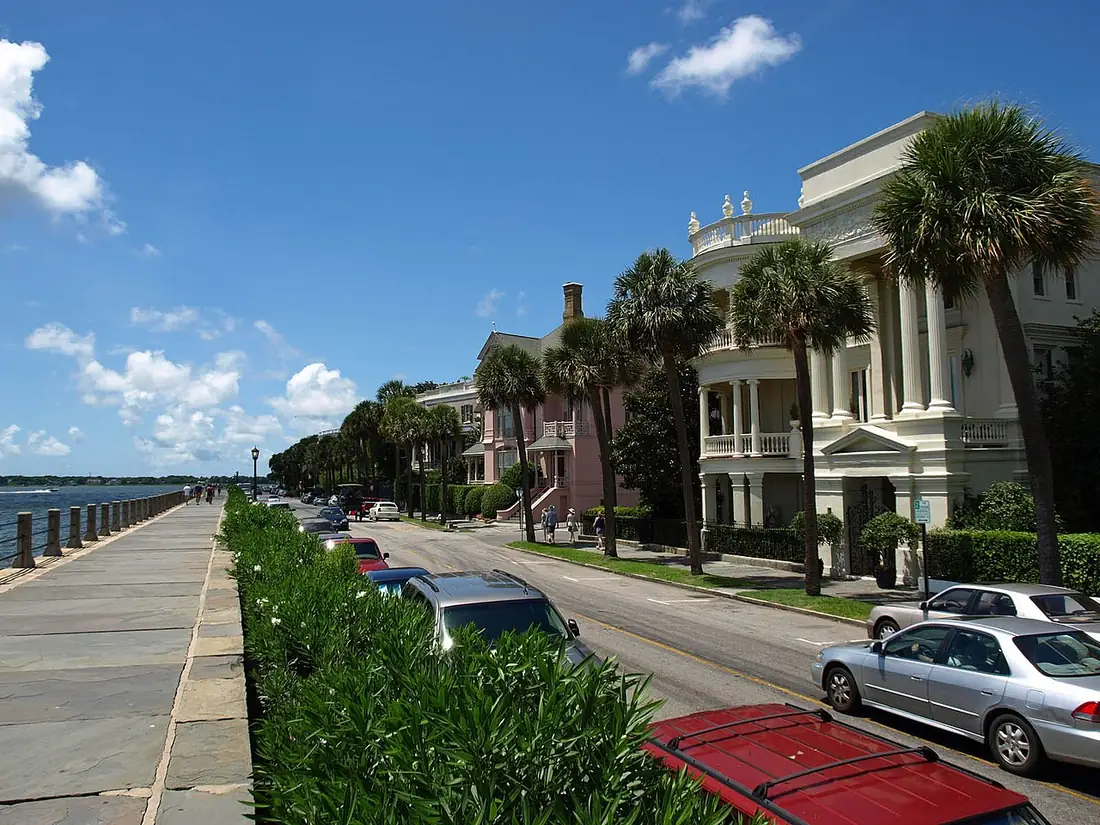
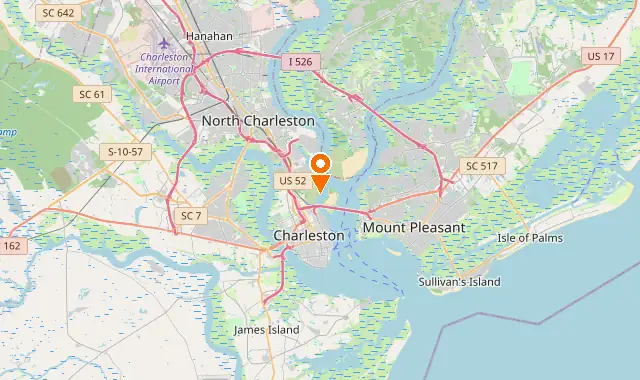
Local facts from Wikipedia and Wikidata, retrieved 2026-10-25. Population and area describe the city itself; the drain coverage counted on this page spans the wider area around it.
Getting ready for the visit
A visit goes at the speed of its access and its information. These five preparations, standard advice across Charleston County, supply both: The cluster matters in practice: a crew finishing in Mount Pleasant can be in Charleston without a depot run, and North Charleston is covered the same way.
- Jot down whether rain changes the symptoms, and when
- Stop adding water to any fixture that is backing up
- Write down any previous clogs on the same line
- Clear the area under the sink or around the cleanout
- Keep children and pets away from any sewage-affected area
Coverage around Charleston
Areas and neighbourhoods in and around Charleston
Calls also come in from Johns Island and the streets between them. Those areas sit inside the same coverage, on the same contractor rounds.
Johns Island
Nearby cities we cover in South Carolina
- Drain cleaning in Mount Pleasant, SC
- Drain cleaning in North Charleston, SC
- Drain cleaning in Columbia, SC
- Drain cleaning in Greenville, SC
- Drain cleaning in Myrtle Beach, SC
- Drain cleaning in Rock Hill, SC
- Drain cleaning in Spartanburg, SC
- Drain cleaning in Mauldin, SC
The full list for the state is on the South Carolina locations page.
Questions, answered
How much does drain cleaning cost in Charleston?
The bands that apply in Charleston: $99-$450 for standard cleaning, $200-$650 for a main line, $300-$900 for hydro jetting. Where your job sits inside its band is a question of access and cause, settled on the call before anyone drives out. Emergency timing sits at the top of any band, daylight routine work at the bottom, and the same line can honestly occupy either depending on when it fails. If the finding on site is materially different from the description, expect the range to be re-agreed with the evidence in front of you, not after the work.
Why do older Charleston homes clog more?
Older pipes clog for structural reasons on top of household ones. Charleston's median home dates to 1995, and lines from that era carry narrower bores, rougher walls and joints that roots can enter. The fix starts with seeing which of those is yours. The joints are the recurring theme: every seam in a clay or iron line is a place roots probe, and they probe the nearest tree's worth of pressure each season. Root history is the detail worth telling the contractor; it changes the equipment that comes on the first trip.
Why do my drains slow down when it rains in Charleston?
Rain raises the water in the soil, and soil water enters any line whose joints have opened. With about 12.2 heavy rain days a year in Charleston, the pattern is common enough to have a name among contractors: infiltration. The symptom is weather-shaped; the cause is a joint, and it can be located. The same joints that admit groundwater also leak sewage out in dry weather, which is why a rain-shaped symptom deserves fixing rather than merely timing around. A line that only misbehaves in wet weather is giving you its evidence for free, if someone records it.
Who actually does the work in Charleston?
DrainFlowed is a connection service, not a drain company. We match you with an independent local contractor who covers Charleston and Charleston County. The contractor sets the schedule and the final price within the agreed range, and the working relationship for the job is between you and them. The cluster matters in practice: a crew finishing in Mount Pleasant can be in Charleston without a depot run, and North Charleston is covered the same way. That independence is also why verifying license and insurance is your step, and a straightforward one.
What should I check before the contractor starts work in Charleston?
Two things: the contractor's license number and proof of insurance, both checkable with the state board, and a clear statement that the agreed range covers the job as you described it. Reputable contractors expect both questions. A contractor who is properly licensed and insured will treat both questions as routine, because their other customers ask them too. If either answer is evasive, the call itself has told you what you needed to know.
Housing figures: US Census Bureau ACS (ACS 2024 5-year estimates via Census Reporter). Weather averages: Open-Meteo archive (ERA5), 2014-2023.
Get a Charleston contractor on the line
One call connects you with an independent local contractor. Describe the problem, hear the range, verify the pro, then let the work happen.
(866) 555-0134 Tap to call nowA live person answers, day or night. Describe the problem, hear the likely range, then decide.