Drain cleaning in Reading, PA - Berks County - 10 ZIP codes covered
Drain Cleaning in Reading, PA
Drain trouble in Reading follows the city's own pattern, whose housing stock centres on a 1938 median build year. DrainFlowed connects Reading homeowners with independent local contractors across 10 ZIP codes in Berks County: describe the problem, hear the likely price range, and agree it before work begins. Coverage here is woven into the neighbouring towns: York and Erie sit on the same rounds, with the same ranges applying.
Reading is one of 15 cities covered in Pennsylvania, at number 7 in the state by the size ranking used to build this site, with 10 ZIP codes of coverage counted in and around it. This part of Pennsylvania works as one service area in practice, linking Reading with York and Erie on shared rounds.
Reading's lead drain problems
The patterns below are Reading's, chosen from the full symptom list on the strength of its own figures. This part of Pennsylvania works as one service area in practice, linking Reading with York and Erie on shared rounds.
Slow Drain
A single slow fixture is the earliest and cheapest version of every drain problem, and Reading is no exception. with half the housing stock older than 1938, a narrowing branch line usually announces itself at one sink or tub first, weeks before anything else misbehaves. The narrowing is usually a coating, hair bound with soap at a bathroom branch, grease at a kitchen one, building in rings until the bore is a fraction of itself. It is, in Reading, the version of the problem worth ruling out first.
Gurgling Drains
That glug-glug from a fixture nobody is using is displaced air, and displaced air means water is meeting resistance somewhere below. with half the housing stock older than 1938, gurgling is an early main line symptom dressed as a curiosity. Gurgling that arrives with laundry discharge points at the shared stretch the washer drains into, which is main line territory. For Reading homes, the sensible first move is diagnosis matched to that pattern.
Recurring Clogs
Twice is a pattern, and patterns in pipes have physical causes. with half the housing stock older than 1938, a repeat clog means the first clearing opened a channel through a problem that is still there, and the camera is what names it. A belly, a section that has sagged and holds water permanently, refills with solids at a rate set by physics rather than luck, and only the camera sees it clearly. In Reading, that is the pattern the call should start from.
Multiple Drains Backing Up
When drains across the house misbehave together, think main line. with half the housing stock older than 1938, the shared stretch is full or blocked, and the correct response is urgent main or sewer cleaning, not fixture-by-fixture attempts. The main line is the one stretch every fixture shares, so its failure is the only one that can present everywhere at once. In this city, that pattern is where an honest assessment begins.
What the weather does to drains in Reading
Start with the sky: Reading takes roughly 46.9 inches of precipitation a year, averaged over 2014-2023. The heavy days matter more than the average: around 8.0 a year bring an inch or more of rain, and those are the days hidden line defects stop being hidden.
The cold count is roughly 98 freezing nights a year. Shallow runs and slow sections are the exposure: water that lingers can freeze, and ice is a blockage that no cable should be forced through. About 25.2 inches of snow a year means meltwater joins rain as a seasonal load, and lines with open joints feel it first.
The weather case for acting early is written in these averages: the load is seasonal, and the season is predictable.
Why Reading drains age the way they do
The middle of Reading's housing stock was built in 1938, per the Census Bureau's American Community Survey. Around 75% of Reading homes predate 1960, which means a large minority of its drains are old enough to have grandchildren. Joints open, walls scale, and roots move in.
In total the Census counts about 36,032 housing units in Reading, each one a small system of branches feeding a main.
Reading sits close to the middle of its state picture too: 1938 against a median of 1942 across the Pennsylvania cities covered here. Neighbouring York and Erie are covered from the same base, and their housing vintages rhyme with Reading's.
Drain services available in Reading
Services are listed here the way the problems demand them, not in catalogue order. Ranges are national, because they describe the work. Neighbouring York and Erie are covered from the same base, and their housing vintages rhyme with Reading's.
- Drain Cleaning - $99-$450
- Clogged Drain Service - $120-$550
- Main Drain Cleaning - $200-$650
- Sewer Line Cleaning - $250-$900
- Hydro Jetting - $300-$900
- Sewer Camera Inspection - $125-$500
Every service has a full page of its own, with signs, causes and process, on the services hub. Every range on this site is collected in the cost guide.
The money side in Reading
Prices here are published as ranges because that is the truthful form: the same slow drain can be a trap of hair or the front edge of a root mass. In Reading the bands are $99-$450 for standard cleaning, $200-$650 for main line work and $125-$500 for camera inspection, with the contractor narrowing yours on the call.
The range is also a planning tool: it lets a homeowner decide in advance what a jetting is worth against a third clearing of the same line. Emergency timing is the one multiplier a homeowner controls least and pays for most; a slow problem booked in normal hours is the same work without it.
Reading coverage snapshot
Nearby covered cities: York, Erie, State College, Bethlehem.
About Reading: the local snapshot
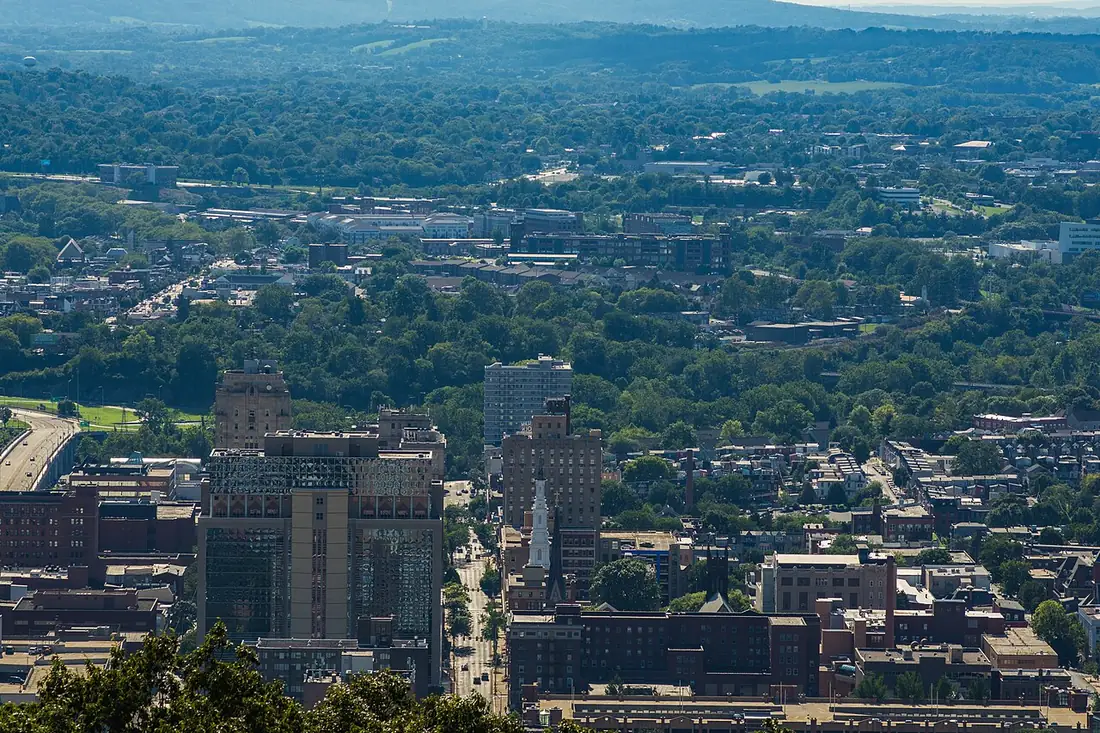
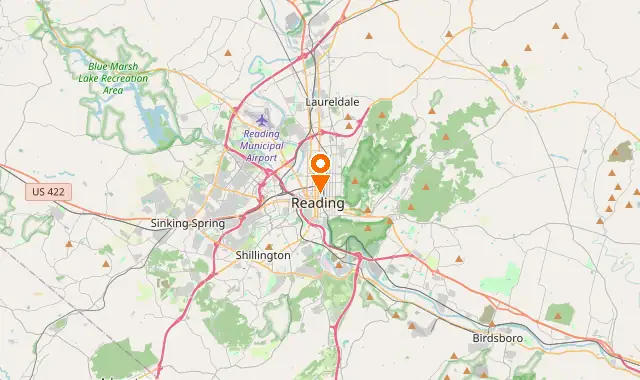
Local facts from Wikipedia and Wikidata, retrieved 2026-10-25. Population and area describe the city itself; the drain coverage counted on this page spans the wider area around it.
Getting ready for the visit
While the contractor is on the way, these are the useful things to do with the wait in Reading: The cluster matters in practice: a crew finishing in York can be in Reading without a depot run, and Erie is covered the same way.
- Jot down whether rain changes the symptoms, and when
- Stop adding water to any fixture that is backing up
- Keep chemical openers out of a blocked line
- Photograph any water marks before you clean them up
- Run no laundry or dishwasher loads until the line is tested
Coverage around Reading
Nearby cities we cover in Pennsylvania
- Drain cleaning in York, PA
- Drain cleaning in Erie, PA
- Drain cleaning in State College, PA
- Drain cleaning in Bethlehem, PA
- Drain cleaning in Lebanon, PA
- Drain cleaning in Altoona, PA
- Drain cleaning in Lancaster, PA
- Drain cleaning in Scranton, PA
The full list for the state is on the Pennsylvania locations page.
Questions, answered
How much does drain cleaning cost in Reading?
The bands that apply in Reading: $99-$450 for standard cleaning, $200-$650 for a main line, $300-$900 for hydro jetting. Where your job sits inside its band is a question of access and cause, settled on the call before anyone drives out. The ranges assume the line can be reached and worked; a line that needs excavation is scoped separately, with the evidence shown first. Keep the described job accurate on the call and the range you hear is the range that holds.
Who actually does the work in Reading?
DrainFlowed is a connection service, not a drain company. We match you with an independent local contractor who covers Reading and Berks County. The contractor sets the schedule and the final price within the agreed range, and the working relationship for the job is between you and them. The working map here joins Reading to York and Erie; one network, one set of ranges, three towns' worth of shared drain knowledge. That independence is also why verifying license and insurance is your step, and a straightforward one.
What should I check before the contractor starts work in Reading?
Ask for their license number and proof of insurance, and confirm the agreed price range covers the job as described. Licensing requirements vary, and you can verify a license with the state board. A reputable contractor will answer both questions without hesitation. Insurance is the quiet half of the question: it is what stands behind the work if a fitting fails or a line is damaged in the digging. Both questions take under a minute, and the answers shape everything that follows.
Why do older Reading homes clog more?
Age is the main reason. With a median build year of 1938, much of Reading's stock drains through lines that have spent decades collecting scale and defending their joints against roots. Newer homes clog from what goes down them; older ones also clog from what the pipe has become. Ground movement over decades opens offsets that catch solids at the lip; the catch grows at a rate set by everything the house sends down. The practical habit for older stock is a camera baseline: one survey, then clean on the interval the footage justifies.
Why do my drains slow down when it rains in Reading?
Rain raises the water in the soil, and soil water enters any line whose joints have opened. With about 8.0 heavy rain days a year in Reading, the pattern is common enough to have a name among contractors: infiltration. The symptom is weather-shaped; the cause is a joint, and it can be located. The same joints that admit groundwater also leak sewage out in dry weather, which is why a rain-shaped symptom deserves fixing rather than merely timing around. A line that only misbehaves in wet weather is giving you its evidence for free, if someone records it.
Housing figures: US Census Bureau ACS (ACS 2024 5-year estimates via Census Reporter). Weather averages: Open-Meteo archive (ERA5), 2014-2023.
Drain problem in Reading? Make the call
A live person answers around the clock. Describe it, hear the range, and get an independent local contractor on the way.
(866) 555-0134 Tap to call nowA live person answers, day or night. Describe the problem, hear the likely range, then decide.